- What ecommerce content marketing actually means and how it differs from regular advertising
- Why content, not ads, is becoming the main driver of discovery for online stores
- The full content marketing funnel mapped to the ecommerce buyer journey
- Every major content type your store needs, from product pages to user generated content
- A step by step ecommerce content strategy you can build this month
- Real examples from brands that turned content into their biggest sales channel
1 What Is Ecommerce Content Marketing
Ecommerce content marketing is the practice of creating and distributing valuable, relevant content, such as blog posts, videos, guides, and social media posts, to attract potential customers to an online store, build trust with them, and guide them toward a purchase, without relying only on paid ads or direct product pitches.
The difference between content marketing for ecommerce and a normal product ad is intent. An ad interrupts someone to sell them something right now. Content marketing earns attention by being genuinely useful first, then lets the sale happen naturally once trust is built.
I have worked with online stores that spent thousands on ads every month and still struggled with customer loyalty, simply because nobody knew anything about the brand beyond the product photo. Once we introduced a consistent blog, a few how-to videos, and real customer stories, return visits and repeat purchases both climbed within a single quarter. That is the actual value of ecommerce content marketing: it turns one time buyers into people who trust your brand enough to come back.
Simple example: A skincare brand selling a vitamin C serum could run a plain product ad, or it could publish a guide on how to layer vitamin C with other actives, a video showing the texture and application, and real customer before and after photos. The second approach educates, builds trust, and still sells the same product, just far more effectively.
2 Ecommerce Content Marketing vs Traditional Product Advertising
Traditional ecommerce marketing leaned almost entirely on paid ads and product listings. That model still works, but it has become more expensive and less trusted every year, since shoppers increasingly research a brand before they buy from it. Retail and ecommerce businesses now earn close to 45 percent of their revenue from organic search alone, which is more than any single paid channel delivers on its own.
| Factor | Traditional Product Advertising | Ecommerce Content Marketing |
|---|---|---|
| Main goal | Immediate sale | Trust, education, and long term relationship |
| Cost pattern | Ongoing cost per click, stops when budget stops | Upfront effort, keeps working long after publishing |
| Customer relationship | Transactional | Loyal and repeat focused |
| Best channel fit | Paid search, paid social | Organic search, social discovery, email, video |
| Typical content | Product photos, discount banners | Blog posts, guides, videos, reviews, user content |
| Long term value | Fades once spend stops | Compounds over time as content keeps ranking and sharing |
Neither approach replaces the other completely. The strongest ecommerce brands in 2026 run both, using ads for speed and content marketing for sustainable, lower cost growth that keeps paying off long after a single campaign ends.
3 Why Ecommerce Content Marketing Matters More in 2026
Shopping behavior has changed. Shoppers today research a brand across social platforms, review sites, and search engines before they ever click "add to cart." Globally, nearly 73 percent of internet users now research a brand or product on social platforms before buying, which means the brands with the most helpful, visible content are winning the discovery stage before a competitor even gets noticed.
| Data Point | What It Means for Your Store |
|---|---|
| SEO delivers an average ROI of roughly 748 percent for ecommerce | Organic content pays back far more than most paid channels over time |
| Multi channel brands using content across platforms see about 26 percent more qualified traffic | Spreading the same content across blog, social, and email compounds results |
| Product pages with genuine review content convert up to 38 percent higher in some categories | Content on the product page itself, not just the blog, drives real revenue |
| Only 37 percent of B2C marketers have a documented content strategy | Most competitors are still improvising, which is a real opportunity for stores that plan properly |
The pattern is clear. Content marketing is no longer a nice extra for online stores, it has become one of the few channels that gets cheaper and more effective the longer you invest in it, unlike paid ads which reset to zero the moment spending stops.
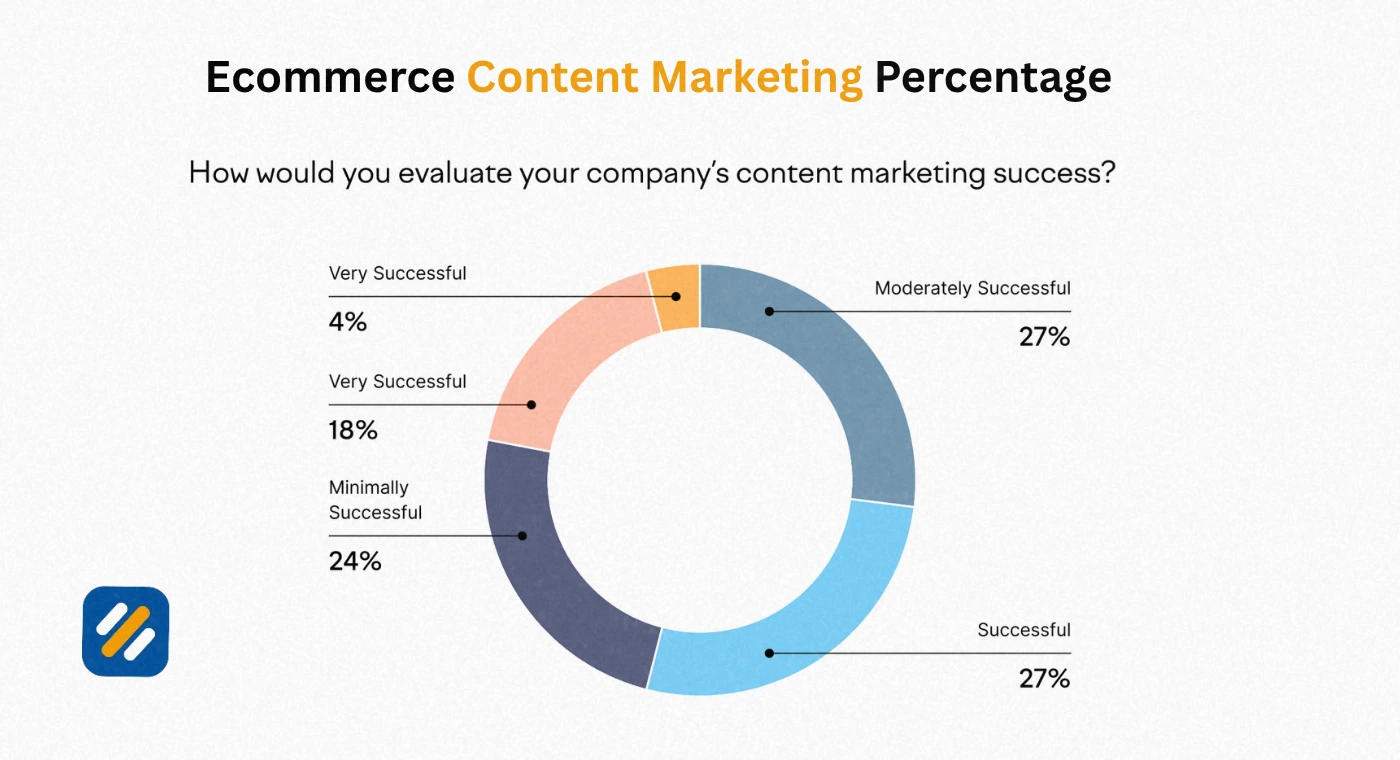
4 The Content Marketing Funnel for Online Stores
Every piece of ecommerce content should have a clear job inside the content marketing funnel, which mirrors the actual buyer journey a shopper goes through before purchasing. Publishing content without matching it to a funnel stage is one of the most common reasons content fails to convert.
Awareness stage: the shopper does not know your brand yet, they are searching for information or inspiration. Blog posts, social content, and short videos work best here.
Consideration stage: the shopper knows a solution exists and is comparing options. Comparison guides, detailed product content, and buyer journey content like "how to choose" articles fit this stage.
Decision stage: the shopper is close to buying and needs a final push. Reviews, user generated content, size guides, and FAQ content remove the last doubts.
Retention stage: the shopper already bought and you want them back. Email content, loyalty content, and how to use guides extend the relationship past the first sale.
Mapping content to buyer journey content this way prevents a common mistake I see often: stores publishing only bottom of funnel, sales focused content and wondering why nobody outside their existing customers ever finds them.
5 The Core Types of Ecommerce Content You Need
A strong ecommerce content strategy usually blends several content types together rather than relying on just one. Here is a breakdown of the formats that consistently perform for online stores.
| Content Type | Funnel Stage | Primary Purpose |
|---|---|---|
| Blog content | Awareness, consideration | Answers questions and captures organic search traffic |
| Product page content | Consideration, decision | Turns browsers into buyers with details, specs, and proof |
| Video content | Awareness, consideration | Shows the product in action and builds emotional connection |
| User generated content | Decision | Builds trust through real customer photos, videos, and reviews |
| Social media content | Awareness | Drives discovery on platforms where shoppers already spend time |
| Email content | Retention | Nurtures leads and brings past customers back |
| Buying guides and comparisons | Consideration | Helps undecided shoppers choose between options |
6 How to Build an Ecommerce Content Marketing Strategy Step by Step
Here is the exact process for building an ecommerce content strategy from the ground up.
Define your ideal customer and their real questions. Before writing anything, list the actual questions your target buyer asks before purchasing your type of product, not just keywords.
Audit your existing content and product pages. Check what content already exists on your site and identify obvious gaps in the buyer journey.
Map content to each funnel stage. For every stage of the funnel, plan at least two to three content pieces so no stage of the journey is left empty.
Build a content calendar with realistic frequency. Consistency matters more than volume. One well researched post per week outperforms five rushed posts that nobody finishes reading.
Create the content with a clear content creation process. Assign a writer, a reviewer, and a publishing owner so ecommerce content creation does not depend on one overloaded person.
Distribute across multiple channels. Never publish once and stop. Repurpose the same content across your blog, email, and social channels.
Measure and refine using real data. Track organic traffic, time on page, and assisted conversions, then double down on the formats and topics that actually move the needle.
7 Ecommerce SEO Content: Getting Found Before You Get Chosen
Ecommerce SEO content is the bridge between content marketing and actual visibility. You can write the most helpful guide in your niche, but if it never appears in search results, it will never do its job. Ecommerce SEO content works best when it targets real search intent instead of just a product name.
- Target informational keywords around your product category, not just the product itself, such as "how to choose a running shoe" alongside "buy running shoes"
- Optimize category and product pages with unique, detailed descriptions instead of manufacturer copy that dozens of other stores also use
- Build internal links between blog content and relevant product pages so search engines and shoppers can move naturally between them
- Add structured data such as product schema and review schema so search engines can display prices, ratings, and availability directly in results
Pro Tip: Never copy manufacturer product descriptions directly onto your store. Duplicate content across hundreds of stores selling the same product is one of the most common reasons ecommerce product pages fail to rank at all.
8 Product Content Marketing: Turning Product Pages Into Content
Product content marketing treats your product pages as content assets, not just digital shelf labels. A product page that only lists specs and a price is leaving conversions on the table, since shoppers arrive with questions a spec sheet cannot answer.
- Answer the real objections a shopper has before buying, such as sizing concerns, material quality, or how the product compares to alternatives
- Use original photography and video rather than manufacturer stock images wherever possible, since original visuals build more trust and perform better in search
- Add a genuine FAQ section addressing the questions your support team hears most often
- Include real customer reviews and, where relevant, customer submitted photos directly on the page
Product pages built this way consistently convert better, since Contentsquare and Sixth City Marketing data both show review rich product pages converting well above pages with no visible social proof.
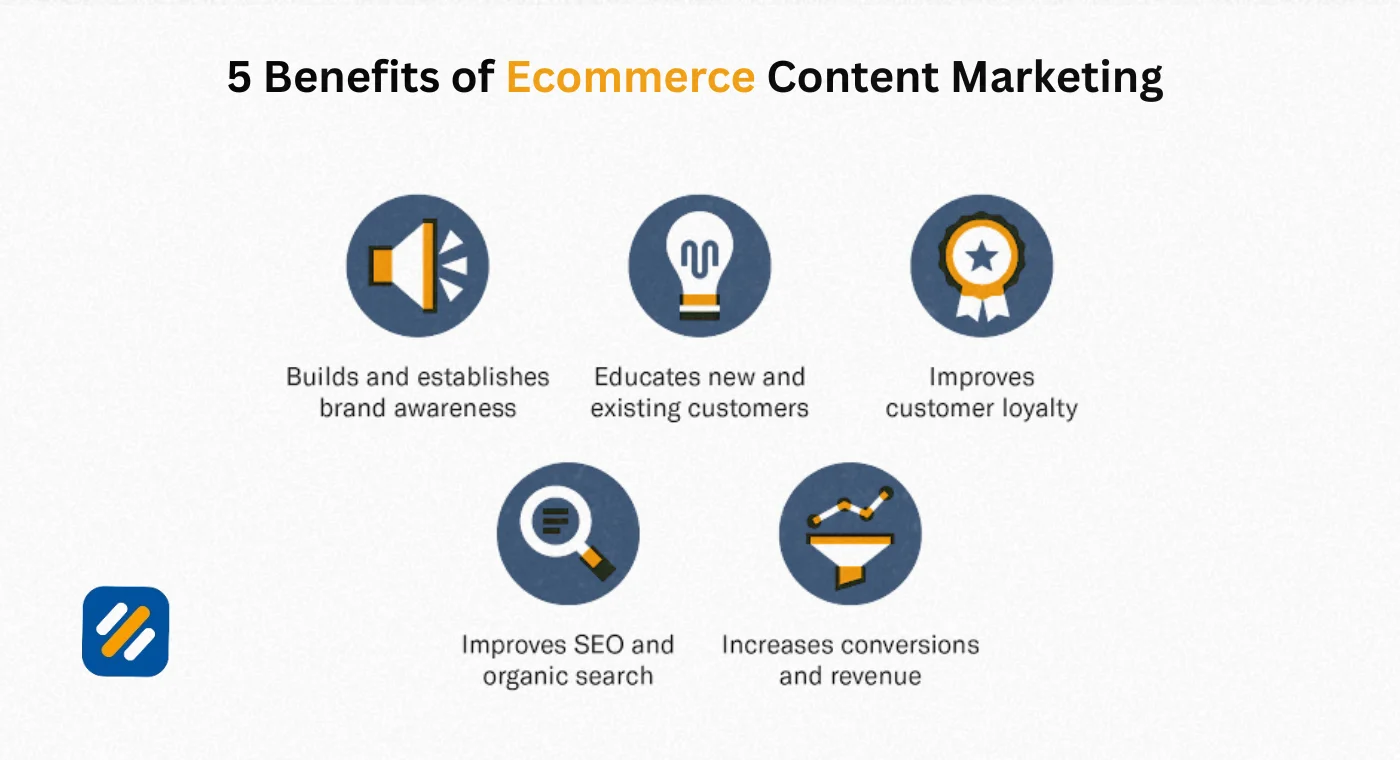
9 Ecommerce Blog Content Ideas That Actually Drive Sales
A common mistake in ecommerce blog content is writing generic posts that could belong to any brand in the category. The most effective ecommerce content ideas are specific to your products and your customer's real problems.
- How to use or style your product, written as a genuine guide rather than a thin sales page
- Comparison posts between your product and close alternatives, written honestly rather than one sidedly
- Behind the scenes content showing how products are made or sourced, which builds trust and brand story
- Seasonal or occasion based gift guides that naturally feature your own catalog
- Customer spotlight stories showing real people using the product in their own lives
- Troubleshooting and maintenance guides that keep customers engaged long after purchase
10 User Generated Content for Ecommerce: Your Most Trusted Salesperson
User generated content for ecommerce, meaning photos, videos, and reviews created by actual customers rather than the brand itself, has become one of the highest converting content types available to online stores. Shoppers trust other shoppers far more than they trust brand messaging, which is exactly why product pages featuring genuine reviews and customer content consistently show conversion lifts in the double digits across multiple studies.
- Ask for photo and video reviews directly in post purchase emails, not just star ratings
- Repost customer content on your own social channels with proper credit and permission
- Create a branded hashtag that makes it easy for customers to tag your store
- Feature real customer content directly on product pages, not buried in a separate reviews tab
11 Ecommerce Social Media Content: Where Discovery Happens Now
Ecommerce social media content is no longer just about brand awareness, platforms like Instagram and TikTok have become direct sales channels where discovery, research, and purchase increasingly happen in one place. TikTok Shop alone grew United States sales by over 400 percent in a single year, showing how quickly social platforms are becoming genuine storefronts rather than just discovery tools.
- Short form video consistently outperforms static posts for reach and engagement on nearly every platform
- Live shopping and live demonstrations build urgency and let shoppers ask questions in real time
- Influencer and creator partnerships extend reach into audiences your own account cannot access alone
- Shoppable posts remove friction by letting a shopper move from discovery to purchase in the same platform
12 Ecommerce Content Distribution: Where to Publish and Promote
Great content that nobody sees does not generate a single sale. Ecommerce content distribution is the plan for pushing your content to the audiences most likely to act on it, across more than just your own blog.
Owned channels: your blog, email list, and app notifications, where you control the message completely
Earned channels: organic search rankings, press mentions, and shares from customers or influencers
Paid channels: boosted social posts and search ads used to accelerate reach for your best performing content
Repurposing: turning one blog post into an email, a few social posts, and a short video, instead of creating brand new content for every channel
A single well researched guide can realistically fuel a month of email and social content when distributed properly, which is far more efficient than constantly starting from a blank page.
13 Real Ecommerce Content Marketing Examples
Looking at real ecommerce content marketing examples makes the strategy far easier to picture than theory alone.
| Brand | What They Do Well | Content Type |
|---|---|---|
| Gymshark | Builds a fitness community around the product, not just the product itself | Social content, influencer partnerships, UGC |
| Glossier | Turns real customers into the primary voice of the brand | User generated content, social content |
| Away | Publishes genuinely useful travel guides tied naturally to luggage use cases | Blog content, buyer journey content |
| Sephora | Uses detailed how-to and tutorial content alongside every product category | Video content, product content |
The common thread across every one of these brands is that the content stands on its own value first. The product mention feels secondary, almost incidental, which is exactly why it works better than a direct pitch would.
14 Ecommerce Content Marketing Best Practices and Mistakes to Avoid
Do create content for every stage of the buyer journey, not just the bottom of the funnel
Do repurpose successful content across multiple channels instead of publishing once and moving on
Do let real customers speak through reviews and user generated content wherever possible
Don't copy manufacturer descriptions onto product pages, since duplicate content rarely ranks
Don't treat content as a one time project, since ecommerce content marketing compounds over months, not days
Don't ignore performance data, since guessing which content works wastes budget that consistent tracking would save
A quick gut check: If you removed your logo from a piece of content, would it still be genuinely useful to someone? If the honest answer is no, it is probably too sales focused to earn real trust.
15 Tools and Trusted Resources for Ecommerce Content Marketing
| Resource | What It Helps With |
|---|---|
| Google Search Console | Tracks which content is actually driving organic search traffic to your store |
| Google Analytics 4 | Measures assisted conversions from content, not just last click sales |
| Answer The Public or AlsoAsked | Surfaces real questions shoppers ask around your product category |
| Canva or CapCut | Produces social and short form video content without a full production team |
| Klaviyo or Mailchimp | Distributes content through email to nurture and retain existing customers |
16 Conclusion
Ecommerce content marketing is not a side project sitting next to your real marketing, it is quickly becoming the main way shoppers discover, evaluate, and trust an online store before they ever click buy. Ads still have a place, but content is what keeps working long after the ad budget runs out, and it is what turns a one time buyer into a repeat customer.
Start small if you need to. Pick one funnel stage your store is currently ignoring, whether that is awareness, consideration, or retention, and commit to publishing consistent, genuinely useful content for that stage over the next ninety days. Track what happens to your organic traffic and repeat purchase rate, and let that result guide where you invest next.
Have a question about building an ecommerce content strategy for your own store? Drop a comment below and I will answer it personally.
Join 1,000+ business owners and bloggers who get one actionable SEO tip every week — straight to their inbox. Free forever.
Get Free Weekly Tips →