- Content marketing strategy is a structured plan for using content to attract, engage, and convert your target audience without paying for every click
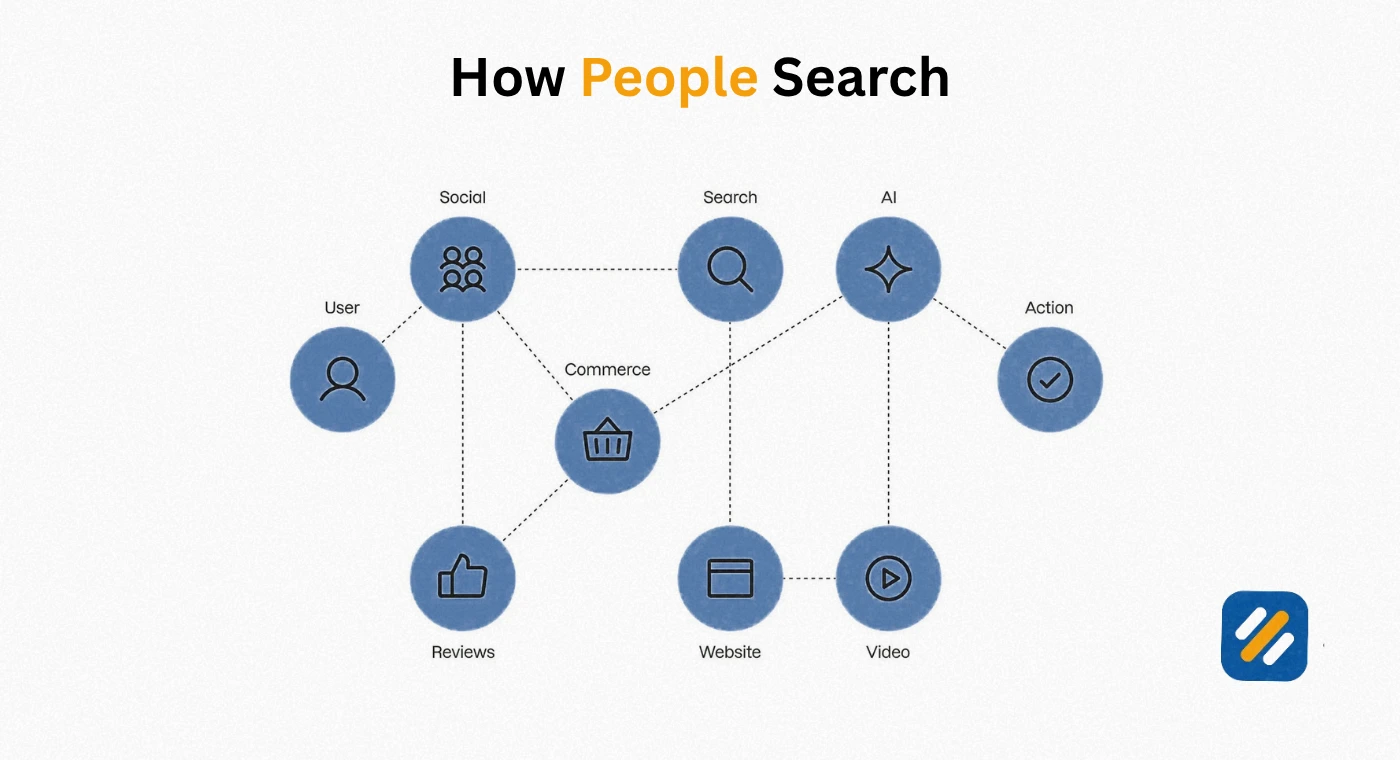
- The best content marketing strategies in 2026 plan for multiple discovery paths including Google, YouTube, AI tools, and social media simultaneously
- Strategic content built around search intent and topical authority consistently outperforms content created without a clear keyword or audience plan
- Businesses that publish consistently with a documented content strategy generate three times more leads than those without one according to Content Marketing Institute research
- A strong blog content strategy for SEO combines keyword research, search intent matching, internal linking, and E-E-A-T signals on every single page
1 What Is Content Marketing and Why Every Business Needs a Strategy for It
Content marketing is the practice of creating and distributing genuinely useful content to attract a specific audience and guide them toward a business goal. No interruptions. No cold pitches. Just information so valuable that people seek it out themselves.
The word "strategy" is what separates successful content marketing from random publishing. Without a strategy, businesses publish articles on topics they think are interesting and wonder why traffic never comes. With a documented content marketing strategy, every piece of content connects to a keyword, an audience need, a channel, and a business outcome.
The numbers behind this are hard to ignore. Content Marketing Institute research consistently shows that businesses with a documented strategy generate significantly more leads and traffic than those without one. The gap is not small. It is the difference between a blog that becomes a traffic asset and one that sits empty after six months.
In many years of working on SEO and content strategies for B2B, CXM, healthcare, and ecommerce clients, the pattern is always the same. Businesses that treat content marketing as a strategy outperform businesses that treat it as a content calendar with no direction behind it.
2 Content Marketing Strategy vs Content Strategy vs Content Plan
Most beginners use these three terms interchangeably and end up with a plan that is missing critical components. Here is exactly what each one means and why the distinction matters:
| Term | What It Covers | The Question It Answers |
|---|---|---|
| Content Marketing Strategy | Overall approach for using content to reach your audience and achieve marketing goals | How will content help us attract and convert our target audience? |
| Content Strategy | Rules and processes for how content is created, managed, and maintained consistently | How do we keep content useful, consistent, and on-brand across everything we publish? |
| Content Plan | Practical schedule and workflow for producing specific content with deadlines and owners | What will we create, when, who will create it, and where will it be published? |
| Blog Content Strategy for SEO | Keyword-driven publishing plan specifically for organic search growth | Which topics will rank on Google, and in what order should we publish them? |
| Content Creation Strategy | Process for ideating, drafting, editing, and producing content at scale | How do we produce high-quality content consistently without burning out? |
You need all four working together. The strategy sets the direction. The content strategy sets the standards. The plan sets the schedule. The creation process makes it executable
3 What Is a Content Marketing Strategy and What Does a Good One Actually Include
A content marketing strategy is a documented plan that defines who you are trying to reach, what you want your content to achieve, which topics you will cover, which channels and formats you will use, and how you will measure whether it is working.
The keyword here is "documented." Keeping your strategy in your head is not a strategy. It is a intention. The moment you write it down, assign owners, and attach metrics, it becomes a real plan you can improve over time.
A complete content marketing strategy includes these six components
Defined audience: Who exactly are you creating content for? Not "small business owners" as a category but a specific description like "US-based service business owners with under ten employees who are getting zero Google traffic and cannot afford an agency." The more specific your audience definition, the more useful every piece of content you create becomes.
Clear business goal: What do you want content to achieve? More organic traffic, more email subscribers, more inbound leads, or more direct sales? Each goal changes which content you create and how you measure success. Vague goals like "build brand awareness" produce vague results.
Keyword and topic plan: Which specific topics will you cover, in what order, and targeting which keywords? This is your content strategy for SEO and it is what turns your blog from a random collection of articles into a topical authority asset.
Channel and format plan: Where will your content appear and in what format? Blog articles, YouTube videos, LinkedIn posts, email newsletters, and podcast episodes all reach different audiences in different contexts. Your channel plan determines how many people actually see what you create.
Publishing schedule: How often will you publish and who is responsible for each piece? Consistency matters more than volume. Two well-optimised articles per week beats ten rushed ones.
Measurement framework: Which metrics will you track and how often? Organic traffic, keyword rankings, time on page, email signups, and lead conversions all tell different parts of the story.
4 The Real Benefits of Strategic Content Marketing
Most articles list content marketing benefits in vague terms. Here is what strategic content marketing actually produces when executed consistently over 12 to 18 months:
| Benefit | What It Means in Practice | Timeline to See It |
|---|---|---|
| Compounding organic traffic | Each article you publish keeps earning clicks for years without additional spend | Month 6 to 18 |
| Lower customer acquisition cost | Content-driven leads cost 62% less than outbound leads according to DemandMetric research | Month 8 onwards |
| Topical authority | Google starts ranking your newer articles faster because it trusts your domain on that topic | Month 10 onwards |
| Inbound lead generation | Potential clients find you through Google rather than you chasing them | Month 6 to 12 |
| Brand trust and E-E-A-T | Consistent expert content builds reader trust that paid ads cannot replicate | Month 3 onwards |
| Affiliate and AdSense revenue | High-traffic content generates passive income through ads and affiliate links | Month 8 to 14 |
| Email list growth | Content readers who subscribe become a direct audience you own permanently | Ongoing from day one |
The compounding effect is what makes content marketing fundamentally different from every paid channel. A Google Ad stops the moment your budget runs out. An article you published in month one can still be your highest traffic page in month twenty-four.
5 How to Create a Content Marketing Strategy Step by Step
Here is the exact process I use when building a content marketing strategy for a new website or client from scratch:
Step 1: Define your audience with painful specificity
Resist the temptation to say your audience is "anyone interested in SEO." Your actual target reader is a specific person with a specific problem searching Google for a specific answer. Write a one paragraph description of that person including their job, their biggest content-related frustration, what they have already tried, and what outcome they want.
This description becomes the filter for every content decision you make. If an article idea does not clearly serve that person, it does not make it into your strategy.
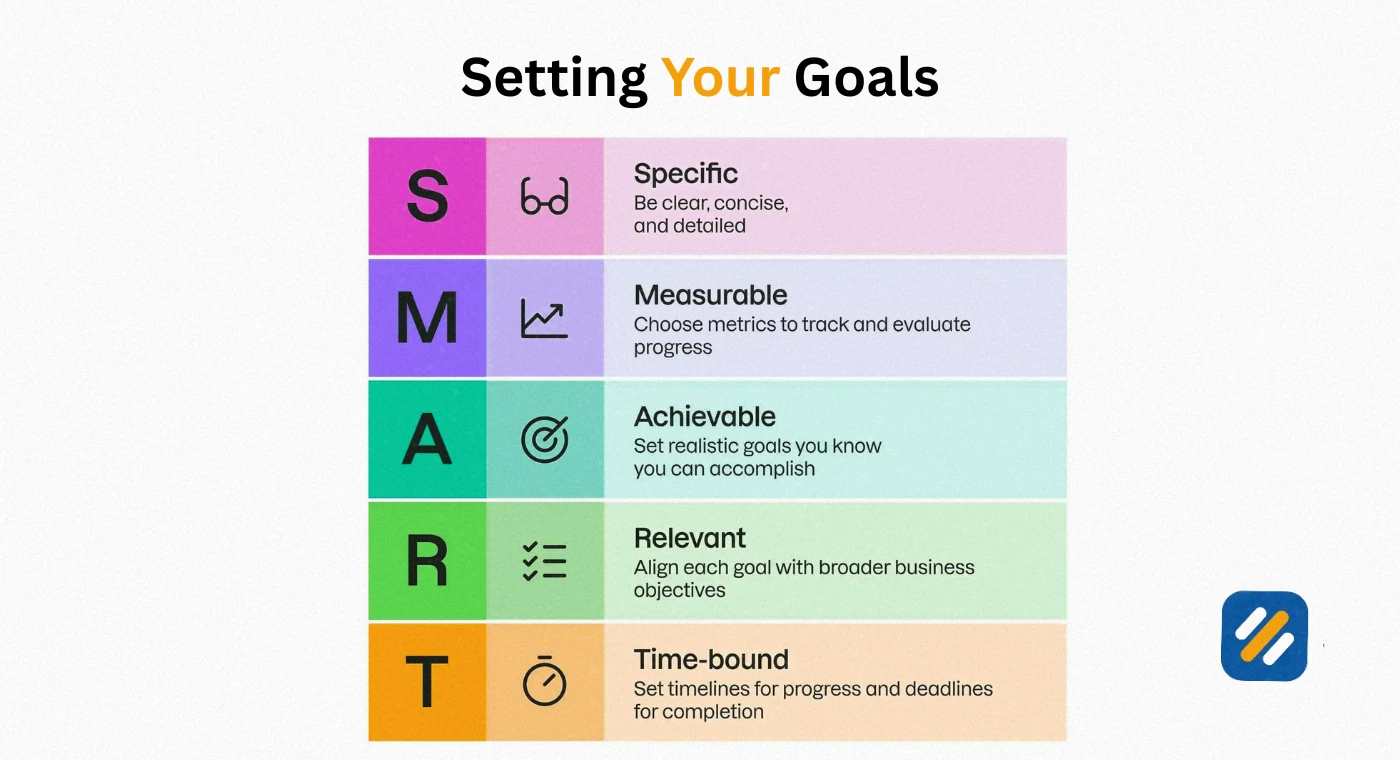
Step 2: Set a SMART content goal
Your content goal needs to be specific, measurable, achievable, relevant, and time-bound. "Get more traffic" is not a goal. "Reach 10,000 monthly organic visitors within 12 months by publishing 3 SEO-optimised articles per week" is a goal.
Your goal determines which metrics matter. If your goal is traffic, you track keyword rankings and organic sessions. If your goal is leads, you track contact form submissions and email signups. If your goal is revenue, you track affiliate conversions and AdSense RPM.
Step 3: Research keywords before writing a single word
Every article in your strategy needs a validated keyword with confirmed search volume before you write it. Use Google Keyword Planner to confirm monthly searches. Use Ahrefs free tool or SEMrush free version to check keyword difficulty. For a new website, only target keywords with a difficulty score under 30.
This is where most small business content strategies fail. They write first and research second. By the time they discover their article targets a keyword nobody searches, the work is already done.
Step 4: Build your topic cluster architecture
A topic cluster is a group of related articles built around one central pillar topic. The pillar article covers the broad topic comprehensively. Cluster articles go deep on specific subtopics and link back to the pillar.
For a personal brand SEO blog, the pillar article might be "Complete Guide to On-Page SEO." Cluster articles would cover title tags, meta descriptions, header tags, internal linking, and image optimisation separately, each linking back to the pillar.
This structure tells Google you are an authority on the entire topic, not just one aspect of it.
Step 5: Choose your channels based on where your audience actually is
Your audience does not only use Google. They watch YouTube, scroll LinkedIn, participate in Reddit communities, and increasingly ask AI tools for recommendations. Your digital content marketing strategy needs to account for all the places your ideal reader spends time.
Start with two channels maximum. For most beginners, that means a blog for Google traffic and LinkedIn for professional audience building. Add channels only when you can maintain them consistently.
Step 6: Create a realistic publishing schedule
Set a publishing frequency you can maintain for twelve months without burning out. Four articles per week sounds impressive until month three when you are running out of ideas and quality starts dropping.
For a solo creator, two to three articles per week is sustainable and fast enough to build topical authority within six to eight months. Consistency matters far more than frequency.
Step 7: Build a content calendar and stick to it
Your content calendar is the operational layer of your strategy. For each planned article include the target keyword, working title, publishing date, author, status, and internal links to add. Review it weekly and update it monthly based on what is ranking, what is not, and what new keyword opportunities you have discovered.
Step 8: Measure, learn, and improve
Review your content performance every month using Google Search Console. Look for three things. First, which articles are ranking between positions 5 and 15, because these are your highest priority improvement opportunities. Second, which articles are getting impressions but no clicks, because these need better title tags and meta descriptions. Third, which keywords you are ranking for that you did not specifically target, because these reveal what your audience is searching for beyond your original plan.
6 Content Marketing Strategy Examples That Prove What Works
Looking at real content marketing strategy examples from successful brands shows you what strategic content looks like in practice at different scales:
Example 1: HubSpot — The Topical Authority Model
HubSpot built its entire content marketing strategy around becoming the definitive resource for every marketing, sales, and CRM topic. They publish pillar pages on broad topics and surround them with hundreds of cluster articles targeting long-tail variations. The result is that HubSpot ranks on page one for thousands of competitive marketing keywords simultaneously. Their strategy is not volume alone. It is structured topical authority at scale.
Example 2: Ahrefs — The Practitioner-Led Content Strategy
Ahrefs publishes SEO guides written exclusively by people who actively do SEO work. Every article includes real data from their own tool, real case studies from their own campaigns, and genuine opinions based on direct experience. This is E-E-A-T done correctly. The articles rank not because they are long but because they contain information nobody else has.
Example 3: Personal Brand SEO Blog — The SEOWithRoman Model
A personal brand blog targeting US and UK small business owners with beginner SEO content. Six categories covering SEO basics, keyword research, on-page SEO, technical SEO, WordPress SEO, and free tools. Every article targets a keyword with difficulty under 30. Three articles per week. Internal links connect every new article to existing ones. Monetisation through AdSense, affiliates, and inbound freelance clients. This is strategic content marketing executed at the individual level with the same discipline as a corporate team.
7 Content Marketing Best Practices That Separate Rankings From Invisibility
These are the content marketing best practices that consistently separate articles that rank from articles that never get found:
Write for search intent first, keyword density second: Before writing, Google your target keyword and study what the top three results actually cover. Are they guides, lists, comparisons, or definitions? Match that format because Google is already showing you what type of content it considers the best answer.
Cover the topic completely, not just the surface: Thin content that only answers the headline question and nothing else will not hold rankings in 2026. Comprehensive content that answers the main question plus every related question a beginner might have builds topical authority and earns featured snippet positions.
Add one piece of information nobody else covers: Every article in your strategy should contain at least one data point, example, perspective, or insight that competing articles do not include. This is what makes your content worth linking to and worth bookmarking.
Internal link every new article to at least three older ones: Internal linking distributes authority across your site, helps Google understand your topical coverage, and keeps readers engaged with your content longer. Every article you publish is also an opportunity to strengthen every existing article it is related to.
Update your best articles every six to twelve months: Content decay is real. An article that ranked in position three for twelve months can drop to position eight simply because competitors published updated versions and Google prioritised freshness. Review your top performing articles annually and update them with new data, examples, and sections.
8 How Content Strategy for SEO Works Differently From General Content Marketing
Most general content marketing focuses on what your audience wants to read. Content strategy for SEO focuses on what your audience is actively searching for on Google. The overlap is where the best content lives.
Here is how a content strategy built specifically for SEO differs from general web content marketing:
| Factor | General Content Marketing | Content Strategy for SEO |
|---|---|---|
| Topic selection | Based on audience interest and brand relevance | Based on keyword research and search volume data |
| Success metric | Engagement, shares, and brand awareness | Keyword rankings and organic traffic |
| Content format | Chosen based on what communicates best | Chosen based on what format Google already ranks for that keyword |
| Publishing frequency | As often as quality allows | Consistent schedule prioritising topical coverage |
| Distribution | Email, social, and paid promotion | Organic search with social as secondary |
| Timeline to results | Immediate if promoted | 3 to 6 months for first meaningful rankings |
| Compounding effect | Limited, each piece needs promotion | Strong, older articles gain authority over time |
The ideal approach combines both. Research-driven SEO topics published with the quality standards of the best general content marketing. Each piece is both findable through Google and genuinely worth reading once someone arrives.
9 3 Expert Tips to Build a Content Marketing Strategy That Outlasts Algorithm Updates
Tip 1: Build for your reader first and Google second, always
Every major Google algorithm update since 2022 has moved in one direction: rewarding content that genuinely helps real people and penalising content created purely to rank. The safest content marketing strategy you can build is one where every article is written as if Google does not exist. Would a real reader find this useful, save it, share it, and come back to your site for more? If yes, Google will eventually agree.
Tip 2: Document your strategy and review it quarterly
A content marketing strategy that lives in your head is not a strategy. Write it down. Set three month goals. Review what is ranking and what is not. Adjust your topic priorities based on what Google Search Console is telling you about your audience's actual search behaviour. The strategies that compound are the ones that improve based on real data rather than original assumptions.
Tip 3: Start with depth on a narrow topic before going broad
The biggest mistake beginners make is trying to cover everything at once. A website with ten articles on ten different topics has no topical authority anywhere. A website with ten articles all focused on one specific subtopic of SEO builds enough authority to rank for competitive keywords in that subtopic within months. Go deep before you go wide. Dominate one content cluster before expanding into the next.
10 Conclusion
A content marketing strategy is not a luxury for large businesses with full marketing teams. It is the single most important planning decision a small business or personal brand can make when it comes to building sustainable organic traffic.
The businesses and blogs that win online are not the ones that publish the most content. They are the ones that publish the right content, on the right topics, targeting the right keywords, on a consistent schedule, with genuine expertise behind every article.
Start with your audience. Define them precisely. Research what they search for. Build your topic clusters. Publish consistently. Measure what works. Improve based on what the data tells you.
That is the complete content marketing strategy framework. It is the same one used by the brands ranking on page one for the most competitive content marketing keywords in the world. And it is the same one that will build SEOWithRoman.com into a trusted authority over the next twelve months.
Have a question about building your own content marketing strategy? Drop a comment below and I will answer it personally.
Join 1,000+ business owners and bloggers who get one actionable SEO tip every week — straight to their inbox. Free forever.
Get Free Weekly Tips →