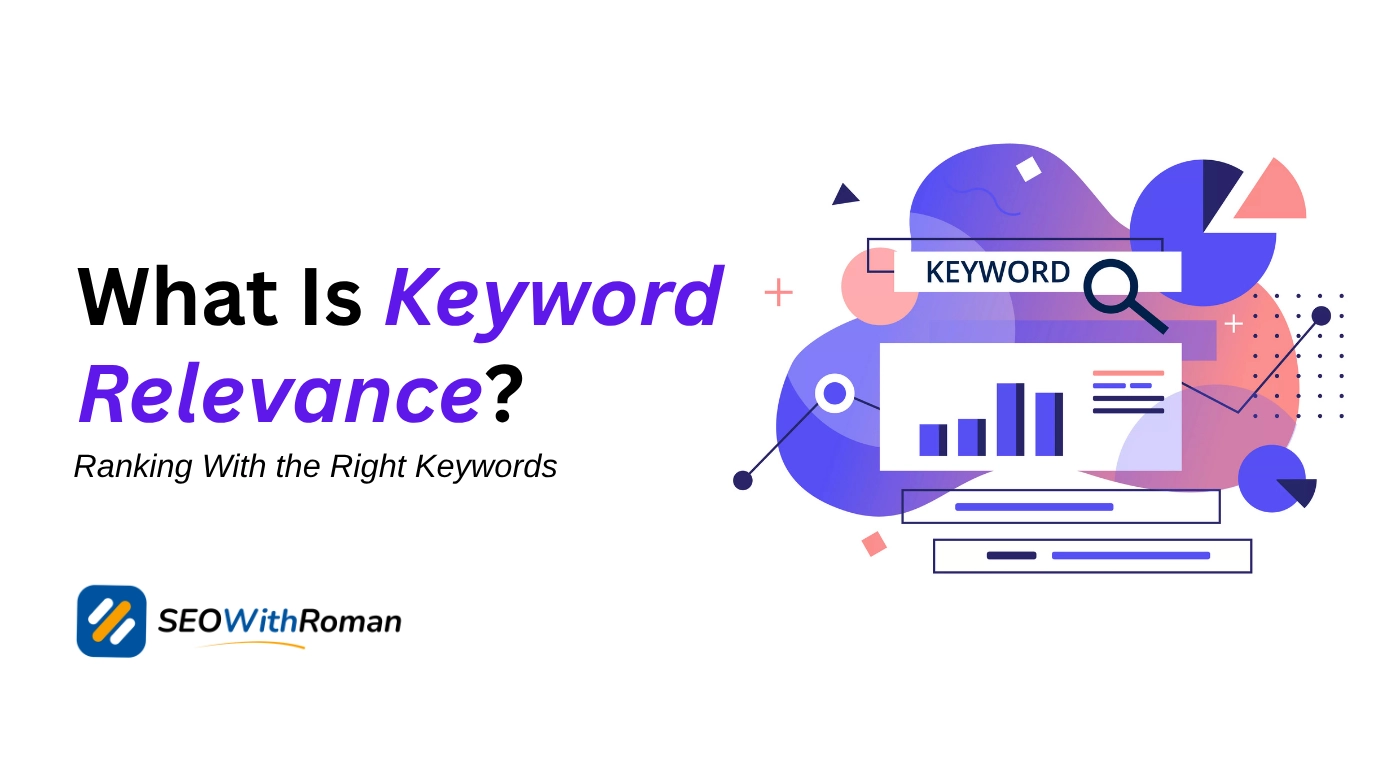
- Keyword relevance means how closely a keyword matches the searcher's actual intent and your page's content
- Google uses semantic understanding, user behaviour signals, and topical context to evaluate keyword relevance
- A highly relevant low-volume keyword consistently outperforms a high-volume irrelevant keyword in conversions and rankings
- Relevance in SEO is not just about using a keyword in your content, it is about matching the entire page experience to what the searcher expects
- Topical relevance across your entire website matters as much as single-page keyword optimisation
1 What Is Keyword Relevance and Why Most Beginners Get It Completely Wrong
Here is a scenario I see constantly when auditing small business websites.
A website owner finds a keyword with 10,000 monthly searches, writes an article targeting it, and watches it rank on page two for three months without a single conversion. Meanwhile, a competitor with a smaller website ranks for a keyword with 800 monthly searches and consistently books clients from it every week.
The difference is keyword relevance:
Keyword relevance is how closely a keyword matches three things at the same time: what the searcher actually wants, what your page actually delivers, and the broader context of your website's topical authority. When all three align, Google rewards you with rankings and users reward you with conversions.
The mistake most beginners make is treating keyword research as a volume game. They find the biggest numbers and chase them without asking whether those keywords connect to what their audience genuinely needs from their specific website.
In six years of doing SEO for clients across CXM, SaaS, ecommerce, and professional services, I have never seen a high-volume irrelevant keyword outperform a lower-volume relevant one when measured by actual business outcomes. Traffic that does not convert is not an asset. It is a distraction.
Tip 1: Target One Primary Intent Per Page
Never try to serve two different search intents on a single page. A page that tries to be both an educational guide and a sales page will underperform at both. Decide whether each page is informational, commercial, or transactional before you write a single word and build every element of that page around serving that one intent completely.
2 Keyword Relevance vs Keyword Popularity | Understanding the Real Difference
Most keyword tools show you search volume first. This is useful data but it creates a dangerous bias toward popularity over fit. Understanding the difference between these two concepts changes how you build your entire content strategy.
Keyword popularity measures how many people search for a term each month. It says nothing about whether those people are the right audience for your website, whether they are ready to take action, or whether your content is the right format to satisfy their intent.
Keyword relevance measures how well a keyword fits the specific intent of your target reader and the specific content of your page. A relevant keyword brings the right person to the right page at the right moment in their decision-making journey.
Here is a practical example: Imagine you run a small accounting firm serving freelancers in the UK.
The keyword "accounting software" gets 326K monthly searches. It is extremely popular. But the people searching it include enterprise finance directors, students learning about accounting, developers building fintech products, and large corporations evaluating ERP systems. Almost none of them are your client.
The keyword "SEO Services UK" gets 1,800 monthly searches. Significantly lower volume. But virtually every person searching it is exactly the client your firm serves. That is keyword relevance in action.
| Factor | Keyword Popularity | Keyword Relevance |
|---|---|---|
| What it measures | Monthly search volume | Match between keyword, intent, and page content |
| What it predicts | How much traffic is possible | How qualified that traffic will be |
| Risk of targeting | High competition, low conversion | Lower volume but higher ROI |
| Best for | Brand awareness campaigns | Lead generation and conversions |
| Google's preference | Secondary signal | Primary ranking quality signal |
| Beginner mistake | Chasing volume without checking fit | Underestimating low-volume relevant keywords |
3 How Google Actually Evaluates Keyword Relevance in 2026
Google's approach to evaluating keyword relevance has changed dramatically over the past five years. Understanding how it works today helps you write content that Google consistently rewards.
Semantic understanding through NLP: Google uses Natural Language Processing to understand the meaning behind words, not just the words themselves. This means a page about "how to reduce customer churn" can rank for "churn rate management" and "client retention strategies" without explicitly using those exact phrases. Google understands that these concepts are semantically related.
This is why keyword stuffing stopped working years ago. Repeating a keyword twenty times signals poor writing quality, not deep expertise. Google's systems are sophisticated enough to distinguish between a page that genuinely covers a topic and one that mechanically repeats a phrase.
User engagement as a relevance signal: When a user clicks your result and immediately returns to the search results page, that tells Google your content did not satisfy their intent. This behaviour, called a pogo stick click, signals poor relevance. Conversely, when users click your result, stay on the page, scroll through the content, and do not return to Google, that confirms strong keyword relevance.
Topical authority across the whole website: Google does not just look at individual pages in isolation. It evaluates whether your entire website demonstrates deep knowledge of a topic area. A website with thirty interconnected articles all covering different angles of SEO for beginners signals much stronger topical relevance for those keywords than a website with one article on the topic surrounded by unrelated content.
Tip 2: Use Your Competitor's Ranking Keywords as a Relevance Shortcut
Instead of guessing which keywords are relevant to your audience, let your competitors prove it for you. Enter a competitor's URL into Ahrefs free Webmaster Tools or SEMrush free version and look at which keywords are already sending them traffic. These are proven relevant keywords for your niche that real searchers are already using.
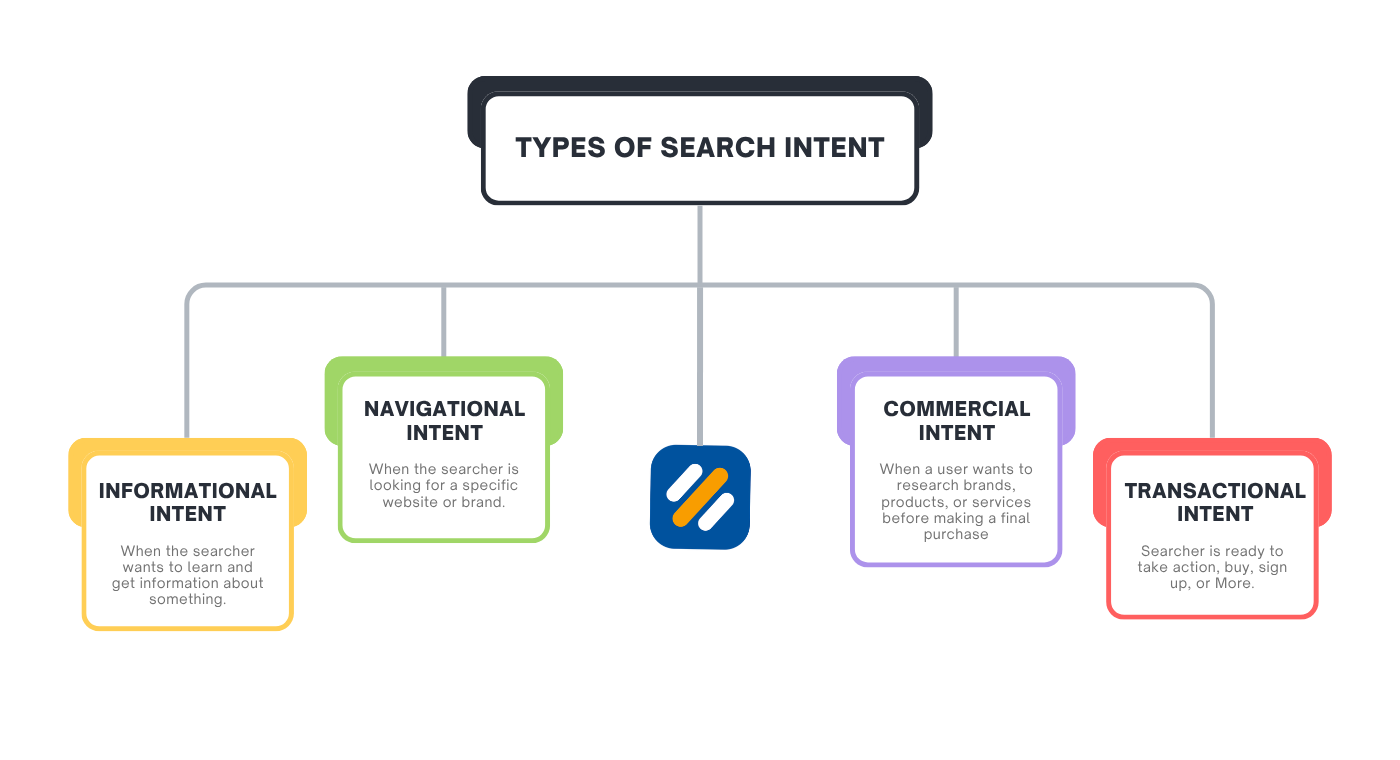
4 The 4 Types of Search Intent and Why They Define Keyword Relevance
Every keyword carries an intent signal. Matching your content format and depth to the correct intent type is the most fundamental act of keyword relevance. Get this wrong and even a technically well-optimised page will underperform.
Informational intent: is when the searcher wants to learn something. Keywords like "what is keyword relevance," "how does Google rank pages," and "what is a backlink" all carry informational intent. The correct content format is an educational guide or explanation article.
Navigational intent: is when the searcher is looking for a specific website or brand. Keywords like "Google Search Console login" or "Ahrefs free tool" carry navigational intent. Trying to rank your blog post for these keywords is wasted effort because the searcher already knows where they want to go.
Commercial intent: is when the searcher is researching options before making a decision. Keywords like "best keyword research tools," "Ahrefs vs SEMrush," and "top SEO plugins for WordPress" carry commercial intent. The correct format is a comparison article, a ranked list, or a detailed review.
Transactional intent: is when the searcher is ready to take action, buy, sign up, or download. Keywords like "hire SEO specialist," "buy SEMrush subscription," and "download free SEO checklist" carry transactional intent. The correct page is a sales page, a service page, or a landing page with a clear call to action.
Matching your page format to the correct intent type is not optional. It is the foundation of keyword relevance. A blog post targeting a transactional keyword will rarely convert. A sales page targeting an informational keyword will rarely rank.
5 Topical Relevance: The Website-Level Signal That Most Beginners Completely Ignore
Single-page keyword relevance is important. But topical relevance operates at the level of your entire website and it has become one of the most powerful ranking signals Google uses in 2026.
Topical relevance means the degree to which your website demonstrates comprehensive, authoritative coverage of a subject area. Google's systems evaluate whether a website has covered a topic from multiple angles, at multiple levels of depth, and with consistent quality across all related content.
This is why a website that publishes forty articles all covering different aspects of SEO for beginners outranks a website with one excellent SEO article surrounded by unrelated content. The first website has built topical authority. The second has not.
Here is how topical relevance works in practice. Imagine two websites both publishing an article on "how to do keyword research for free."
Website A has published this article alongside thirty other articles covering related topics: what is search intent, how to write title tags, what is domain authority, how to build backlinks, how to use Google Search Console, and so on. Every article links to related articles on the same website.
Website B has published only this one article. No related content. No internal linking. No topical context.
Google sees Website A as a topical authority on SEO. It will rank that keyword research article higher and rank it faster, even if Website B's article is technically better written.
This is why the publishing schedule and category structure we built for SEOWithRoman.com matters so much. Every article contributes to the topical authority of the whole website.
6 How to Check Keyword Relevance Before You Write a Single Word
One of the most valuable habits I developed in my SEO career is checking keyword relevance before committing to writing an article. This single step has saved me and my clients dozens of hours writing content that would never have ranked or converted.
Here is the exact process I follow:
Step 1: Google the keyword and study the results. The top three ranking pages tell you exactly what Google considers the most relevant content format for that keyword. Are they guides, lists, comparisons, or definitions? Are they written for beginners or advanced users? Are they short or long? This is Google showing you its relevance assessment.
Step 2: Check the People Also Ask section. The questions Google surfaces in the People Also Ask section reveal the related intent signals around your keyword. If you can answer all of them within your article, your content becomes significantly more relevant than a page that only addresses the primary keyword.
Step 3: Identify semantic keywords from top-ranking pages. Read the top three ranking articles and note which related terms they all use. These are the semantic keywords Google associates with your primary keyword. Including them naturally in your content signals comprehensive topical coverage.
Step 4: Match your page format to what is already ranking. If every top result is a numbered list, write a numbered list. If every top result is a step by step tutorial, write a step by step tutorial. Trying to rank a definition article for a keyword where Google is rewarding how-to guides is fighting relevance signals rather than working with them.
Step 5: Check whether your website has topical authority for this keyword. If your website has never published anything related to this topic, a new article will take longer to rank. Building a supporting cluster of related articles around your primary target gives the main article the topical context it needs to rank faster.
7 Keyword Relevancy Tool Options | How to Measure Relevance Accurately
While keyword relevance is ultimately a judgement call built on understanding your audience, several tools give you data-driven signals to support that judgement.
| Tool | What It Measures | Cost | Best Used For |
|---|---|---|---|
| Google Search Console | Which keywords your pages actually rank for and their CTR | Free | Identifying relevance gaps between intent and performance |
| Ahrefs Free Webmaster Tools | Keyword rankings, topical coverage gaps, internal link structure | Free | Auditing existing content for relevance signals |
| Google Trends | Whether keyword interest is growing or declining | Free | Validating that a keyword is still relevant to today's searchers |
| Surfer SEO | Semantic keyword coverage compared to top ranking pages | Paid | Checking whether your content covers the right related terms |
| Google's People Also Ask | Related questions around your keyword | Free | Understanding the full scope of search intent around a topic |
| Rank Math Content Analysis | On-page relevance scoring including keyword placement and density | Free plugin | Checking single-page relevance before publishing |
For a new website with zero budget, the combination of Google Search Console, Google Trends, and Rank Math covers your keyword relevance monitoring needs completely. Paid tools add speed and depth but they are not required to build a relevance-first content strategy.
Tip 3: Update Old Content to Restore Relevance
Search intent shifts over time. A keyword that meant one thing in 2022 may carry a different intent in 2026 as the topic evolves. If you have articles that used to rank but have dropped in position, check whether the top-ranking pages have changed format or depth since you published. Updating your content to match the current relevance signals Google is rewarding is often faster than publishing a new article on the same topic.
8 Conclusion
Keyword relevance is the difference between content that ranks and converts and content that brings traffic with no real value to your business.
Volume tells you what is popular. Relevance tells you what will actually work for your specific audience, your specific website, and your specific goals.
Before you write your next article, ask one question. Is this keyword relevant to the exact person I am trying to help and does my page give them exactly what they are looking for?
If the answer is yes on both counts, publish it. Optimise it properly. Build related content around it. And let Google's own relevance systems do the work of rewarding you for it.
Have a question about keyword relevance for your own website? Drop it in the comments below and I will answer it personally.
Join 1,000+ business owners and bloggers who get one actionable SEO tip every week — straight to their inbox. Free forever.
Get Free Weekly Tips →