- SEO client management software helps agencies organise projects, automate reporting, track rankings, and manage billing from one centralised platform
- The right SEO agency software reduces admin time by up to 60% and improves client retention by giving clients transparent access to their campaign data
- Top tools in 2026 include AgencyAnalytics, SEMrush, Ahrefs, ClickUp, and Teamwork.com — each serving different agency sizes and needs
- AI is not killing SEO. It is making SEO client management faster, more data-driven, and more valuable for agencies that adapt
- Most professional SEO management platforms start between $29 and $199 per month with free trials available
1 What Is SEO Client Management Software and Why Every Agency Needs It
If you are running an SEO agency or managing multiple client websites, you already know the chaos that builds up without a proper system. Keyword rankings sitting in one spreadsheet. Client reports being manually built in Google Slides. Billing tracked in a separate app. Tasks assigned through Slack messages that disappear in three days.
SEO client management software solves this by bringing everything into one centralised workspace. It is a platform specifically designed for SEO agencies and specialists to manage client projects, track rankings, automate reports, handle billing, and communicate with clients without switching between five different tools.
The difference between an agency that scales past 20 clients and one that stalls at eight is almost always a systems problem, not a talent problem. The agencies that grow are the ones that built the right operational foundation early.
After many years of managing SEO across multiple client accounts covering B2B, BPO, ecommerce, and healthcare industries, the single biggest time drain I have seen in agency operations is manual reporting and scattered task management. The right SEO management software eliminates both.
Here is what proper SEO client management software handles for you
- Centralised rank tracking across all client websites in one dashboard
- Automated white-label reporting sent to clients on a schedule you set
- Project and task management organised by client and campaign
- Billing, invoicing, and contract management in one place
- Client portals where clients can log in and see their own data
- Site monitoring that alerts you when something breaks before the client notices
2 What Is the Difference Between SEO Software and SEO Client Management Software
This is a question I get from a lot of beginners entering agency work for the first time.
SEO software refers to tools that help you do SEO work. Think Ahrefs for backlink analysis, Screaming Frog for technical audits, or Rank Math for on-page optimisation. These tools help you execute SEO tasks.
SEO client management software is the operational layer on top. It is the system that manages the relationship between you and your clients, coordinates your team’s work, and communicates results professionally.
| Category | What It Does | Examples |
|---|---|---|
| SEO Research Tools | Keyword research, competitor analysis, backlink data | Ahrefs, SEMrush, Moz |
| Technical SEO Tools | Site audits, crawl error detection, Core Web Vitals | Screaming Frog, Sitebulb |
| Rank Tracking Tools | Monitor keyword positions daily across search engines | SERPWatcher, AccuRanker |
| SEO Reporting Tools | Build and automate client-facing performance reports | AgencyAnalytics, Swydo |
| Project Management Tools | Organise tasks, deadlines, and team collaboration | ClickUp, Teamwork.com, Asana |
| Full SEO Management Platforms | Combine all of the above in one agency-focused workspace | SEOcrawl AI, AgencyAnalytics |
| Client Portal Tools | Give clients transparent access to their campaign data | Assembly, SPP, HighLevel |
The most effective SEO agencies in 2026 use a combination of dedicated SEO research tools plus one central management platform that handles reporting, task management, and client communication.

3 Top 10 SEO Client Management Software Tools for Agencies in 2026
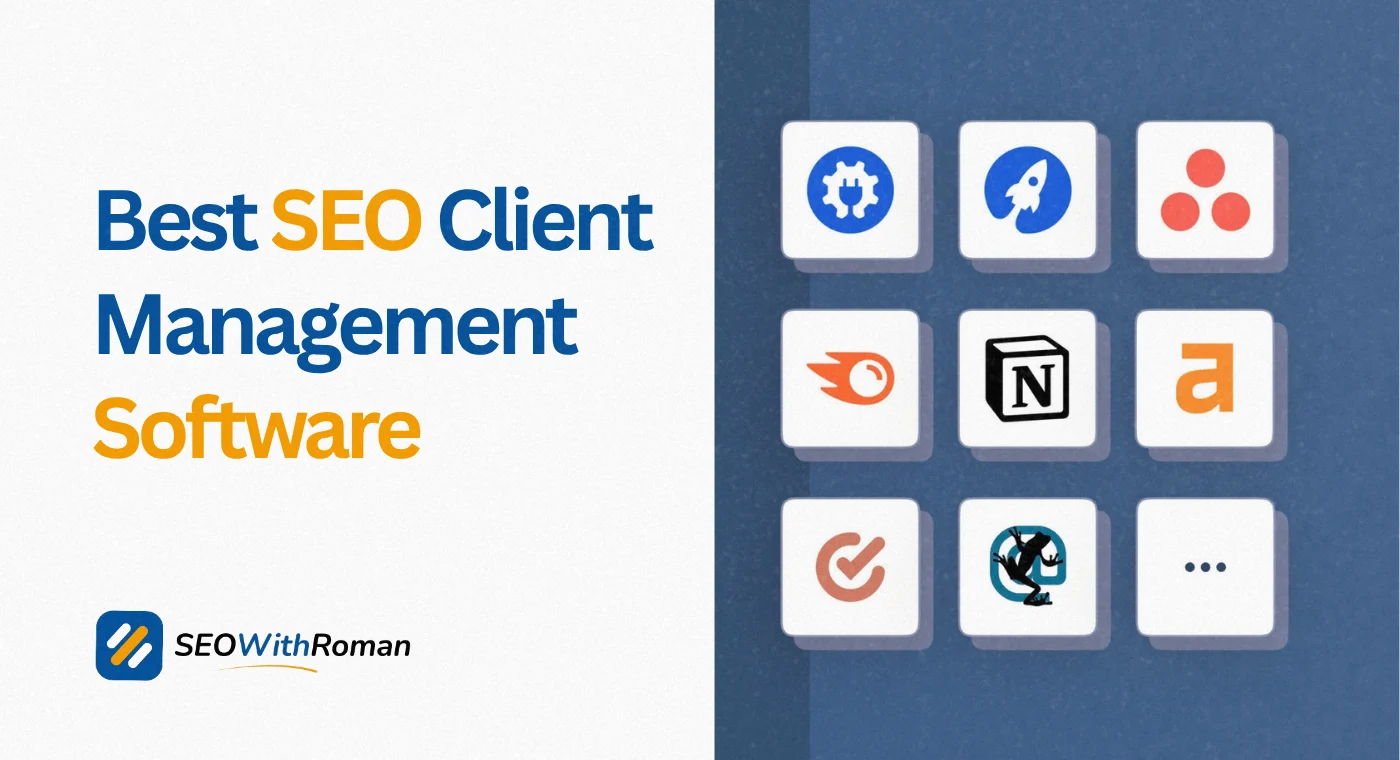
Here are the ten best SEO agency tools available right now, evaluated on features, pricing, ease of use, and real agency value:
1. AgencyAnalytics
AgencyAnalytics is the most popular dedicated SEO reporting and client management platform for small to mid-size agencies. It connects to over 80 data sources including Google Analytics, Google Search Console, Google Ads, Facebook, and more. Each client gets a branded dashboard with live data that updates automatically.
What makes it stand out for agencies is the white-label reporting. You set up your templates once and the platform sends branded PDF or live link reports to clients on whatever schedule you choose, weekly or monthly, with your logo and colours throughout. No manual work once the templates are built.
Best for: Agencies that prioritise professional client reporting and want to automate the most time-consuming part of client management.
Starting price: $59 per month for five clients.
2. SEMrush
SEMrush is the most comprehensive all-in-one SEO platform available. It covers keyword research, competitor analysis, technical site audits, rank tracking, backlink monitoring, and content optimisation in a single platform. For agencies, the Agency Growth Kit add-on adds white-label reporting, a lead generation widget, and a CRM for managing client proposals.
In my experience managing SEO campaigns for US and UK B2B clients, SEMrush delivers the deepest competitive intelligence of any platform. When a client asks why a competitor is outranking them, SEMrush is the tool that gives you the clearest answer.
Best for: Full-service SEO agencies that need research power, rank tracking, and reporting in one tool.
Starting price: $139 per month for the Pro plan.
3. Ahrefs
Ahrefs is the industry standard for backlink analysis and keyword research. Its Site Audit tool is one of the most thorough technical SEO crawlers available. For agencies managing link building campaigns, Ahrefs is indispensable. The Ahrefs for Agencies plan adds client access, project management features, and white-label reporting.
Best for: Agencies with a strong focus on backlink building, content gap analysis, and competitive keyword research.
Starting price: $129 per month.
4. SEOcrawl AI
SEOcrawl AI is a newer platform built specifically for agency operations. It combines rank tracking with no keyword cap, automated GSC and GA4 reporting, site monitoring, AI visibility tracking across ChatGPT, Claude, Gemini, and Perplexity, and a built-in task manager, all under a white-label domain your clients log into at seo.youragency.com.
The AI visibility tracking is what separates it from older platforms. As clients start asking about their brand presence in AI search engines, SEOcrawl AI is one of the only platforms that tracks this and delivers it in a client-ready format.
Best for: Forward-thinking agencies that want to include AI search visibility alongside traditional SEO in their client deliverables.
Starting price: €199 per month for the Pro plan with full white-label.
5. ClickUp
ClickUp is the most flexible project management tool available and one of the most popular SEO agency tools for internal team management. You can build custom SEO workflows, create client-specific task lists, set recurring tasks for monthly deliverables, assign work to team members, and track deadlines all in one place.
ClickUp does not handle client-facing reporting or rank tracking on its own. But as the internal operations layer of an agency stack, it is difficult to beat at its price point.
Best for: Agencies that need powerful internal task management and want to build custom SEO workflows.
Starting price: $7 per user per month.
6. Teamwork.com
Teamwork.com is built specifically for client-facing agencies. It includes time tracking, task management, client access portals, billing integration, and project dashboards in one platform. The time tracking feature integrates directly with invoicing, so billable hours convert to invoices without any manual data entry.
Best for: Multi-client agencies that bill by the hour and need time tracking connected to project management and client billing.
Starting price: $10.99 per user per month.
7. Assembly
Assembly is a client portal and CRM focused on post-sales client management. It brings communication, billing, contracts, and project updates into a branded client portal. Clients log in to see their invoices, deliverables, and project status without emailing your team for updates.
The AI Assistant feature pulls together all client notes, message history, and files into a single summary view before client calls, saving significant prep time for account managers.
Best for: Agencies focused on client experience and retention who want a professional branded portal for all post-sales communication.
Starting price: $29 per month.
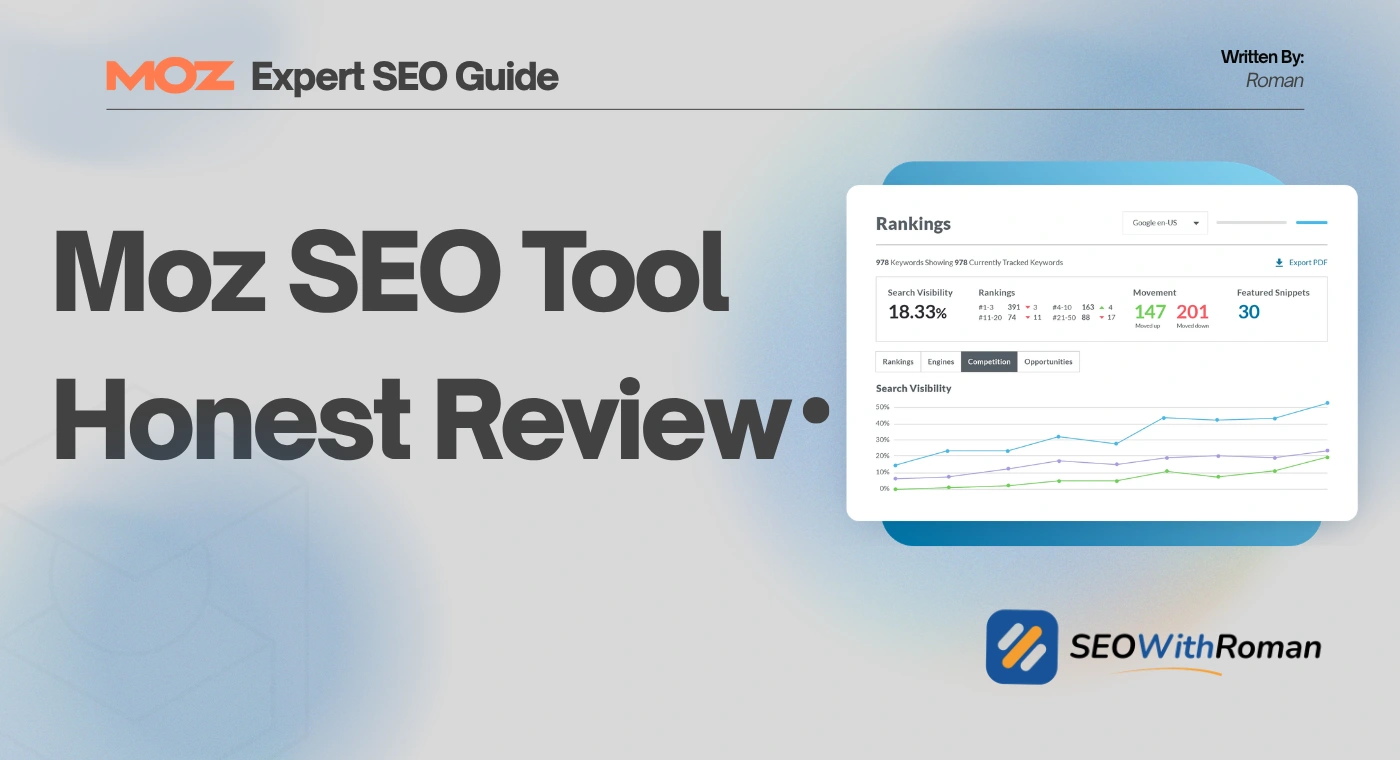
8. Moz Pro
Moz Pro is one of the original SEO management platforms and remains one of the most beginner-friendly options available. Its keyword explorer, rank tracker, site audit tool, and link explorer cover all the core SEO functions an agency needs. The reporting features are solid but less automated than AgencyAnalytics.
Best for: Agencies new to SEO management software looking for a well-established platform with strong educational support.
Starting price: $99 per month.
9. BrightLocal
BrightLocal is the dominant platform for agencies specialising in local SEO. It handles local rank tracking, Google Business Profile management, citation building, review monitoring, and local SEO reporting all in one place. If your agency works with restaurants, dentists, law firms, or any local service business, BrightLocal is purpose-built for that work.
Best for: Agencies with a local SEO focus managing multiple business locations and Google Business Profile accounts.
Starting price: $29 per month.
10. Wrike
Wrike is an enterprise-grade project management platform that handles complex multi-client SEO operations. Its custom dashboards, advanced reporting, resource management, and automation capabilities make it ideal for larger agencies with multiple departments and teams. It is more complex to set up than ClickUp but offers deeper customisation for large-scale operations.
Best for: Large SEO agencies with 20 or more clients and multiple internal teams needing advanced workflow automation.
Starting price: $10 per user per month.
4 Top 10 SEO Software Tools Every Agency Should Know
Beyond client management platforms, every SEO agency needs a core set of SEO research and execution tools. Here are the ten essential tools that belong in every agency’s toolkit:
| Tool | Primary Function | Best For | Free Version |
|---|---|---|---|
| Ahrefs | Backlink analysis, keyword research, site audit | Link building and content gap analysis | Limited free tools available |
| SEMrush | All-in-one SEO research and monitoring | Full-service SEO campaigns | Free trial available |
| Google Search Console | Indexing, crawl errors, search performance | Every website, non-negotiable | Completely free |
| Google Analytics 4 | Traffic analysis, conversion tracking | Understanding user behaviour | Completely free |
| Screaming Frog | Technical site crawling and audit | Technical SEO specialists | Free up to 500 URLs |
| Rank Math | On-page SEO optimisation for WordPress | WordPress website management | Free version available |
| Google Keyword Planner | Keyword volume and competition data | Keyword research for any niche | Completely free |
| Surfer SEO | Content optimisation and NLP analysis | Content-focused SEO agencies | Paid only |
| Majestic | Backlink quality analysis | Link profile assessment | Limited free data |
| Google PageSpeed Insights | Core Web Vitals and speed analysis | Technical SEO and performance | Completely free |
5 Is SEO Dead Now With AI? The Honest Answer for Agencies
This question comes up in almost every SEO conversation in 2026. The short answer is no. The slightly longer answer is that SEO is changing faster than it has in the past decade and agencies that adapt will grow significantly while those that ignore AI will lose clients.
Here is what is actually happening. Google’s AI Overviews, ChatGPT Search, Perplexity, and other AI search tools are changing how people find information. More queries are being answered directly in AI-generated summaries without the user clicking through to a website.
This does not make SEO irrelevant. It makes different aspects of SEO more important
What AI is changing:
- Informational queries are increasingly answered directly in AI search without a click
- Brand visibility in AI-generated answers is becoming a new ranking metric
- Content quality and genuine expertise matter more than ever because AI systems cite authoritative sources
- Traditional keyword targeting is expanding into Generative Engine Optimisation (GEO)
What AI is not changing:
- Businesses still need organic traffic from commercial and transactional searches
- Google still ranks websites and those rankings still drive significant click-through traffic
- Local searches, product comparisons, and service searches still resolve in traditional search results
- E-E-A-T has become more important, not less, as AI generates more content that lacks real expertise
The agencies winning in 2026 are the ones that track both traditional SEO rankings and AI brand visibility for their clients. Tools like SEOcrawl AI are built exactly for this dual tracking need.
SEO is not dead. It is expanding into a broader discipline that includes AI search optimisation alongside traditional search optimisation.
6 What Is the Best Client Management Software for SEO Agencies
The honest answer is that the best SEO client management software depends entirely on your agency’s size, service model, and what problem you need to solve first.
Here is a decision framework based on your specific situation
| Your Situation | Best Tool | Why |
|---|---|---|
| Small agency, under 10 clients, tight budget | Assembly or Plutio | Affordable, combines billing and client portals |
| Growing agency, 10 to 30 clients, need reporting automation | AgencyAnalytics | Built specifically for multi-client SEO reporting |
| Agency focused on local SEO clients | BrightLocal | Purpose-built for local rank tracking and GBP management |
| Full-service agency needing research plus management | SEMrush with Agency Kit | Best all-in-one research and reporting combination |
| Agency wanting to offer AI visibility to clients | SEOcrawl AI | Only platform tracking Share of Voice across five AI search engines |
| Large agency with complex internal workflows | Wrike or Teamwork.com | Enterprise-grade project management and resource planning |
| Freelancer or solo SEO consultant | Bonsai or HoneyBook | Simple billing, contracts, and client communication |
If I had to choose one platform for a growing SEO agency managing between 10 and 30 clients in the US and UK market, I would choose AgencyAnalytics for reporting combined with ClickUp for internal task management. This combination covers client-facing results and internal operations without overpaying for features you do not need at that stage.
7 Is SEO Paid or Free? Understanding the Real Cost of SEO
This is one of the most searched questions about SEO and the answer has two distinct parts.
The SEO process itself is free. Google does not charge you to rank your website. There is no fee to appear in organic search results. You cannot pay Google to place your website in the organic listings the way you pay for Google Ads.
The tools and expertise to do SEO effectively are not free. Here is what the actual cost of SEO looks like in practice:
| SEO Activity | DIY Cost | Agency Cost |
|---|---|---|
| Keyword research | Free with Google Keyword Planner | Included in agency retainer |
| On-page optimisation | Free with Rank Math plugin | $500 to $2,000 per month |
| Technical SEO audit | Free with Google Search Console | $500 to $3,000 one-time |
| Backlink building | Time-intensive, minimal tool cost | $1,000 to $5,000 per month |
| Content creation | Time cost only if writing yourself | $500 to $2,000 per month |
| SEO management software | $0 to $200/month depending on tools | Included in agency overhead |
| Full SEO retainer with an agency | Not applicable | $1,500 to $10,000 per month |
The reason most businesses hire SEO agencies instead of doing it themselves is not because DIY SEO is impossible. It is because effective SEO requires consistent time, technical knowledge, and access to data tools that most business owners do not have available alongside running their core business.
For a small business owner in the US or UK, a monthly SEO retainer between $1,500 and $3,000 is a realistic investment that should generate returns through organic traffic that replaces paid advertising spend over time.
8 How to Use SEO Client Management Software Effectively | Step by Step
Having the right SEO management tools is only half the equation. The other half is building a workflow that your team follows consistently. Here is the exact operational flow I recommend for agencies getting started with SEO client management software:
Step 1: Onboard every client with a standard intake process.
Create a client onboarding checklist in your project management tool. Every new client triggers the same tasks: connect Google Search Console, connect GA4, set up rank tracking for agreed keywords, configure site monitoring, and create the client portal login.
Step 2: Set up automated weekly rank tracking.
Configure your rank tracking to update daily and send a weekly summary to your internal team. This means you catch ranking movements before clients notice and can proactively communicate wins or address drops.
Step 3: Build automated monthly reports once, run forever.
Spend two hours building your white-label report template the first month. After that your reporting tool generates and sends it automatically on the same date every month. This is the single biggest time saving in agency operations.
Step 4: Use task management for every deliverable.
Every piece of work for every client lives as a task with an owner, a deadline, and a status. No deliverable should exist only in someone’s head or an email thread.
Step 5: Monitor sites proactively, not reactively.
Configure site monitoring to alert you immediately when a client’s page changes status, loses a canonical tag, or shows a significant traffic drop. You should always know about a problem before the client does.
Step 6: Review client health monthly before the report goes out.
Before each monthly report is sent, spend fifteen minutes reviewing the client’s ranking trends, traffic changes, and outstanding tasks. This gives you context to personalise the report and flag anything that needs a conversation.
9 3 Expert Tips for Managing SEO Clients More Effectively
Tip 1: Build your reporting template before you need it
Most agencies build client reports reactively, the night before a client call. Build your white-label report template during your first free week and never touch it again manually. Every hour you spend on reporting after that is an hour of agency overhead you can eliminate.
Tip 2: Never manage client expectations through email threads
Every client expectation, agreed deliverable, and timeline should live inside your client management platform as a documented record. Email threads get lost, misread, and disputed. A client portal with documented project milestones protects your agency and builds client trust simultaneously.
Tip 3: Track AI visibility alongside traditional rankings from day one
Clients in 2026 are starting to ask whether their brand appears in ChatGPT and Google’s AI Overviews. Agencies that can already show this data in their monthly reports have a meaningful competitive advantage over agencies still delivering traditional rank-only reports. Add AI visibility tracking to your stack now, before your competitors do.
10 Conclusion
SEO client management software is no longer optional for agencies that want to grow past ten clients without burning out their team. The right platform centralises your operations, automates your most time-consuming tasks, and gives your clients the transparency that builds long-term retention.
The best tool is always the one your team will actually use consistently. Start with AgencyAnalytics for reporting automation if client communication is your biggest pain point. Add ClickUp or Teamwork.com for internal task management if project coordination is the bottleneck. And if AI visibility is becoming a client conversation, add SEOcrawl AI to your stack before your competitors do.
SEO is not dying. It is evolving. The agencies that thrive in the next three years will be the ones that built the right operational systems today.
Found this guide useful? Drop a comment below and tell me which SEO client management software your agency is currently using. I read and reply to every one.
Join 1,000+ business owners and bloggers who get one actionable SEO tip every week — straight to their inbox. Free forever.
Get Free Weekly Tips →