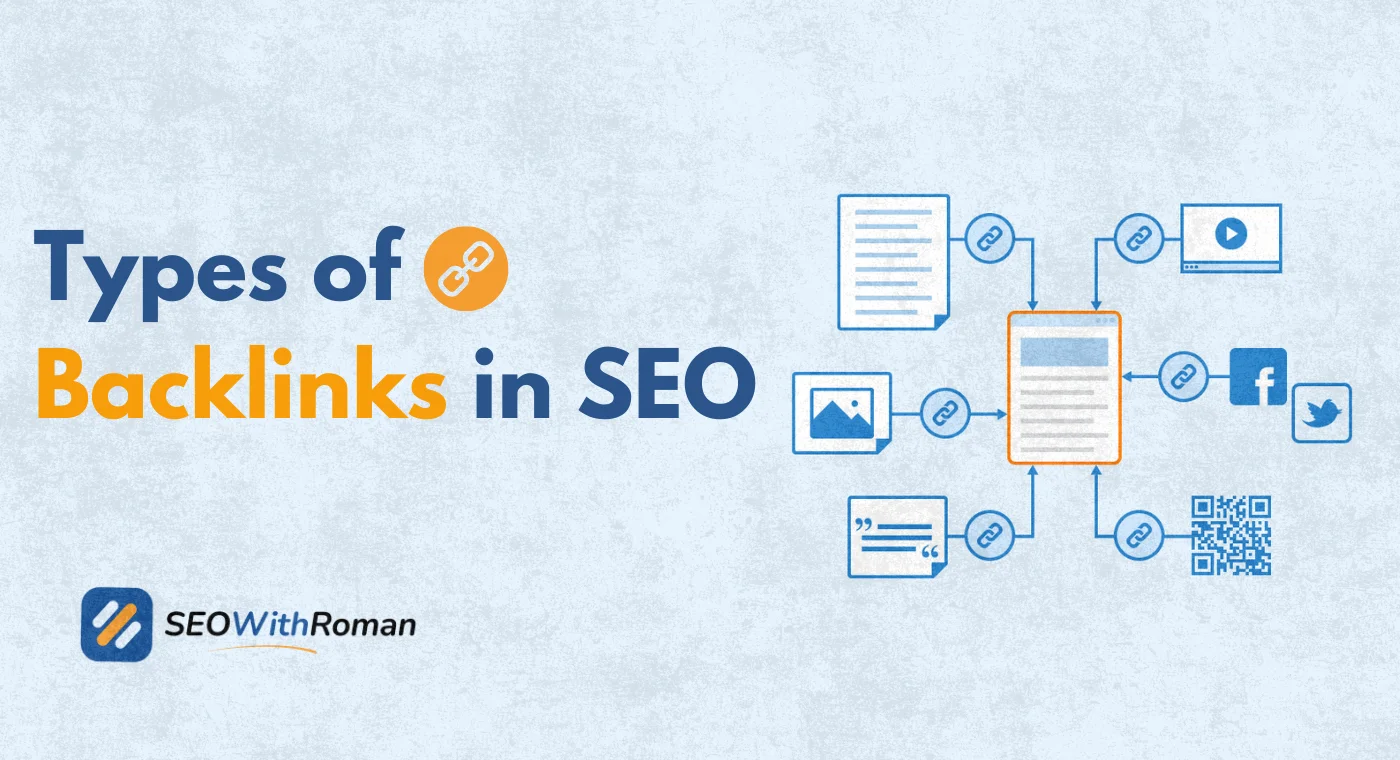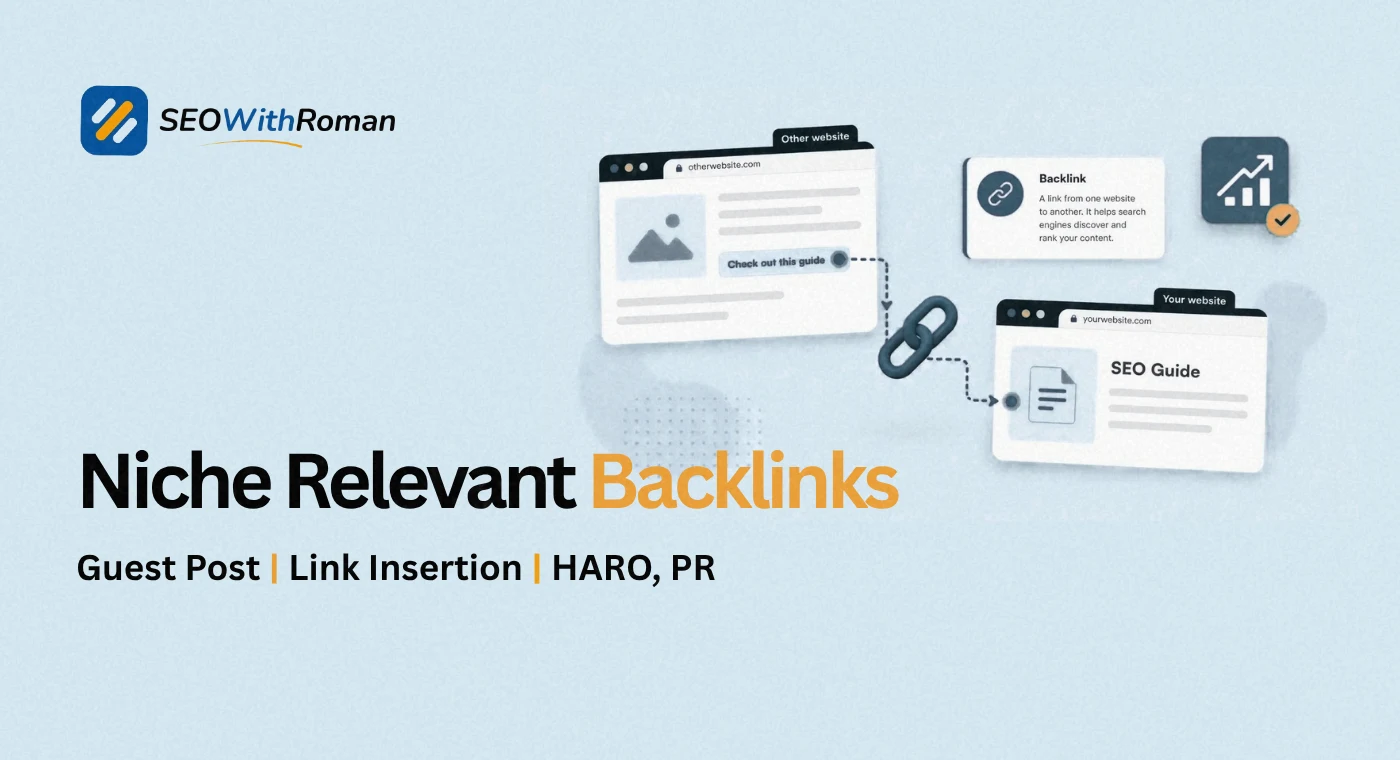
- Relevant backlinks are links from websites that operate in the same niche or topical ecosystem as your own site
- One contextual backlink from a topically relevant website consistently outperforms ten generic links from unrelated sites
- Google evaluates backlink relevance through keywords, anchor text, surrounding content, and the topical authority of the linking domain
- Niche relevant link building through guest posts, niche edits, and editorial backlinks are the three highest value strategies in 2026
- Your backlink profile should be a natural mix of relevant, authoritative, and contextual links, not a single type repeated at scale
1 What Are Relevant Backlinks and Why They Changed Everything About Link Building
For the first decade of modern SEO, the rule was simple. More backlinks meant higher rankings. Website owners chased quantity above everything else, buying links from directories, link farms, and private blog networks with no regard for whether those links made any logical sense.
Google changed that permanently
Today, a relevant backlink is worth more than fifty irrelevant ones. Not because Google said so in a blog post, but because that is what consistently moves rankings in every competitive niche I have worked in across six years of real client SEO.
A relevant backlink is a link pointing to your website from another website that covers the same or closely related topics. The connection between the two websites is what makes the link valuable. If you run an SEO blog and a marketing publication links to your article about keyword research, that is a relevant backlink. If a cryptocurrency forum links to the same article, that link carries almost no topical signal regardless of the domain authority behind it.
The reason relevance matters so much is rooted in how Google actually evaluates links. Google does not simply count the number of links pointing to your page. It analyses the topical context of the linking page, the keywords surrounding the link, the anchor text used, and the overall authority of the linking domain within your specific subject area.
A backlink embedded inside a relevant article on a trusted industry website tells Google two things simultaneously. First, that your content is credible enough for an established source in your niche to recommend it. Second, that your website belongs in the same topical conversation as the websites linking to you.
That combination of relevance and authority is what moves rankings in 2026
2 Relevant Backlinks vs High Authority Backlinks | Understanding the Real Difference
This is the debate that confuses most beginners and costs experienced SEOs real money when they get it wrong.
Domain Rating, Domain Authority, and similar metrics are measures of how many high quality links point to an entire website. They tell you how strong that domain is globally. What they do not tell you is whether that domain's content has anything to do with your niche.
A website with a Domain Rating of 80 that covers random lifestyle topics is not necessarily a better backlink source for your SEO blog than a website with a Domain Rating of 35 that publishes exclusively about digital marketing. The lower authority site in your niche will often deliver stronger ranking improvements because of topical relevance.
| Factor | High Authority Generic Link | Niche Relevant Backlink |
|---|---|---|
| Domain Rating | High, typically 60 plus | Moderate, 30 to 60 is acceptable |
| Topical match | None or weak | Strong, same or adjacent niche |
| Anchor text context | Surrounded by unrelated content | Surrounded by topically matching keywords |
| Traffic quality | High volume but wrong audience | Lower volume but exact target audience |
| Google trust signal | Domain authority only | Domain authority plus topical relevance |
| Ranking impact | Moderate, authority passes but context is missing | High, authority and topical signal both pass |
| Long term value | Can decay if site changes topic | Stable as long as content stays live |
| Best use case | Brand awareness, general authority | Targeted keyword ranking improvement |
The ideal backlink combines both. A high authority website in your niche that links to your content with relevant anchor text is the most powerful link you can earn. But when forced to choose, topical relevance should take priority over domain authority for niche ranking goals.
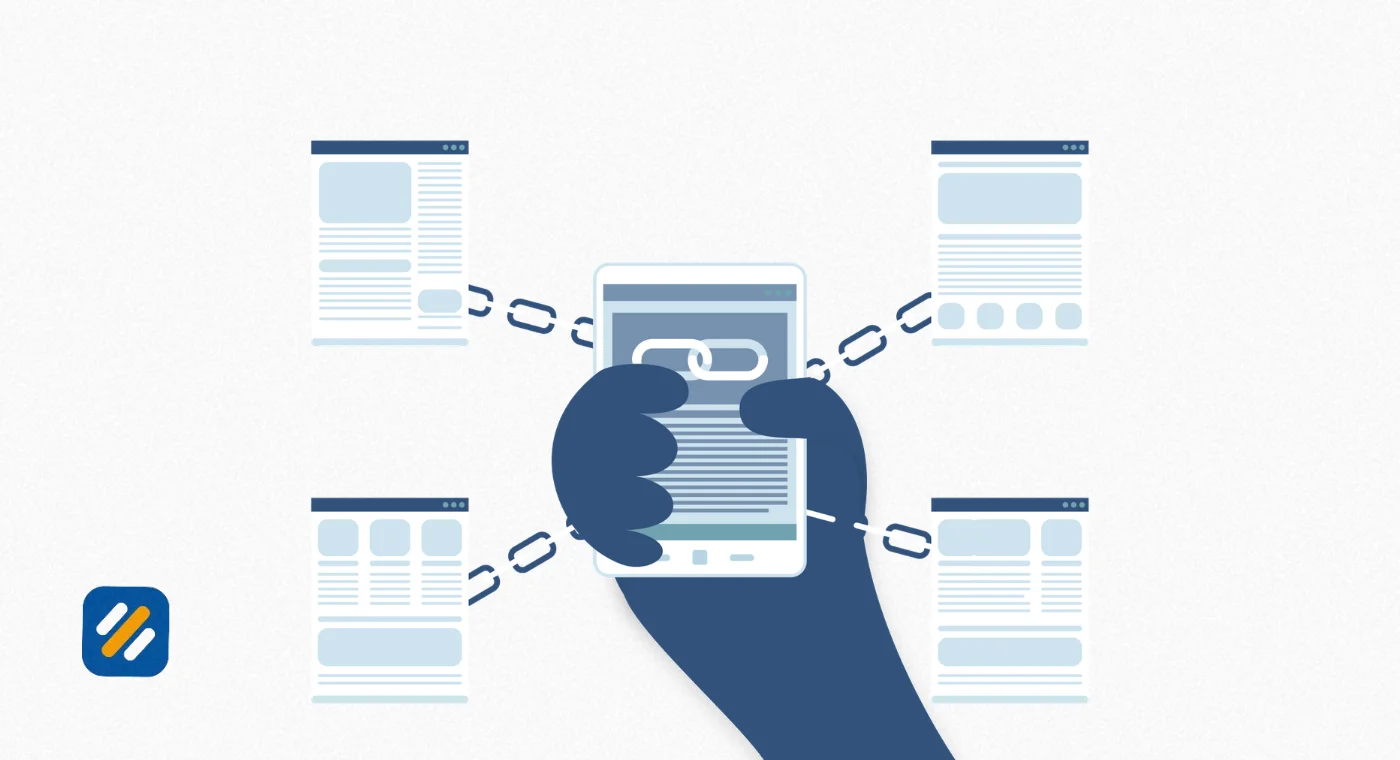
3 How Google Measures Backlink Relevance | The Four Signals That Matter
Understanding how Google actually measures relevance changes how you approach every link building campaign. There are four signals Google analyses when evaluating whether a backlink is relevant:
Signal 1: Page-Level Topical Match
The page linking to you must cover content related to your page's topic. If an article about content marketing strategy links to your guide on SEO keyword research, there is a clear topical connection. If an article about home renovation links to the same guide, there is none. Google reads the full content of both pages and assesses the thematic overlap between them.
Signal 2: Anchor Text and Surrounding Context
The anchor text is the clickable words used in the link. Google treats anchor text as a direct relevance signal, which is why exact-match anchor text is powerful but overusing it triggers spam filters. The words surrounding the link, called the co-citation context, matter almost as much as the anchor text itself. A link with anchor text "keyword research" surrounded by sentences about SEO strategy and Google rankings carries far more relevance than the same anchor text sitting in a paragraph about cooking recipes.
Signal 3: Domain-Level Topical Authority
Google does not just look at the linking page. It evaluates the entire linking domain's topical focus. A website that publishes 200 articles all about digital marketing and SEO has strong topical authority in that space. A link from that domain to your SEO article carries significant weight. A website that publishes articles on fifty unrelated topics has weak topical authority in any single area, which dilutes the relevance signal of any individual link it produces.
Signal 4: Link Placement Within Content
Where a link appears on a page matters. A link embedded naturally within the body text of an article, contextual backlinks, carries more weight than a link in a footer, sidebar, or link list. Google understands that editorial contextual links within body content represent a genuine recommendation. Links placed in navigation or author profiles carry far less topical signal.
4 The 5 Most Effective Ways to Build Niche Relevant Backlinks in 2026
These are the strategies that consistently produce results in competitive niches. Each one is ranked by the quality of the links it typically produces, not by how easy it is to execute.
Strategy 1: Guest Posting on Niche Publications
Guest posting remains one of the most reliable ways to earn editorial backlinks from topically relevant websites. You write a high quality article for a website in your niche and include a contextual link back to your own content within the article.
The key to making guest posting work in 2026 is targeting genuine editorial publications rather than websites that exist primarily to sell guest post placements. Google has become sophisticated at identifying guest post farms, websites that publish dozens of contributed articles per week with no editorial standards, and devaluing the links they produce.
A guest post on a website with real traffic, real editorial standards, and genuine audience engagement in your niche is worth ten placements on low-quality guest post farms.
Strategy 2: Niche Edits and Link Insertions
Niche edits, also called link insertions or niche insertions, involve finding existing articles on relevant websites that are already ranking and asking the website owner to insert a link to your content within the existing article.
This strategy produces some of the highest quality relevant backlinks available because the linking page already has established authority, existing backlinks pointing to it, and proven search traffic. Your link inherits the relevance and authority of a page Google already trusts.
Finding niche edit opportunities requires either direct outreach to website owners or identifying broken links on relevant pages and offering your content as a replacement.
Strategy 3: Competitor Backlink Analysis and Replication
One of the fastest ways to build a relevant backlink profile is to systematically identify where your competitors are getting their best links and pursue the same sources.
Use Ahrefs or Semrush to export the backlink profiles of three to five competitors ranking above you for your target keywords. Filter the list to show only links from websites with strong topical relevance to your niche. Every relevant website on that list is a proven opportunity because someone in your space already earned a link there.
Strategy 4: Digital PR and Expert Contributions
When journalists and content creators publish articles in your niche and need an expert quote or data source, they naturally include a link back to that expert's website. These editorial backlinks from media publications are among the most authoritative and topically relevant links you can earn because they are placed by real editors making genuine editorial decisions.
Platforms like Help a Reporter Out (HARO), Qwoted, and SourceBottle connect you with journalists actively seeking expert sources. Responding consistently to relevant queries in your niche builds both links and E-E-A-T signals simultaneously.
Strategy 5: Original Research and Linkable Asset Creation
Publishing original research, data studies, or comprehensive resource guides gives other websites in your niche a reason to link to you without being asked. When you publish data that nobody else has, you become a primary source that journalists, bloggers, and content creators in your industry naturally reference.
This is the most scalable long-term link building strategy available because the links accumulate passively after the initial content is published. One well-researched industry study can generate relevant backlinks for years.
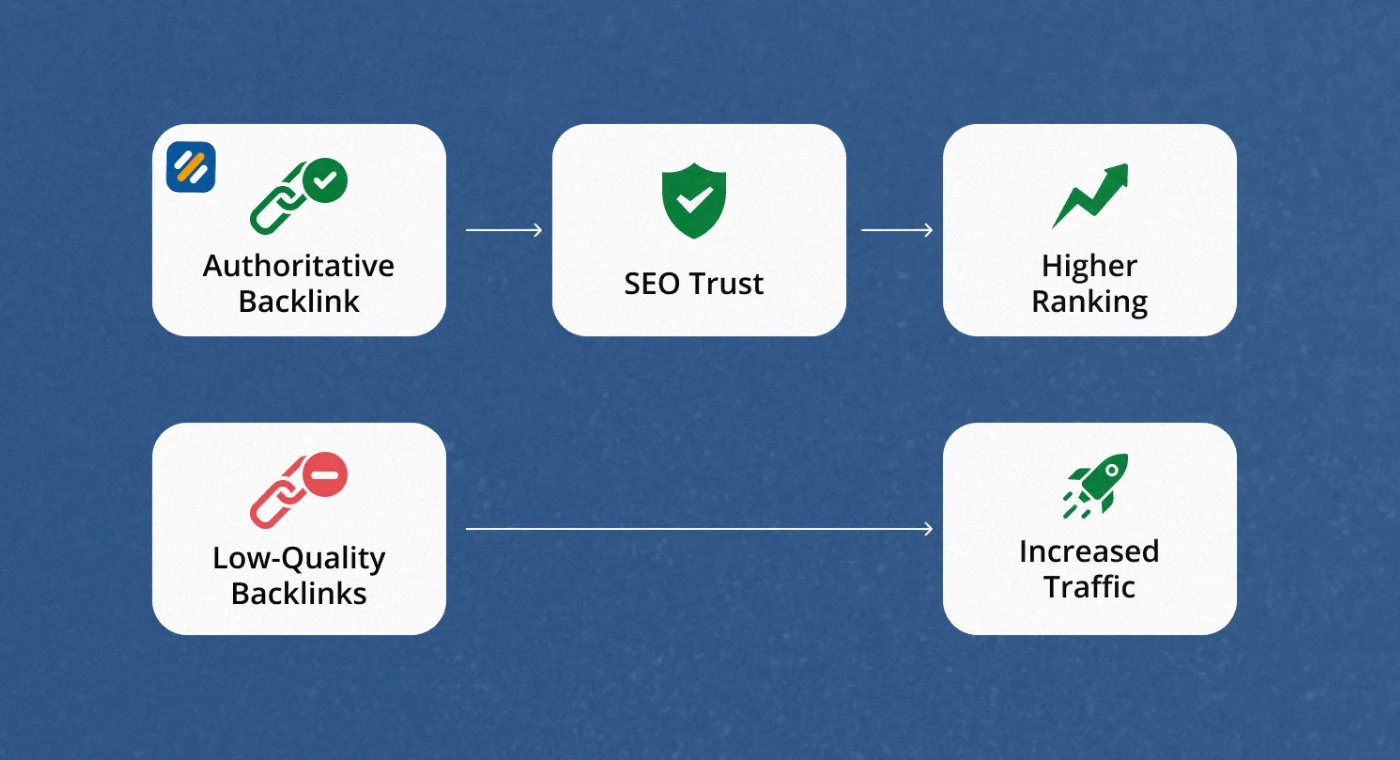
5 How to Find Relevant Websites for Backlinks | Step by Step
Finding the right websites to target for relevant link building is where most beginners waste the most time. Here is the exact process I use when building a prospect list for a new campaign:
Step 1: Define your topical ecosystem
Before searching for websites, map out the topics that are adjacent to your niche. An SEO blog's topical ecosystem includes digital marketing, content marketing, business growth, and entrepreneurship. These adjacent topics represent websites that are relevant enough to produce valuable backlinks even when they do not focus exclusively on SEO.
Step 2: Use Google search operators to find niche publications
Search operators let you find specific types of websites that accept contributions or publish content in your niche. Useful search queries include:
- your keyword + "write for us"
- your keyword + "guest post guidelines"
- your keyword + "submit an article"
- your keyword + "contributor"
- intitle:your keyword "resources"
Each of these uncovers a different type of relevant link opportunity from websites actively welcoming contributions.
Step 3: Run competitor backlink gap analysis
Open Ahrefs Link Intersect or Semrush's Backlink Gap tool. Enter three to four of your direct competitors. The tool shows you every website linking to them that does not currently link to you. Filter results by Domain Rating above 30 and sort by the number of competitors that share each linking domain. Websites linking to multiple competitors in your niche are the highest priority targets.
Step 4: Evaluate each opportunity for genuine relevance
Before adding a website to your outreach list, check three things. Does the website publish content about your topic or adjacent topics? Does it have real organic traffic from Google according to Ahrefs or Semrush? And does it look like a real website with a real audience rather than a link farm or private blog network?
Step 5: Build your outreach list and personalise every pitch
Generic outreach emails get ignored. A personalised pitch that references a specific article on the target website, explains exactly where your link fits within their existing content, and demonstrates that you have read their site gets responses. Quality of outreach beats volume every single time.
6 What Is Topical Relevance and Why It Is Now More Important Than Domain Authority
Topical relevance is the degree to which your website and a linking website share the same subject matter. It is a concept that has become increasingly central to how Google evaluates backlink quality as its algorithms have become more sophisticated at understanding content at a semantic level.
Google's understanding of the web has evolved from keyword matching to entity recognition and topic modelling. Modern Google does not just see keywords. It understands that "keyword research," "search volume," "keyword difficulty," and "search intent" all belong to the same topical cluster around SEO. A website that consistently publishes content across all of these related topics builds what SEOs call topical authority.
When a website with strong topical authority in your niche links to your content, it passes both domain authority and topical authority to your page. This combination is what produces the sustained ranking improvements that generic high authority links from unrelated sites fail to deliver.
In practical terms, this means that a link from a dedicated SEO publication with a Domain Rating of 45 will typically do more for your SEO article's rankings than a link from a general news site with a Domain Rating of 75 that happens to have published one article loosely related to digital marketing.
Building topically relevant backlinks is not just a link building strategy. It is a topical authority building strategy that signals to Google that your website belongs in conversations about your niche.
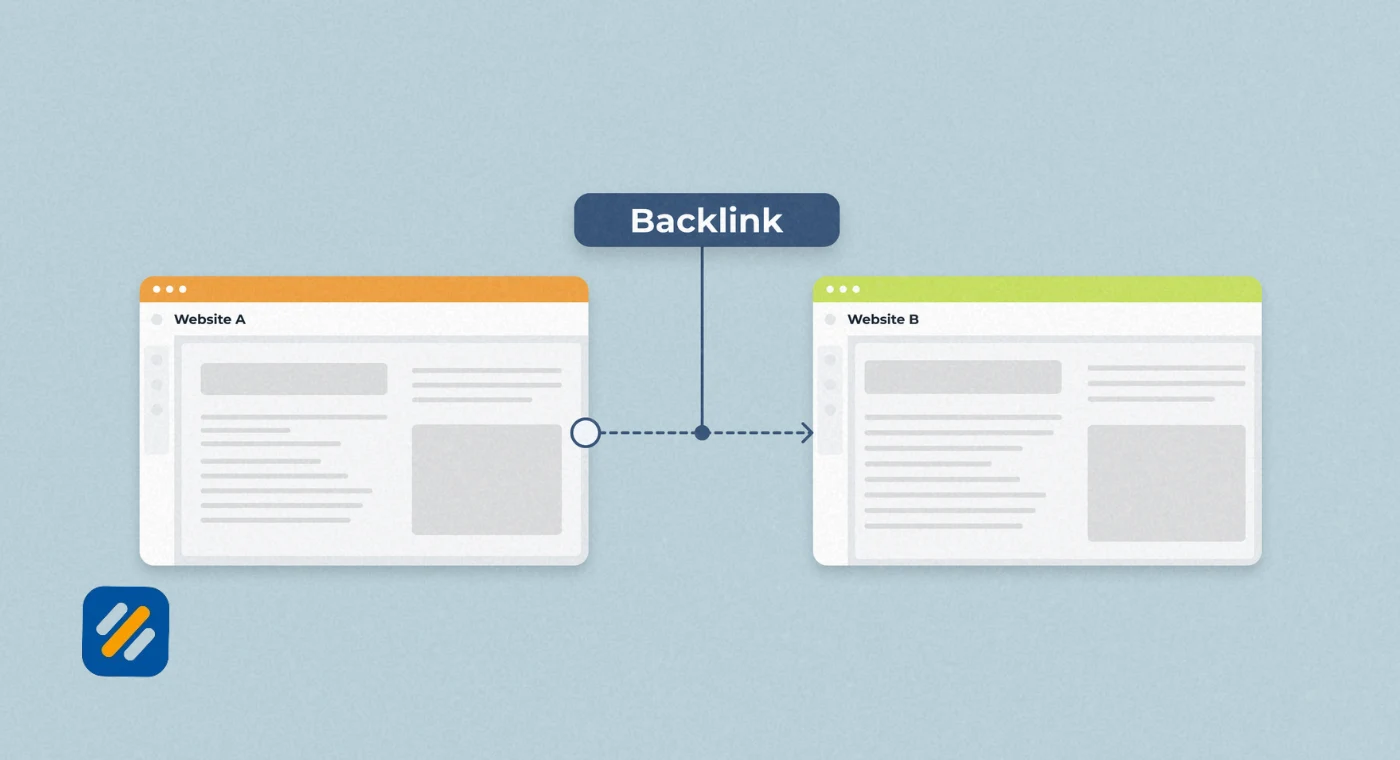
7 Relevant Backlinks vs Contextual Backlinks | Are They the Same Thing
These terms are often used interchangeably but they describe slightly different qualities of the same link.
A relevant backlink refers to the topical connection between the linking site and your site. It answers the question: is this link from a related niche?
A contextual backlink refers to where within a page the link is placed. It answers the question: is this link embedded naturally within body content?
The strongest links are both relevant and contextual. They come from websites in your niche and they appear within the body text of real editorial content, surrounded by topically related keywords, with natural anchor text.
| Link Type | Topical Relevance | Placement Quality | Overall SEO Value |
|---|---|---|---|
| Contextual and relevant | Same niche, embedded in body content | Highest | Highest |
| Relevant but not contextual | Same niche, placed in sidebar or footer | High relevance, low placement quality | Medium |
| Contextual but not relevant | Different niche, embedded in body content | Good placement, weak relevance | Medium |
| Neither contextual nor relevant | Different niche, footer or directory | Low on both signals | Low |
| Editorial backlinks | Same niche, placed by real editor | Highest possible on both signals | Highest |
The goal of every relevant link building campaign should be to accumulate links in the top two rows of this table. Everything else is a compromise.
8 How to Evaluate the Quality of a Relevant Backlink Before You Pursue It
Not every website in your niche deserves your outreach effort. Before investing time in pursuing a link placement, run through this evaluation checklist:
Check organic traffic in Ahrefs or Semrush. A website with declining organic traffic is losing Google's trust. A link from a site in traffic freefall passes less and less authority over time. Look for consistent or growing traffic trends, not a single month of high numbers.
Check the website's topical focus. Open the website and read ten recent articles. Are they all closely related to your niche? Or is the website publishing articles on ten different unrelated topics? A website that tries to cover everything builds topical authority in nothing.
Check the website's own backlink profile. A relevant website that earns its own links from other reputable niche sites has genuine authority in your topic area. A relevant website whose backlinks all come from link farms and private blog networks does not, regardless of its Domain Rating score.
Check the quality of the content published. Would you read this website to learn something? Does it publish original insights or just reworded versions of what everyone else has already written? Websites that produce genuinely useful content attract real audiences and genuine links. Websites that produce low quality content attract neither.
Check how recently the website was updated. An abandoned website that has not published new content in eighteen months is declining in Google's estimation. A link from a dormant website carries less value than the same link from an active, regularly updated publication.
9 3 Expert Tips for Building Relevant Backlinks That Most Guides Skip
These are the insights that come from years of real campaign work, not from reading other guides and summarising them.
Expert Tip 1: Target the Linking Page, Not Just the Linking Domain
Most beginners focus entirely on a website's Domain Rating when evaluating a backlink opportunity. Experienced link builders focus on the specific page that will contain the link. A page with its own strong backlink profile, real organic traffic, and established rankings passes significantly more authority than a new page on the same high-DR domain. When pursuing niche edits or link insertions, always check the individual page's metrics in addition to the domain-level metrics.
Expert Tip 2: Build Topical Clusters Before Pursuing External Links
The fastest way to improve the value of every relevant backlink you earn is to make your own website more topically authoritative before you start outreach. If your website has ten articles all covering different aspects of SEO for beginners, every backlink you earn to any one of those articles benefits your entire topical cluster. Internal linking connects the authority across your content so that one strong backlink lifts multiple pages. Build your internal content depth first, then pursue external links.
Expert Tip 3: Use Unlinked Brand Mentions as Your Easiest First Wins
Before building new relevant backlinks from scratch, search for places that have already mentioned your brand, website, or content without linking to you. These unlinked mentions are the warmest possible outreach targets because the website owner already thinks enough of you to reference you. A simple, polite email asking them to turn the mention into a link converts at a far higher rate than cold outreach to websites that have never heard of you. Use Google Alerts or Ahrefs Content Explorer to monitor for new mentions as they appear.
10 Conclusion
Relevant backlinks are not just a ranking tactic. They are how Google understands which websites belong in the expert conversation around any given topic. Every relevant, contextual, editorial backlink you earn is a signal that your website deserves to be trusted within your niche.
The websites that dominate search results in competitive industries are not the ones with the most backlinks. They are the ones with the most relevant backlinks from the most credible sources in their space.
Build your link profile the right way. Target websites in your topical ecosystem. Create content worth linking to. Do personalised outreach that offers real value to the editor and their audience. And prioritise relevance over raw authority metrics every single time.
One genuinely relevant link from a trusted niche publication will do more for your rankings than fifty generic links from unrelated directories. That is not an opinion. It is what many years of building real campaigns on real websites consistently shows.
Have a question about building relevant backlinks for your specific niche? Drop a comment below and I will answer it personally.
Join 1,000+ business owners and bloggers who get one actionable SEO tip every week — straight to their inbox. Free forever.
Get Free Weekly Tips →