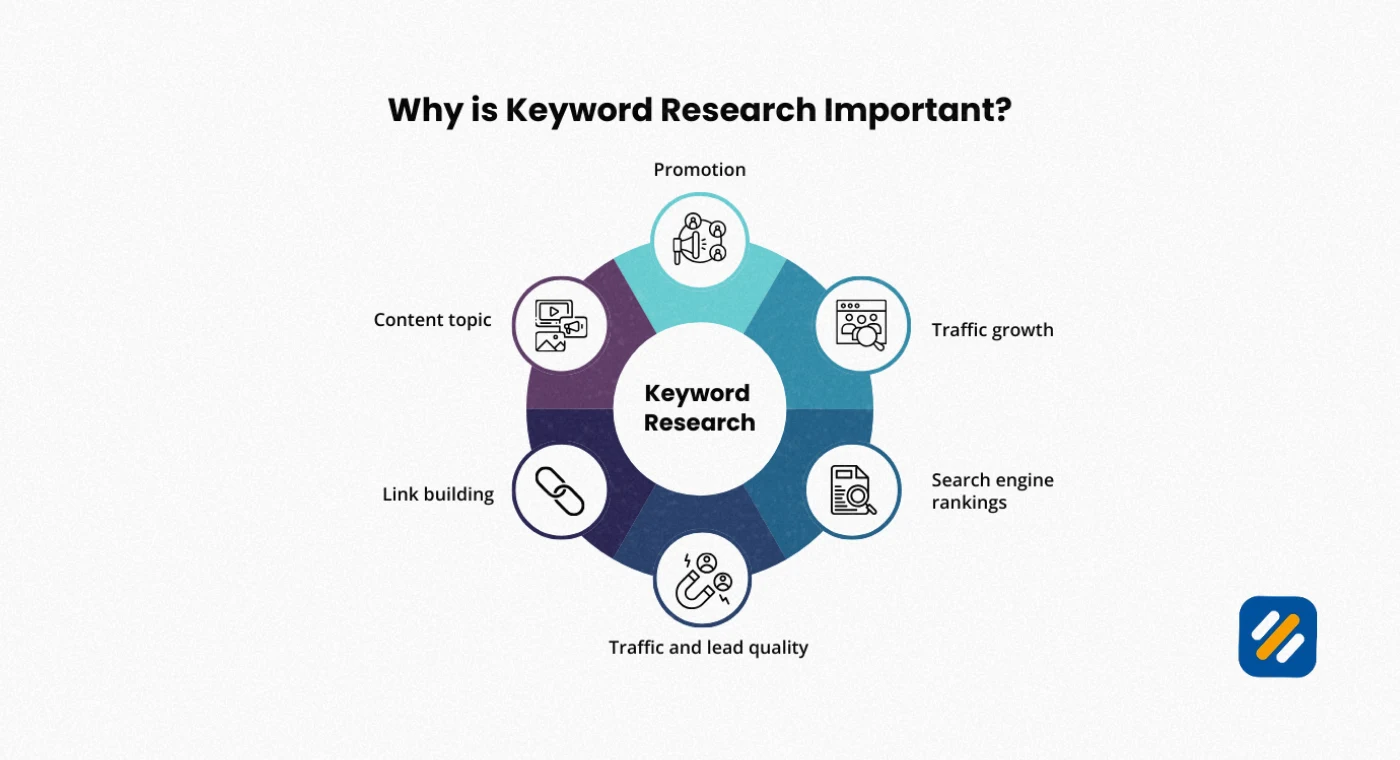
- Keyword research is the foundation of every SEO strategy, without it you are guessing what your audience wants
- SaaS keyword research requires a unique approach focused on pain points, feature comparisons, and bottom-of-funnel buying intent
- You can do effective keyword research for free using Google Keyword Planner, Google Search Console, and AI tools like Claude and ChatGPT
- The top keyword research tools in 2026 include Ahrefs, SEMrush, Moz, Ubersuggest, and Google Keyword Planner
- Long-tail keywords with low difficulty and clear search intent consistently outperform high-volume generic keywords for new and growing websites
1 What Is Keyword Research and Why Every Website Needs It Before Writing a Single Word
Keyword research is the process of identifying the exact words and phrases your target audience types into Google when they are looking for something you offer. It tells you what to write, how to structure it, and whether ranking for a topic is even realistic for your website right now.
Here is the honest version that most guides skip. Writing content without keyword research is the single biggest reason most websites get zero organic traffic. You might write ten excellent articles on topics you care about deeply, and if nobody is searching for those exact phrases, none of them will ever bring a visitor from Google.
I have audited dozens of websites over many years of doing SEO professionally. The pattern is always the same. Websites that do keyword research before writing consistently outrank websites that do not, even when the non-researched content is technically better written.
Keyword research answers four questions before you write a single word
- Is anyone actually searching for this topic?
- How competitive is it to rank for this keyword?
- What does the person searching for this actually want to find?
- Which specific phrase should I target to give my page the best chance of ranking?
Without those four answers, every article you publish is a gamble. With them, every article is a calculated investment.
2 The Anatomy of a Keyword | What Every Beginner Must Understand
Before jumping into tools and processes, you need to understand the properties that make one keyword better than another. Not all keywords are equal. Choosing the wrong ones can waste months of content work.
Search Volume is the average number of times a keyword is searched per month in a specific location. A keyword searched 5,000 times per month sounds attractive until you see the competition. For a new website, a keyword searched 200 times per month with low competition is worth ten times more than a keyword searched 50,000 times that you have zero chance of ranking for.
Keyword Difficulty is a score, usually from 0 to 100, that estimates how hard it is to rank in the top 10 for a keyword. Tools like Ahrefs and SEMrush calculate this based on the authority of the pages currently ranking. For a new website, target keywords with a difficulty score under 20. For a growing website with some domain authority, keywords up to 40 are realistic.
Search Intent is the most important factor that most beginners completely ignore. Search intent means the underlying reason behind a search query. What does the person actually want when they type this phrase into Google? There are four types:
Informational: The person wants to learn something. Example: “what is keyword research”
Navigational: The person is looking for a specific website. Example: “Ahrefs login”
Commercial: The person is comparing options before buying. Example: “best keyword research tool”
Transactional: The person is ready to buy or sign up. Example: “buy Ahrefs subscription”
Matching your content format to the search intent of your target keyword is one of the most reliable ways to improve your rankings faster than any other on-page tactic.
Long-Tail Keywords are longer, more specific phrases with lower search volume but higher conversion potential. “Keyword research” is a head keyword. “How to do keyword research for a SaaS website for free” is a long-tail keyword. Long-tail keywords are where new websites win their first rankings and where serious conversion traffic comes from.
3 Keyword Research for SaaS Websites | Why It Is Completely Different
Keyword research for a SaaS-based website is a fundamentally different exercise than keyword research for a blog or ecommerce store. Most general keyword research guides miss this entirely.
SaaS buyers search differently. They are not browsing. They are solving a specific business problem and they move through a clear decision journey before they sign up for anything.
Understanding that journey is the starting point of every successful SaaS keyword strategy.
Top of Funnel: Problem Awareness Keywords
These are the keywords your potential customers search when they first realise they have a problem but do not yet know what solution exists. For a project management SaaS, top of funnel keywords look like:
- “how to manage remote teams”
- “why is my team missing deadlines”
- “how to improve team productivity”
These keywords have high search volume but low buyer intent. They attract future customers who are not ready to sign up yet. Content targeting these keywords builds brand awareness and topical authority.
Middle of Funnel: Solution Awareness Keywords
These are searches from people who know a category of solution exists and are learning more about it. Examples:
- “best project management software”
- “what is project management software”
- “how does project management software work”
These keywords have strong commercial intent. The searcher is actively considering your category of product.
Bottom of Funnel: Decision Keywords
These are the highest value keywords in any SaaS keyword strategy. The searcher is ready to choose. Examples:
- “Asana vs Monday.com”
- “best Trello alternative for small teams”
- “ClickUp pricing 2026”
- “free project management software trial”
Bottom of funnel keywords often have lower search volume but conversion rates that are ten to twenty times higher than top of funnel keywords. Every SaaS website should have dedicated content targeting these decision-stage queries.
| SaaS Funnel Stage | Keyword Type | Search Intent | Content Format | Conversion Potential |
|---|---|---|---|---|
| Top of Funnel | Problem keywords | Informational | Blog guides, how-to articles | Low, long-term nurture |
| Middle of Funnel | Category keywords | Commercial | Comparison pages, feature guides | Medium |
| Bottom of Funnel | Decision keywords | Transactional | Alternative pages, pricing pages, case studies | Very high |
| Local or niche | Geo or industry specific | Mixed | Landing pages, localised content | High when relevant |
4 Can You Do Keyword Research for Free? Yes | Here Is Exactly How
The honest answer is yes. You can build a complete keyword strategy without spending a single dollar, and for a new website or a SaaS in its early growth stage, free tools are more than sufficient.
Here are the best free methods ranked by effectiveness
Google Search Console is the most underused free keyword research tool available. If your site has been live for more than a month, GSC shows you exactly which queries are already bringing impressions to your pages. Go to Performance, then Search Results, and look at the Queries tab. Every keyword showing impressions but low clicks is an optimisation opportunity. Every keyword ranking between positions 8 and 20 is a ranking you can push to page one with targeted content improvements.
Google Keyword Planner gives you search volume data directly from Google’s own database. It was designed for Google Ads but works perfectly for SEO keyword research. Enter a seed topic, set your target location to US or UK, and export the keyword suggestions with their volume ranges. Filter by low competition and at least 100 monthly searches.
Google Autocomplete and People Also Ask are completely free and consistently surface keywords that paid tools miss. Type your seed keyword into Google and note every autocomplete suggestion. Then scroll to the People Also Ask section and expand every question. Each one is a real search query with a clear search intent already defined for you.
AI Tools including Claude AI and ChatGPT have become genuinely useful for keyword discovery. Ask Claude to generate 20 long-tail keyword variations for your topic written from the perspective of your target customer. The output surfaces natural language queries that match how real people search, not how industry insiders phrase things.
Ahrefs Free Webmaster Tools gives any verified website owner access to their own keyword rankings, backlink data, and site health reports at no cost. It is one of the most underrated free tools in SEO.
5 How to Create SEO Keywords | The Step by Step Process
Creating your SEO keyword list is not a single action. It is a six-step process that moves from broad ideas to specific, validated, prioritised keywords ready to assign to content.
Step 1: Start With Seed Topics
Write down the five to ten broad topics your website covers. For a SaaS project management tool, seed topics might be: project management, team collaboration, task tracking, remote work productivity, team communication. These are not your final keywords. They are your research starting points.
Step 2: Expand With Google Suggestions
Type each seed topic into Google and record every autocomplete suggestion. Then check the People Also Ask questions and the related searches at the bottom of the results page. You will typically find thirty to fifty keyword ideas per seed topic this way.
Step 3: Run Competitor Analysis
Find two to three websites ranking in your niche. Enter each competitor URL into SEMrush free version or Ahrefs free tools and look at their top organic keywords. Filter for keywords with high search volume and difficulty under 30. These are proven keywords that Google is already rewarding in your niche.
Step 4: Validate Volume and Difficulty
Take your shortlisted keywords into Google Keyword Planner to confirm search volume. Then use SEMrush free version or Ahrefs free keyword checker to get a difficulty score. For a new website, eliminate any keyword with difficulty above 25. For a growing website, anything under 40 is worth considering.
Step 5: Analyse Search Intent
Google your top keywords one by one. Look at what format the top three results use. Are they listicles, how-to guides, comparison pages, or definition articles? That format is what Google considers the right answer for that query. Your content must match it.
Step 6: Assign One Primary Keyword Per Page
Every page on your website should target one primary keyword. That keyword goes in the title tag, first paragraph, at least one H2, the meta description, and naturally throughout the body at around one percent density. Secondary keywords go into supporting headings and body paragraphs naturally.
6 What Are the Top 10 Keyword Research Tools in 2026
| Tool | Cost | Best For | Key Strength | Free Version |
|---|---|---|---|---|
| Ahrefs | From $129/month | Full keyword and competitor research | Most accurate keyword difficulty scores | Free Webmaster Tools for site owners |
| SEMrush | From $139/month | All-in-one SEO and keyword platform | Competitor keyword gap analysis | 10 free searches per day |
| Google Keyword Planner | Free | Volume data and ad competition | Direct Google data, no estimates | Fully free with Google account |
| Moz Keyword Explorer | From $99/month | Keyword priority scoring | Priority score combining volume and difficulty | Limited free searches |
| Ubersuggest | From $29/month | Beginner friendly keyword research | Easy interface, affordable pricing | 3 free searches per day |
| Google Search Console | Free | Existing ranking keyword data | Real Google crawl data for your site | Fully free |
| Ahrefs Free Generator | Free | Quick long-tail keyword ideas | Fast suggestions with KD scores | Fully free |
| AnswerThePublic | From $9/month | Question-based keyword discovery | Visual question maps around any topic | Limited free searches |
| Claude AI | Free tier available | Natural language keyword angle discovery | Surfaces how real people phrase searches | Free tier available |
| Google Trends | Free | Trend and seasonality analysis | Identifies rising keywords before they peak | Fully free |
7 Keyword Research for SaaS | Finding the Keywords That Drive Signups, Not Just Traffic
Traffic that does not convert is worthless for a SaaS business. This is the insight that separates SaaS keyword strategy from general content marketing.
The most powerful keywords for any SaaS product are not the ones with the highest search volume. They are the ones that attract people actively looking for a solution to the exact problem your product solves.
Here is how to find them
Target alternative and comparison keywords: Searches like “best alternative to Salesforce” or “HubSpot vs Pipedrive” have very clear buyer intent. The person is evaluating options and ready to make a decision. Creating dedicated comparison and alternative pages for competitor products is one of the highest ROI content strategies for SaaS SEO.
Target integration keywords: SaaS users search for tools that connect with the software they already use. If your product integrates with Slack, Zapier, or Notion, keywords like “project management tool that integrates with Slack” represent a highly specific, highly convertible search intent that most competitors ignore.
Target use case keywords: Instead of only targeting your product category, target the specific jobs your product gets done. “How to track employee time remotely” is a use case keyword for a time tracking SaaS. The searcher has a specific need and your product is the solution. This approach consistently surfaces low competition keywords with strong commercial intent.
Target pricing and trial keywords: Searches for “[tool name] pricing,” “[tool name] free trial,” and “[tool name] discount” come from people who have already made a shortlist and are comparing final options. These pages rarely need to rank for high-volume keywords because the searcher has already done most of their research.
8 How to Use a Keyword Research Tool | The Practical Workflow
Knowing which tools exist is not the same as knowing how to use them effectively. Here is the exact workflow I use with clients across industries including SaaS, BPO, and ecommerce:
Using SEMrush for Keyword Research:
Enter your seed keyword into the Keyword Overview tool. Note the volume, difficulty, and intent label. Then click Keyword Ideas to see related, question-based, and phrase-match variations. Filter by difficulty under 30 and sort by volume descending. Export the top 50 results and repeat for each seed topic.
Using Ahrefs Keywords Explorer:
Enter your seed keyword and set the location filter to your target market. Click Matching Terms to see all keyword variations. Apply filters: KD maximum 25, volume minimum 100. Then click Questions to find every question-based variation of your keyword. These become your H2 headings inside the article.
Using Google Search Console for Existing Sites:
Go to Performance then Search Results. Filter by impressions greater than 100 and position greater than 10. Every keyword in this filtered view is a ranking you are close to achieving. These are your priority optimisation targets, not new content opportunities.
9 Free Keyword Research Tools vs Paid | Which Do You Actually Need
This question comes up constantly from small business owners and SaaS founders who are managing their own SEO. The honest answer depends entirely on your stage.
For a website in its first six months publishing its first thirty to fifty articles, free tools are genuinely sufficient. Google Keyword Planner, Google Search Console, Google Autocomplete, and Claude AI for question angles will give you everything you need to build a solid keyword strategy without spending anything.
The moment paid tools become worthwhile is when you need to scale. When you are publishing more than four articles per week, running competitor gap analyses across ten or more competitors, tracking hundreds of ranking keywords daily, and doing technical audits simultaneously, the time saved by paid tools more than justifies the cost.
For a SaaS business with a content team, Ahrefs or SEMrush is not optional. It is infrastructure. The keyword data, competitor insights, and rank tracking these tools provide directly informs product positioning, content planning, and marketing messaging.
10 3 Expert Tips for Smarter Keyword Research in 2026
Tip 1: Search Intent Always Beats Search Volume
Every time you have to choose between a keyword with higher volume and a keyword with clearer intent, choose intent. A keyword with 200 monthly searches where the searcher clearly wants exactly what you offer will outperform a keyword with 5,000 monthly searches where your content is only a partial match. Google’s algorithms in 2026 reward relevance to intent more than any other single factor.
Tip 2: Target Keyword Clusters, Not Individual Keywords
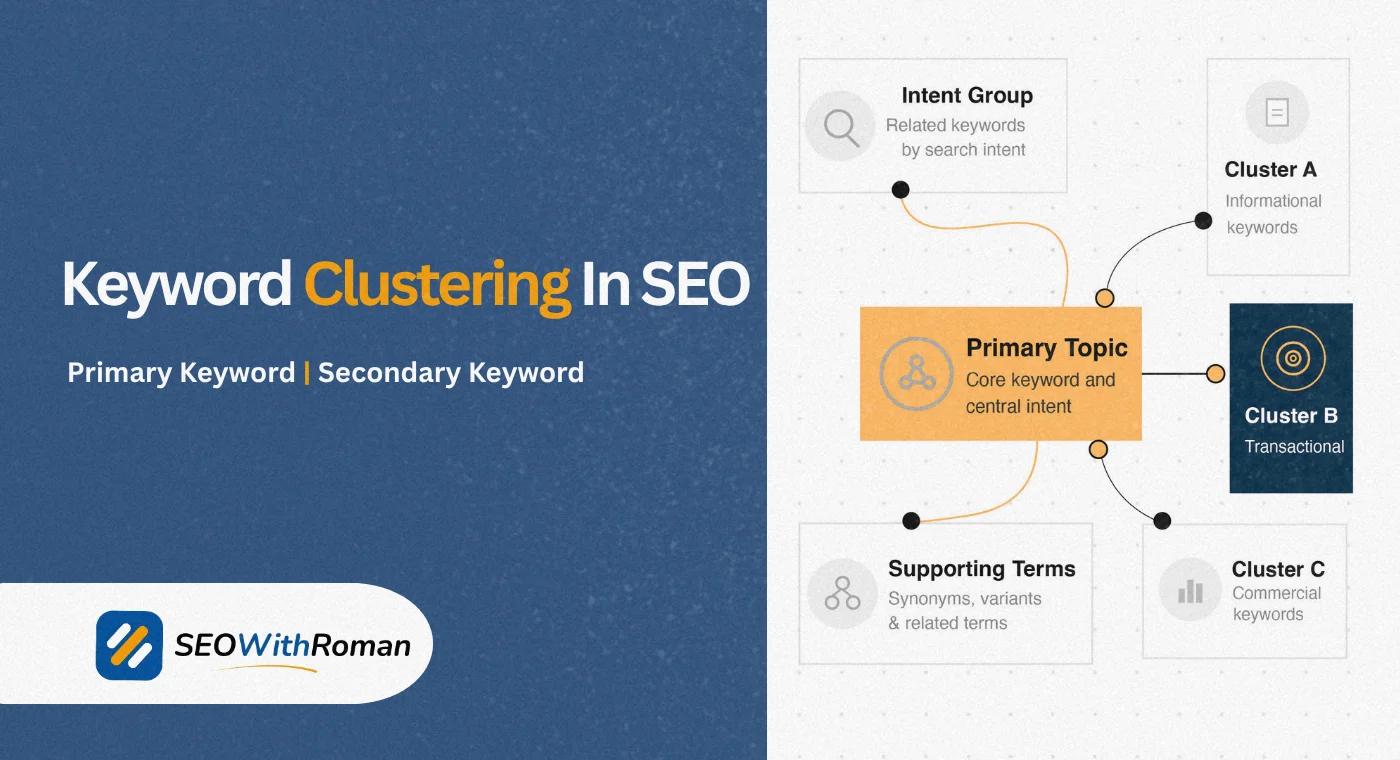
Instead of targeting one keyword per article in isolation, build keyword clusters. A cluster is a group of closely related keywords all pointing to the same topic. One pillar page targets the broad head keyword. Multiple supporting articles target specific long-tail variations and link back to the pillar. This topical cluster approach builds authority faster than isolated articles and is the strategy used by every high-authority website you admire.
Tip 3: Revisit Your Keyword List Every Quarter
Keyword research is not a one-time task. Search volumes change. New competitors enter your niche. Google’s People Also Ask surfaces new questions your audience is asking. New AI tools surface emerging language patterns before traditional tools catch them. Setting aside two hours every three months to refresh your keyword list and update your content plan consistently outperforms doing deep research once and never revisiting it.
11 Conclusion
Keyword research is not a technical exercise reserved for SEO professionals. It is the most practical and immediately actionable thing any website owner can do to make sure their content reaches the people it was written for.
For a SaaS website, it is the difference between building an audience of potential customers and building an audience of random visitors who never convert. For a personal brand blog, it is the difference between writing into the void and building a content library that generates compounding traffic for years.
Start with free tools. Validate every article idea before you write it. Match your content format to search intent. Build keyword clusters around your most important topics. And revisit your keyword list every quarter as your website and your audience grow.
Every hour you invest in keyword research before writing saves ten hours of creating content that never gets found.
Have a question about keyword research for your specific website or industry? Leave a comment below and I will answer it personally.
Join 1,000+ business owners and bloggers who get one actionable SEO tip every week — straight to their inbox. Free forever.
Get Free Weekly Tips →