- Organic SEO means earning Google rankings through content and optimisation, not paying for ads
- Organic traffic compounds over time, meaning the longer you do it the more it grows without extra cost
- The three foundations of organic SEO are on-page optimisation, off-page authority, and technical health
- A website with consistent organic SEO effort can generate free traffic for years from a single article
- Organic SEO takes 3 to 6 months to show results but the return on investment far exceeds paid advertising long term
1 What Is Organic SEO and Why It Is the Smartest Investment a Small Business Can Make
Every time you search something on Google, you see two types of results. The ones at the very top with a small "Sponsored" label are paid ads. Every result below that, the ones with no label, those are organic results.
Organic SEO is the process of getting your website into those unpaid results by making your content genuinely useful, your website technically sound, and your authority strong enough for Google to trust you.
The word "Organic basics" here means natural. You are not paying Google to show your page. You are earning that position by being the best answer to the searcher's question.
Here is what makes organic SEO fundamentally different from every other marketing channel. When you stop running paid ads, your traffic stops immediately. When you stop organic SEO work, your traffic continues, sometimes for years, from the content and authority you already built.
I have client articles published in 2022 that still bring in hundreds of visitors every month in 2026 without a single update. That is the compounding power of organic SEO that no paid channel can replicate.
2 Organic SEO vs Paid Search — Understanding the Real Difference
Most beginners think organic SEO and paid search are just two ways to do the same thing. They are not. They serve completely different purposes and produce completely different long term outcomes.
| Factor | Organic SEO | Paid Search (PPC) |
|---|---|---|
| Cost per click | Free once ranking | You pay for every single click |
| Time to results | 3 to 6 months minimum | Immediate once ads go live |
| Traffic when you stop | Continues for months or years | Stops the moment budget runs out |
| Trust level with users | High, users trust organic results more | Lower, users know it is an ad |
| Long term ROI | Compounds and grows over time | Stays flat, costs rise as competition increases |
| Best for | Sustainable long term growth | Quick visibility, promotions, testing |
| Difficulty | Requires consistent effort and patience | Requires budget and bid management |
The businesses that win online long term almost always combine both. But for small businesses and personal brands with limited budgets, organic SEO delivers a return on investment that paid advertising cannot match over a 12 to 24 month horizon.
3 The 3 Foundations of Organic SEO Every Beginner Must Understand
Organic basics SEO is not one single thing. It is built on three foundations that work together. Weaken any one of them and the other two cannot compensate.
Foundation 1: On-Page SEO
On-page SEO is everything you do directly on your webpage to make it relevant to a search query. This includes writing a title tag that contains your target keyword, structuring your content with clear headings, using the keyword naturally throughout the body, optimising images with descriptive alt text, and adding internal links to related pages.
On-page SEO tells Google what your page is about. Without it, even a technically perfect website with strong backlinks will not rank for the right keywords.
Foundation 2: Off-Page SEO
Off-page SEO refers to signals that come from outside your website, most importantly backlinks. When another website links to your content, it tells Google your page is credible and worth recommending to searchers.
A backlink from a respected website in your industry carries far more weight than ten links from random unrelated sites. Quality matters far more than quantity when it comes to building off-page authority.
Foundation 3: Technical SEO
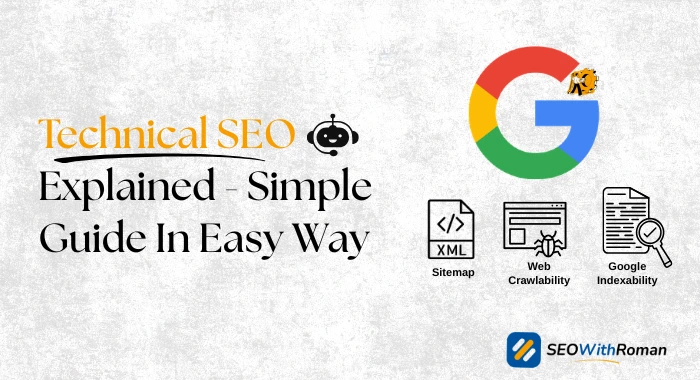
Technical SEO ensures Google can actually find, crawl, and index your pages without obstacles. It covers site speed, mobile usability, clean URL structures, sitemaps, and fixing crawl errors.
Think of it this way. On-page SEO is your message. Off-page SEO is your reputation. Technical SEO is the infrastructure that makes sure Google can hear your message and verify your reputation in the first place.
4 How Google Ranks Organic Basics Results — The Factors That Actually Matter
Google uses over 200 ranking factors but beginners do not need to know all of them. In six years of working on real client websites, I have found that the same core factors consistently determine who ranks and who does not.
| Ranking Factor | What Google Looks For | How to Improve It |
|---|---|---|
| Content relevance | Does your page fully answer the search query | Cover the topic completely, match search intent |
| Page authority | How many quality websites link to this page | Earn backlinks through great content and outreach |
| Domain authority | Overall trust level of your entire website | Build consistently over time with quality content |
| Page experience | Speed, mobile usability, Core Web Vitals scores | Use WP Rocket, optimise images, fix CWV issues |
| E-E-A-T signals | Experience, expertise, authority, trustworthiness | Add author bio, cite sources, show real experience |
| Keyword optimisation | Is the keyword in title, headings, and body | Use Rank Math to optimise every page before publishing |
| Search intent match | Does the content format match what searchers want | Study top ranking pages and match their format |
| Freshness | Is the content recently updated for time-sensitive topics | Update key articles at least once per year |
5 What Organic Search Traffic Actually Looks Like and Why It Compounds
One of the most misunderstood things about organic basics SEO is how traffic grows over time. It does not grow in a straight line. It grows like compound interest.
In the first three months of a new website, organic traffic is nearly zero. This is normal. Google needs time to crawl your pages, assess your content quality, and compare your site to established competitors.
Between months three and six, you start seeing your first rankings appear, usually for long-tail keywords with low competition. Traffic is small but it is real and it is free.
From month six to twelve, if you have been publishing consistently and your on-page SEO is solid, traffic starts accelerating. Each new article adds to your topical authority. Each new backlink lifts all your pages slightly. The site starts ranking for keywords you did not specifically target.
By month twelve to eighteen, a site with 60 to 80 quality articles and consistent SEO work can be generating thousands of visitors per month at zero ongoing cost per click.
This is what "compounding" means in organic SEO. The work you did in month one still pays dividends in month eighteen. The article you publish today could be bringing in traffic in 2028.
6 The Organic SEO Process Step by Step for a Brand New Website
Here is the exact sequence I follow when starting organic SEO for a new website from scratch:
Step 1: Set up your technical foundation first. Before publishing a single article, make sure Google can crawl your site. Install Rank Math, set up Google Search Console, submit your sitemap, and verify your site loads in under 3 seconds on mobile.
Step 2: Do keyword research before writing anything. Every article needs a target keyword with confirmed search volume before you write a single word. Use Google Keyword Planner or Ahrefs free tool to find keywords with at least 100 monthly searches and a difficulty score under 30.
Step 3: Match your content to search intent. Before writing, Google your target keyword and study the top three ranking articles. Are they guides, lists, comparisons, or definitions? Match that format because Google is already showing you what type of content it considers the best answer for that query.
Step 4: Write content that genuinely covers the topic. Do not write thin 500-word articles. Write comprehensive content that answers the main question and every related question a beginner might have. Depth signals expertise. Expertise builds E-E-A-T.
Step 5: Optimise every page with Rank Math before publishing. Check your title tag, meta description, keyword density, heading structure, image alt text, and internal links. Aim for a Rank Math score of 80 or above on every article.
Step 6: Build internal links as your content library grows. Every new article should link to at least two or three older articles on related topics. This spreads authority across your site and helps Google understand your topical coverage.
Step 7: Track rankings and traffic in Google Search Console. After publishing, monitor your pages in GSC every two weeks. When you see a page ranking between positions 5 and 15, that is a priority article to update and strengthen because a small improvement can move it to page one.
7 The Biggest Organic SEO Mistakes Beginners Make in the First Six Months
After auditing dozens of small business websites, the same mistakes appear again and again in the early months:
Publishing without keyword research. Writing articles on topics you find interesting instead of topics people are actually searching for is the single biggest reason new websites get zero traffic. Every article needs a validated keyword before you write it.
Targeting keywords that are too competitive. A brand new website cannot rank for "SEO Organic basics" or "Organic SEO." These terms have difficulty scores above 60 and the pages ranking for them have years of authority behind them. Start with keywords under difficulty 20 and build upward.
Ignoring internal linking. Most beginners publish articles in isolation with no links connecting them. Internal linking is one of the fastest ways to distribute authority across your site and help Google understand your topical expertise.
Expecting results in 30 days. This is the most common reason people abandon organic SEO just before it starts working. Set a realistic timeline of six months minimum before judging whether your strategy is working.
Writing for Google instead of people. Keyword stuffing, thin content, and articles that answer one narrow question without any depth will not rank in 2026. Google's algorithms are sophisticated enough to identify content written purely for rankings rather than readers.
8 Conclusion
Organic basics in SEO come down to one core idea. Help real people find genuinely useful answers to their questions, make sure Google can access and understand those answers, and build enough credibility over time that Google trusts your website to appear in front of its users.
It takes patience. It takes consistency. But unlike every paid channel, the work you do today keeps paying you back for years.
Start with the foundation. Get your technical SEO right. Research your keywords before writing. Publish content that actually helps your reader. Optimise every page before it goes live.
Do that consistently for twelve months and organic search will become the most valuable traffic source your website has.
Have a question about organic SEO basics? Leave a comment below and I will answer it personally.
Join 1,000+ business owners and bloggers who get one actionable SEO tip every week — straight to their inbox. Free forever.
Get Free Weekly Tips →