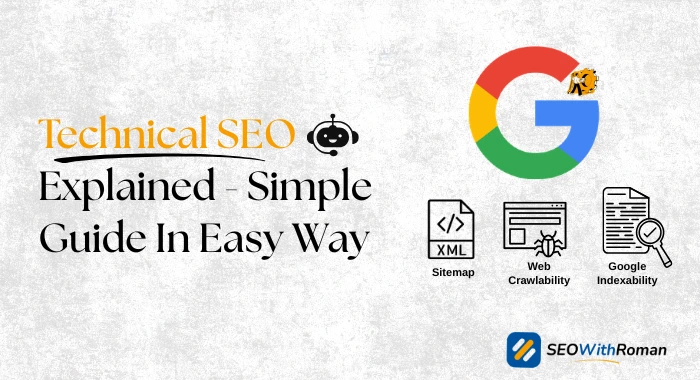
- What technical SEO actually means, explained without the jargon
- Why great content still fails to rank without a solid technical foundation
- The core elements search engines check before they trust your site
- How technical SEO is different from on page and off page SEO
- A simple way to check your own site's technical health today
1 What Is Technical SEO, in Simple Words
Technical SEO is everything you do to help search engines find, understand, and trust your website, without touching a single word of your actual content.
Think about it this way. Your content is what you say. Technical SEO is whether anyone can hear you at all. You could write the most detailed, genuinely useful article on your topic, but if Google's crawler cannot properly access your page, load it quickly, or figure out what it is about, that article might as well not exist in search results.
I have seen this exact situation with real client sites. A business owner spends weeks writing a great blog post, publishes it, and then waits. Nothing happens. Not because the writing was weak, but because the site had a slow loading time, a missing sitemap, or pages accidentally blocked from being crawled. Technical SEO fixes that gap between having good content and Google actually being able to use it.
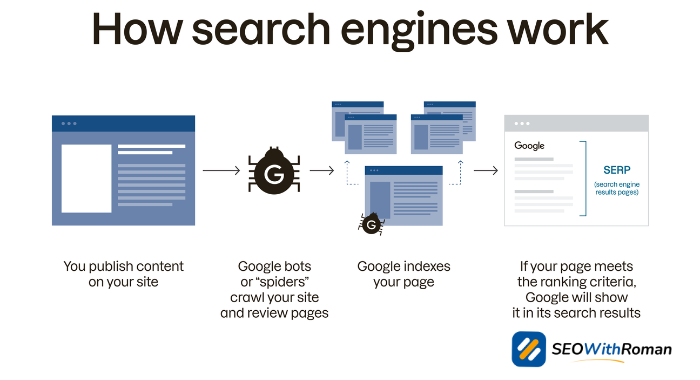
In plain terms, technical SEO covers three jobs a search engine has to complete before your page can rank at all.
- Crawling, which means a bot needs to discover your page exists in the first place
- Rendering and indexing, which means Google needs to load the page properly and save it in its database
- Understanding, which means Google needs to work out what your page is actually about
If any one of these three steps breaks, your rankings suffer, no matter how good your writing is.
2 Why Technical SEO Matters More Than You Think
Most beginners assume SEO is only about keywords and backlinks. Those matter, but they come second. Technical SEO comes first because it decides whether your content is even eligible to compete.
Here is a simple analogy I give my own clients. Imagine you have opened the best coffee shop in your city, but the front door is locked and there is no sign outside. It does not matter how good your coffee is. Nobody walks in. Technical SEO is the unlocked door and the visible sign.
A technically weak site usually shows a few classic warning signs. Pages take too long to load. Search Console reports crawl errors. Some pages simply never get indexed, even months after publishing. Rankings fluctuate wildly after every Google update, because the foundation underneath the content was never stable to begin with.
Getting the technical side right does not guarantee a top ranking on its own. But getting it wrong absolutely guarantees you are leaving traffic on the table, sometimes without ever realizing why.
3 The Core Elements of Technical SEO
Technical SEO is a broad topic, but almost everything falls under a handful of core areas. Here is a breakdown of what actually matters and why, along with trustworthy places to learn more about each one.
| Element | What It Controls | Why It Matters | Learn More |
|---|---|---|---|
| Crawlability | Whether Googlebot can access your pages | If a page cannot be crawled, it cannot be indexed or ranked at all | Google Search Central Fundamentals |
| Indexability | Whether Google is allowed to store your page in its index | Pages blocked by noindex tags or robots.txt never appear in search results | Google SEO Starter Guide |
| Site speed and Core Web Vitals | How fast and stable your page feels to a real visitor | Google has confirmed page experience signals affect rankings, especially on competitive keywords | web.dev by Google |
| XML sitemap | A map that tells Google which URLs exist on your site | Helps Google discover new or updated pages faster, especially on newer sites | Google Search Central |
| Mobile friendliness | How well your site works on a phone | Google uses mobile first indexing, meaning it primarily uses your mobile version to rank you | Google Developers Mobile Guide |
| Structured data | Code that describes your content in a way machines understand | Helps you qualify for rich results and gives AI search tools clearer context about your page | Schema.org |
| Secure connection (HTTPS) | Whether your site is encrypted | A basic trust and security signal that Google has used as a ranking factor for years | Google Search Central |
You do not need to master all of these overnight. Most site owners fix them one at a time, usually starting with whichever one is causing the most visible damage in Google Search Console.
4 How Technical SEO Is Different From On Page and Off Page SEO
People often mix these three up, so here is the simplest way I explain it to new clients.
On page SEO is about your content itself. Your title tags, your headings, your keyword placement, the actual words on the page.
Off page SEO is about your reputation outside your own site. Backlinks, brand mentions, social signals, anything that builds trust from external sources.
Technical SEO is about the machinery underneath both of them. It does not care what your content says or who links to you. It only cares whether search engines can physically access, load, and interpret what you have built.
A helpful way to remember it: on page SEO makes your content good, off page SEO makes your site trusted, and technical SEO makes your site visible in the first place.
You genuinely need all three, but technical SEO is the one that determines whether the other two even get a chance to work.
5 A Simple Way to Check Your Own Site's Technical Health
You do not need expensive tools to run a basic technical health check. Here is the process I walk beginner clients through in under twenty minutes.
Step 1: Check if Google has indexed your site
Search Google for site:yourdomain.com. If your important pages show up, Google has found and indexed them. If key pages are missing, that is your first red flag.
Step 2: Test your page speed
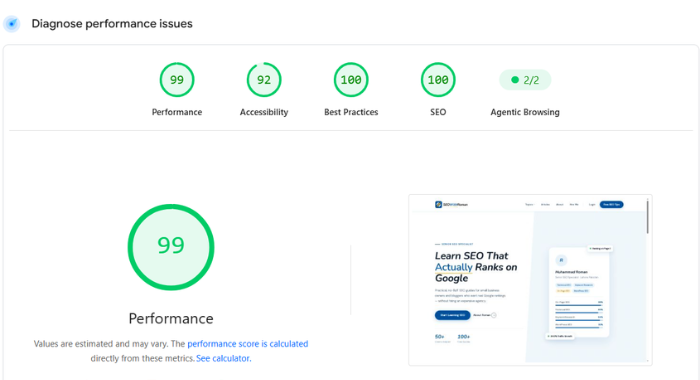
Use Google's free PageSpeed Insights tool and enter your homepage URL. Pay attention to the Core Web Vitals scores, particularly Largest Contentful Paint, which measures how fast your main content loads.
Step 3: Check for crawl errors in Search Console
Open the Pages report inside Google Search Console. Look for anything marked as excluded, blocked, or having a server error. This report tells you exactly what is stopping Google from indexing certain pages.
Step 4: Confirm your site works properly on mobile
Open your site on your own phone. Check that text is readable without zooming, buttons are easy to tap, and nothing overlaps or breaks.
Step 5: Verify your sitemap is submitted
Inside Search Console, go to the Sitemaps section and confirm your XML sitemap has been submitted and shows a healthy number of discovered URLs.
Running through these five checks once a month catches most technical problems long before they cause a real drop in traffic.
Pro Tip: If you only fix one thing this week, fix page speed first. Slow loading pages quietly hurt both your rankings and your conversion rate, and most speed issues come from a handful of easy fixes, like compressing images or removing unused scripts.
6 Common Technical SEO Mistakes Beginners Make
A few mistakes show up again and again on new websites, so it is worth naming them directly.
- Accidentally leaving a noindex tag on live pages after launching a site from a staging environment
- Ignoring mobile performance because the desktop version looks fine
- Ranking multiple pages for the same keyword due to duplicate content and missing canonical tags
- Never submitting an updated sitemap after adding new pages
- Treating technical SEO as a one time setup task instead of something you check regularly
7 Technical SEO in the Age of AI Search
One more thing worth understanding before you go. Technical SEO used to matter only for Google's traditional crawler. That has changed.
AI tools like Google AI Overviews, ChatGPT, and Perplexity now crawl and read websites too, often using many of the same signals Googlebot has relied on for years. If your site is fast, cleanly structured, uses proper heading tags, and includes structured data, you are not just easier for Google to rank. You are also easier for AI systems to read, summarize, and potentially cite as a source.
In practice, this means the technical basics you fix today are not just helping you rank in classic blue links. They are increasingly deciding whether your content gets pulled into AI generated answers at all. The fundamentals have not changed. The number of systems reading them has.
8 Conclusion
Technical SEO is not something you set up once and forget about. It is closer to basic home maintenance. You do not need to be an expert to keep things running well, but you do need to check on it regularly, because small issues left alone tend to turn into bigger ones.
If you take one thing away from this article, let it be this. Before you spend another month writing content, spend twenty minutes running through the five point check in section 5. It is entirely possible your content is already good enough to rank, and the only thing standing in its way is something technical, quiet, and completely fixable.
Start there, fix what you find, and give your content the fair chance it deserves.
None of these mistakes are complicated to fix once you know they exist. The real danger is not knowing they are happening at all, since they rarely come with an obvious warning sign beyond quietly stagnant traffic.
Join 1,000+ business owners and bloggers who get one actionable SEO tip every week — straight to their inbox. Free forever.
Get Free Weekly Tips →