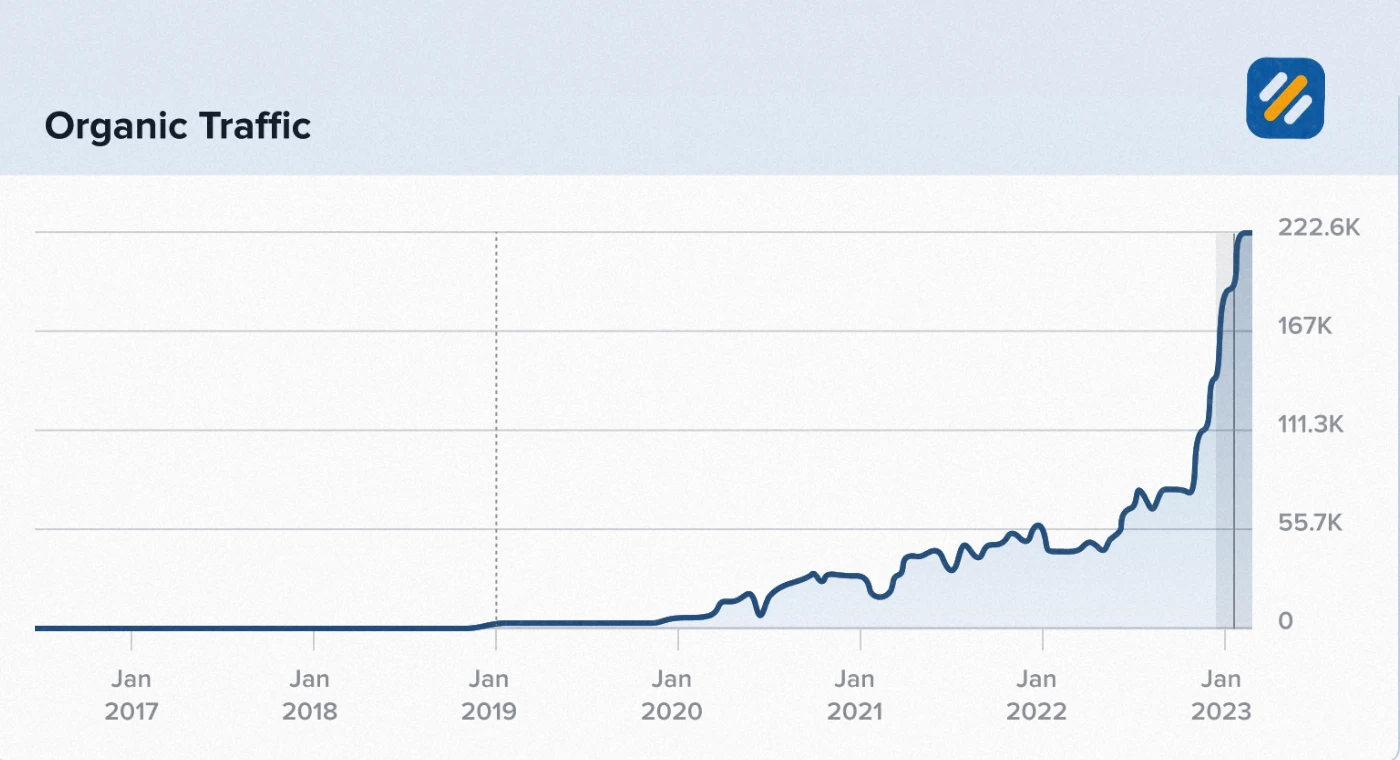
- How babygold.com went from about 48,100 to 222,049 organic visits a month
- Why 150 specific collection pages did more than any single trick
- What review snippets and backlinks really did, and what the data cannot prove
- Where the site still leaves traffic on the table
- How to check “is babygold legit” and “babygold.com reviews” like a careful buyer
- A 7 step checklist to copy the strategy on your own store
In one year, a family run jewelry brand went from about 48,100 organic visits a month to more than 222,000. No viral stunt and no ad budget are mentioned in the data. That is the story behind babygold.com, as documented in a public case study by AIOSEO using Semrush data in November 2023.
This babygold SEO case study goes beyond a recap. We recalculate the numbers, point out what the data can and cannot prove, and add the angle most write ups skip: how website design makes each SEO win possible. If you sell jewelry, or anything with a lot of product variations, there is something here you can use this week.
1 Babygold at a Glance: Who They Are and What They Sell
Babygold is a Los Angeles jeweler founded in 2018 by Helen and Michael Ashikian. According to AIOSEO’s report, every piece is solid 14k gold, made in the family’s own factory, and sold direct to shoppers instead of through wholesalers. Babygold jewelry covers the classics (necklaces, rings, bracelets) plus body chains, anklets and charms, with a popular personalized line for names and initials.
| Detail | Information |
|---|---|
| Brand | Babygold (babygold.com) |
| Founded | 2018, Los Angeles |
| Model | Direct to consumer, own factory |
| Material claim | Solid 14k gold |
| Signature line | Personalized names and initials |
| Press mentions reported | Vogue, Elle, Harper’s Bazaar |
| Main traffic source studied | Organic search |
2 The Growth Timeline, Recalculated
The report shares yearly organic traffic. We added the growth rates ourselves, because the percentages tell a different story from the raw totals.
| Year | Total organic visits | Average per month | Growth vs previous year |
|---|---|---|---|
| 2019 | 27,228 | 2,269 | Base year |
| 2020 | 154,007 | 12,834 | +466% |
| 2021 | 369,415 | 30,785 | +140% |
| 2022 | 559,292 | 46,608 | +51% |
| Jan to Nov 2023 | 1,157,006 | 105,182 | +107% (11 months vs full 2022) |
Notice the pattern. Growth slowed every year until 2022, which is normal as a site gets bigger. Then 2023 broke the trend. Eleven months of 2023 added about 597,700 more visits than all of 2022, and the monthly average more than doubled. Something changed in late 2023, and it was not just time passing.
The first organic visits showed up in June 2018, and the brand closed that year with 3.4K visits. Monthly traffic then jumped by about 35K in August 2023 compared to July, and November 2023 became the record month at 222,049 visits.
3 What Actually Drove the Jump: Three Moves in Detail
Move 1: Building about 150 specific collection pages
Between November 2022 and November 2023, babygold added roughly 400 pages. About 150 of them were new collection pages, and that is the detail worth studying.
Older collection URLs were broad: /collections/earrings, /collections/rings, /collections/chains. The new ones were specific, for example /collections/14k-gold-hoop-earrings, /collections/14k-gold-bangle-bracelets, /collections/14k-gold-kids-bracelets and /collections/14k-gold-initial-pendants.
The pattern is easy to copy: material + product type + style or audience. Each page matches a real search (“14k gold hoop earrings”) instead of fighting for a giant term like “earrings,” where huge brands dominate.
Our take: collection pages are really a design template. To create 150 of them without quality dropping, you need a layout that automatically produces a unique H1, a title tag, a short intro, breadcrumbs and links to sibling collections. The risk is thin, repetitive pages that compete with each other. Avoid that by writing a genuine two or three sentence intro for each, and by linking from the parent category to every child.
Move 2: Review snippets in the search results
AIOSEO reports that babygold ranked for about 102% more keywords per month in 2023 than in 2022, and that its review snippets grew 91.4% year over year in November. Their example: a diamond name necklace showing 5 stars from 22 reviews, with price and shipping details.
These come from Product schema, which tells Google the price, availability and rating of an item. A listing with stars, price and shipping takes more space and earns more trust than a plain blue link.
Our take: schema never guarantees a rich result, and it must follow Google’s rules. Reviews should be real, visible on the page and about the product itself. The price in your markup should match the price shown on screen. Also be careful with causation. The keyword growth and the snippet growth happened together, but the report cannot prove one caused the other.
Move 3: Backlinks, including a surprising source
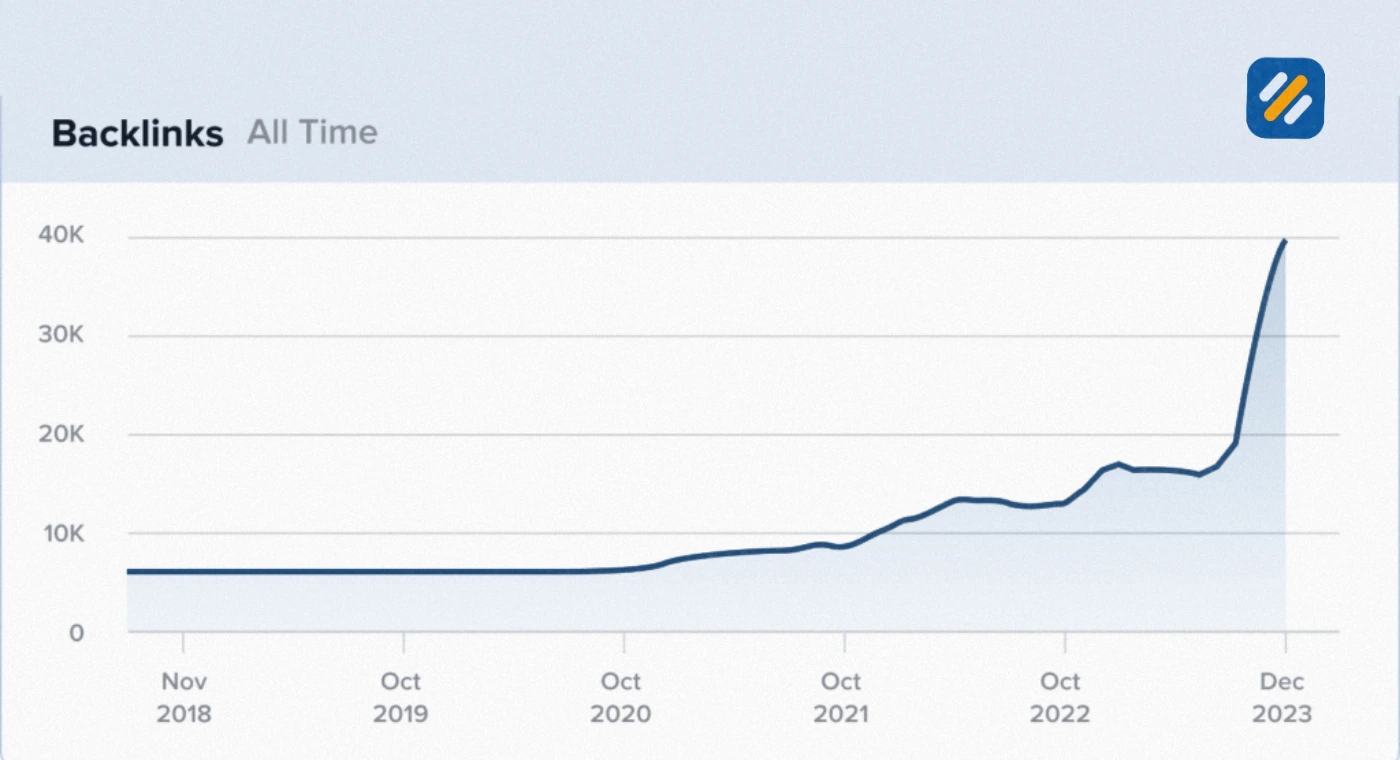
Babygold had under 10,000 backlinks for most of its life and passed that mark in January 2023. Links arrived from Vogue, Elle and Forbes, and in October 2023 the total jumped by about 11,000 in a single month.
AIOSEO traced much of that spike to babygold.gorgias.help, the store’s customer support center, hosted on the Gorgias domain. Because the help pages sit on another domain and link back to the store, they count as backlinks.
Our take: be careful before celebrating that jump. Thousands of links from one support platform are not the same as thousands of editorial links. We cannot confirm how Google weighs them, and we would not expect them to carry the power of a feature in Vogue. The practical lesson is to track referring domains, not just total backlinks, and to build links from press, gift guides and creators who genuinely write about your products.
Pro Tip: Open your backlink report and sort by referring domains. If one domain supplies 40% or more of your links, treat that total as a vanity number and aim to grow the number of unique, relevant sites linking to you.
4 Gaps Still Left on the Table
The report also shows where babygold could gain more. The brand earned 89.5% more image rich results in November 2023 than the year before, yet its image SEO was described as weak. A few pages lacked H1 tags, and some indexable pages had no meta description.
| Gap | Why it matters | Fix |
|---|---|---|
| Weak image SEO | Images drive rich results and visual search | Descriptive file names, useful alt text, image sitemap |
| Missing H1 on some pages | Weakens topic clarity | One clear H1 per page |
| Missing meta descriptions | Lower click rate from results | Unique, benefit led descriptions |
| Few supporting guides | Limits topical authority | Buying, care and gifting content linked to collections |
These findings are from the 2023 report, so check the live site before repeating them as current facts.
5 Why Website Design Is the Hidden Engine Behind These Wins
Each of the three moves above depends on design decisions made long before any SEO tweak.
Scalable templates: 150 collection pages only work if the layout generates unique headings, breadcrumbs and internal links automatically.
Speed: Jewelry sites are image heavy. Google’s Core Web Vitals targets are Largest Contentful Paint under 2.5 seconds, Interaction to Next Paint under 200 milliseconds and Cumulative Layout Shift under 0.1. Compress hero images and never lazy load the first one.
Clean URLs and structure: Keep every product within three clicks of the homepage, and use readable URLs like the ones babygold uses.
Filters under control: Karat, length and price filters can create thousands of duplicate URLs. Canonical tags or selective indexing keep Google focused.
Structured data built in: Put Product schema into the product template so every new item gets it automatically, with prices that update when the visible price does.
Trust elements in the layout: Returns, shipping, reviews and contact details should appear on the page, not hidden in the footer.
6 Is Babygold Legit? What the Public Evidence Shows and How to Verify It
People search “is babygold legit” and “babygold.com reviews” before buying, which is smart when a purchase involves real gold. We will not give a yes or no verdict, because that needs current, personal evidence. Here is what the public record offers and how to check it yourself.
What AIOSEO’s report states: the company launched in 2018, makes its pieces in a Los Angeles family factory, has been featured in fashion publications, and shows customer review counts in search results, such as the 22 reviews on one necklace. These are third party statements, so confirm them on the official site.
Read the official site’s policies. Look for returns, shipping, warranty and contact details.
Check the product details. Real jewelers state the karat, weight and hallmark. Under US rules on precious metal marking, claims such as “14k” should be accurate.
Read babygold.com reviews on several platforms. Compare the brand’s own site with independent review sites and social media comments.
Look at patterns, not just stars. Repeated complaints about delays or sizing matter more than one angry review. Reviews spread across months look more natural than a burst in one week.
Pay with protection. Credit cards and PayPal offer dispute options that bank transfers do not.
7 Babygold Discount Code Searches: A Buying Signal Worth Understanding
A search for a babygold discount code means the shopper is ready to buy and wants a reason to finish. For store owners these are some of the most valuable searches around, and also some of the most messy.
For shoppers: undated codes on coupon sites are often expired. The safest sources are the official babygold site, its email list and verified social accounts. We have not listed any code here, because codes change and we cannot verify one.
For store owners: coupon sites often rank for your brand plus “discount code,” which means someone else controls your offer. Counter it with one official offers page, a visible email signup with a welcome incentive, and clear expiry dates.
8 How to Make a Case Study Work for Google and AI Search
AI Overviews and chat assistants like content that is quick to quote. Put a plain answer under each heading, use tables for numbers, name your sources and date your data. This article follows that pattern on purpose. Keep brand details consistent across your site, social profiles and directories, because consistency helps machines recognize your brand as one real entity.
9 The 7 Step Checklist to Copy the Babygold Strategy
1: Find specific searches. Use Google autocomplete, People Also Ask and Search Console queries for long phrases with material, product and style.
2: Create a collection page template. Include a unique H1, title, intro, breadcrumbs and links to related collections.
3: Launch in batches. Publish 10 to 20 collections at a time and watch impressions in Search Console.
4: Add Product schema to the template. Include price, availability and real review data.
5: Fix images. Descriptive file names, alt text and compressed modern formats.
6: Earn links, then count domains. Aim for press, gift guides and creator features, and measure unique referring domains.
7: Audit monthly. Check for missing H1s, missing meta descriptions and duplicate filter pages.
10 Final Thoughts
The clearest lesson from this babygold SEO case study is that specific beats broad. A few hundred well built pages that match real searches did more than any single trick. Add real reviews in the search results, links from relevant sites and a design that makes it all repeatable, and a small jeweler can compete with famous names. If you take one step this week, pick ten long phrases your customers use and give each one its own properly built page.
Join 1,000+ business owners and bloggers who get one actionable SEO tip every week — straight to their inbox. Free forever.
Get Free Weekly Tips →