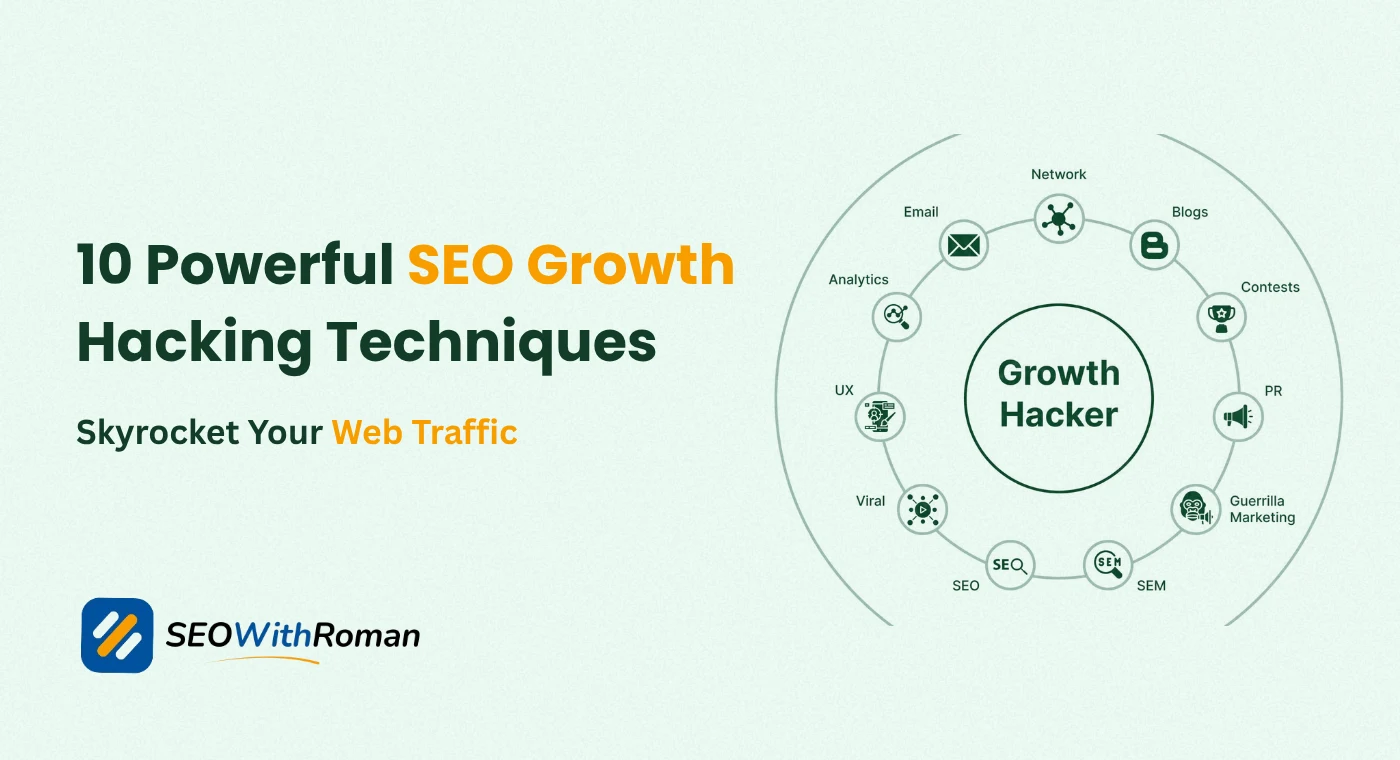
- SEO growth hacking combines data-driven SEO experiments with rapid testing to find the fastest path to organic traffic growth
- Unlike traditional SEO, growth hacking techniques focus on quick wins that compound into long term results
- Competitor SEO analysis, content optimisation, and technical SEO fixes are the three pillars of SEO growth hacking
- A/B testing for SEO, internal link restructuring, and programmatic content are underused tactics most competitors ignore completely
- Data-driven SEO decisions consistently outperform gut-feel strategies, and free tools make this accessible to any website owner
1 What Is SEO Growth Hacking and Why It Works Faster Than Traditional SEO
Traditional SEO is a slow, methodical process. Publish content, wait for rankings, build backlinks, repeat. Most websites following a traditional SEO approach wait six to twelve months before seeing meaningful results.
SEO growth hacking is different. It is the practice of combining SEO fundamentals with rapid experimentation and data-driven decision making to find the fastest route to organic traffic growth. Instead of waiting to see what works, you test systematically, identify what is moving the needle, and scale it immediately.
The term growth hacking was coined by Sean Ellis in 2010 to describe a mindset where every decision is evaluated purely on its potential for growth. Applied to SEO, this means treating your website like a laboratory. Every title tag is an experiment. Every internal link is a lever. Every piece of content is a hypothesis you are testing against what Google rewards.
After many years of running SEO campaigns across B2b, SaaS, ecommerce, and local service businesses, I can tell you that the websites that grow fastest are not the ones with the biggest budgets. They are the ones that experiment more, measure more precisely, and double down on what actually works in their specific niche.
Here are the ten SEO growth hacking techniques that consistently produce the fastest results
2 What Is the Skyscraper Technique and How to Use It for Fast Rankings
The Skyscraper Technique is one of the most proven SEO growth hacking techniques ever documented. It was developed by Brian Dean of Backlinko and the concept is straightforward but powerful.
Find the best ranking content for your target keyword. Create something measurably better. Then reach out to every website linking to the original and show them the improved version.
Here is why it works as a growth hacking technique specifically. You are not guessing what content Google wants to rank. You are studying what it has already decided is the best answer and then raising the bar. This removes the biggest variable in content creation which is whether anyone will actually want to link to it.
How to execute the Skyscraper Technique step by step
Step 1: Find a keyword in your niche with strong backlink data behind the top ranking article. Use Ahrefs free Webmaster Tools to check the referring domains pointing to the top result.
Step 2: Analyse the top ranking article thoroughly. Count the word count, note the headings, identify what it covers and what it misses.
Step 3: Create a version that is at minimum 30% more comprehensive. Add sections the original missed, update outdated statistics, add a data table, add a practical step by step process, and include original examples from your real experience.
Step 4: After publishing, find every website that links to the original using Ahrefs. Contact each one and let them know you have published a more current and comprehensive resource on the same topic.
The Skyscraper Technique works because it aligns with Google's core goal of showing the most helpful result. If your version is genuinely better, Google will eventually recognise that through improved engagement metrics and new backlinks.

3 Competitor SEO Analysis | The Growth Hack That Steals Rankings Legally
The fastest way to find SEO growth opportunities is to look at exactly what is already working for your competitors and replicate it with better execution.
Competitor SEO analysis is not copying. It is intelligence gathering. Your competitors have already done years of keyword research, content testing, and link building. Their rankings are a roadmap showing you exactly which keywords are worth targeting in your niche.
Here is the growth hacking process I use for competitor analysis on every new client website:
Step 1: Identify your top three organic competitors. These are not necessarily your business competitors. They are the websites ranking for the same keywords you want to target. Search your primary keyword in Google and note who appears consistently across multiple searches.
Step 2: Run a keyword gap analysis. Enter your domain and your top competitor's domain into Ahrefs or SEMrush keyword gap tool. This shows you every keyword your competitor ranks for that you do not. These are your immediate growth opportunities.
Step 3: Filter for quick wins. Sort the gap keywords by difficulty score and look specifically for keywords where your competitor ranks between positions 4 and 15 with a difficulty under 30. These are keywords where competition is proven but not insurmountable.
Step 4: Analyse their top traffic pages. Look at which pages send your competitor the most organic traffic. These topic areas are confirmed to have search demand. Create better versions of those pages with more depth, better examples, and stronger on-page optimisation.
Step 5: Analyse their backlink profile for link building opportunities. Look at who links to your competitor. Every website linking to your competitor is a potential link for you if you create comparable or better content on the same topics.
4 SEO Quick Wins | 5 Technical Fixes That Improve Rankings Within Weeks
Technical SEO fixes are the closest thing to guaranteed SEO quick wins that exist. Unlike content which takes months to rank, fixing technical issues that are actively preventing Google from ranking your pages can produce visible improvements within days or weeks.
Here are the five technical fixes that consistently produce the fastest ranking improvements:
Fix 1: Resolve crawl errors in Google Search Console. Open your Pages report and identify any pages marked as "Excluded." Pages blocked by robots.txt, pages with noindex tags accidentally applied, and pages with canonical errors are all preventing Google from indexing content you want to rank.
Fix 2: Improve Core Web Vitals scores. Google's Page Experience signals directly influence rankings, particularly on competitive keywords. Run your site through Google PageSpeed Insights and fix the specific issues it identifies. On WordPress, installing WP Rocket and Smush handles the majority of speed and image optimisation automatically.
Fix 3: Fix internal linking gaps. Run a crawl of your site using Screaming Frog free version and identify pages with fewer than three internal links pointing to them. These "orphaned" or under-linked pages rank lower than they should because they are receiving minimal authority from the rest of your site.
Fix 4: Add schema markup to key pages. FAQ schema, Article schema, and HowTo schema give Google structured data to display in search results as rich snippets. Rich snippets increase click through rates without requiring any ranking improvement, meaning you can get more traffic from the same position.
Fix 5: Fix redirect chains. A redirect chain is when a URL redirects to another URL which then redirects again. Each hop in the chain loses link equity. Identify and flatten all redirect chains to single 301 redirects using Screaming Frog.
5 Content Optimisation | How to Improve Existing Pages Without Writing New Content
Most beginners focus entirely on publishing new content. Experienced SEO growth hackers know that optimising existing pages that are already ranking between positions 5 and 20 is often the highest return activity on any website.
A page ranking in position 8 is receiving roughly 3% of clicks for that keyword. Moving it to position 3 would increase that to over 10%. That is a 3x traffic increase from a single page improvement, with no new content needed.
Here is the content optimisation process that consistently moves pages up in rankings
Identify your best upgrade candidates. In Google Search Console, go to the Performance report and filter by pages. Sort by average position and look for pages ranking between positions 5 and 20 with at least 50 monthly impressions. These are your upgrade candidates.
Analyse what the top three ranking pages cover that yours does not. Google the keyword your page is targeting. Read the top three results thoroughly. Every heading they cover that your page does not is a gap you need to fill.
Add missing content sections. Do not rewrite the entire page. Add the missing sections as new H2 headings with 150 to 300 words each. This increases topical coverage without disrupting what is already working.
Update all statistics and examples. Any data point in your article that is more than 18 months old should be updated to the most current available figure. Google tracks content freshness and rewards pages that stay current.
Improve the title tag for click through rate. Use Google Search Console to check your current CTR for the keyword. If your page is ranking in position 4 but getting a below average CTR, the title tag is the problem. Test a new version with a stronger power word or a more specific benefit promise.
Strengthen internal links to the page. Go to your three to five most authoritative pages and add an internal link pointing to the page you are upgrading. This additional internal link authority can be enough to move a borderline page from position 6 to position 3.
6 A/B Testing for SEO | How Data-Driven Experiments Accelerate Organic Traffic Growth
A/B testing for SEO is one of the most underused growth hacking techniques among small business websites. It is standard practice at every major website with a serious SEO team and practically never used by beginners who could benefit from it the most.
SEO A/B testing means changing one element on a page or across a group of pages, measuring the impact on rankings and traffic, and keeping the change if it improves performance or reverting it if it does not.
The most impactful elements to A/B test for SEO are
| Element to Test | What to Change | How to Measure Impact |
|---|---|---|
| Title tag | Power word, number, benefit phrase | CTR change in Google Search Console after 2 weeks |
| Meta description | Benefit promise, call to action, specificity | CTR change in Google Search Console |
| H1 heading | Keyword placement, question format vs statement | Ranking position change in GSC after 4 weeks |
| Content length | Add 300 words of depth to existing page | Ranking position for target keyword |
| Internal link anchor text | Keyword-rich vs branded vs natural phrase | Rankings for the linked page's target keyword |
| Page load speed | WP Rocket settings, image compression level | Core Web Vitals score and bounce rate in GA4 |
| FAQ schema | Add or remove FAQ section with schema markup | Rich snippet appearance rate in search results |
The key rule in SEO A/B testing is change one element at a time. If you change the title tag and add 500 words of content simultaneously and your rankings improve, you will not know which change caused the improvement. Isolate each variable and give each test at least two to four weeks before drawing conclusions.
7 Link Building Strategies That Actually Work for New Websites in 2026
Backlinks remain one of Google's most powerful ranking signals. But the link building strategies that worked five years ago are either less effective or actively dangerous today. Here are the link building approaches that produce results in 2026 without risking a Google penalty.
Digital PR and data studies. Create original research using data you can collect from your own work, your clients, or publicly available sources. A study with genuine findings gets linked to by journalists, bloggers, and industry publications without any outreach required. One well-designed study can earn dozens of high authority links.
Broken link building. Find pages in your niche that link to resources that no longer exist. Create a replacement resource that covers the same topic. Then contact the website owner and suggest replacing the broken link with your working resource. This approach works because you are genuinely helping the website owner fix a problem they did not know they had.
Guest posting on relevant websites. Write genuinely useful articles for websites in adjacent niches that serve the same audience. The key word is relevant. A guest post on an SEO blog linking to your SEO blog passes meaningful authority. A guest post on a random technology blog with no topical connection provides almost no benefit.
Resource page link building. Search Google for "best SEO resources" or "recommended SEO tools" in your niche. These resource pages are actively curated lists that link out to useful content. If your content genuinely belongs on the list, contact the page owner and suggest adding it.
HARO and journalist requests. Help a Reporter Out and similar platforms connect journalists looking for expert sources with subject matter experts. Responding to relevant queries with genuine expertise earns backlinks from major publications that no outreach campaign could otherwise access.
8 SEO Performance Tracking | The Metrics That Actually Tell You If Your Growth Hacking Is Working
The most common mistake I see in SEO growth hacking is optimising for the wrong metrics. Beginners track rankings obsessively and ignore the metrics that actually tell you whether your strategy is working.
Here are the metrics that matter and how to track each one
| Metric | What It Tells You | Where to Track It | Review Frequency |
|---|---|---|---|
| Organic impressions | Is Google showing your pages to more people | Google Search Console Performance report | Weekly |
| Average click through rate | Are your title tags convincing people to click | Google Search Console Performance report | Every 2 weeks |
| Organic traffic by page | Which pages are actually bringing visitors | GA4 Acquisition report filtered by organic | Weekly |
| Keyword position distribution | How many keywords rank in top 3, 4 to 10, 11 to 20 | Google Search Console or Ahrefs | Monthly |
| Pages indexed vs pages published | Is Google indexing your new content | Google Search Console Pages report | After each publish |
| Core Web Vitals scores | Is your site fast enough to compete | Google Search Console Core Web Vitals report | Monthly |
| Backlinks earned | Is your content attracting links | Ahrefs free Webmaster Tools | Monthly |
| Conversion rate from organic | Is your SEO traffic turning into leads or revenue | GA4 Goals or Events report | Monthly |
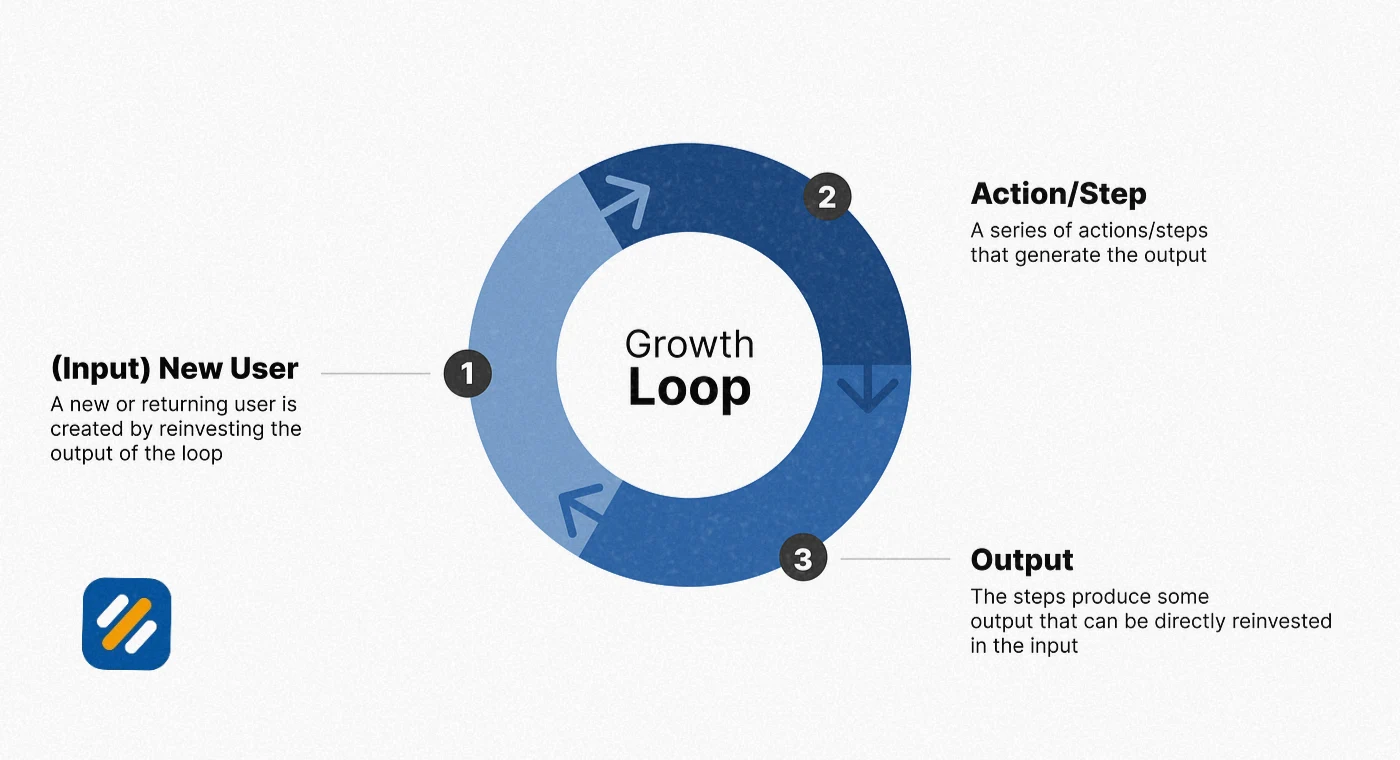
The growth hacking mindset applied to SEO performance tracking means you are not just monitoring these numbers. You are looking for the specific metric that changed after a specific action and using that connection to inform your next experiment.
9 Conversion Rate Optimisation for SEO | Turning Rankings Into Revenue
Most SEO guides end at rankings and traffic. SEO growth hacking goes one step further and treats conversion rate optimisation as an essential part of the organic traffic growth strategy.
Getting to page one is the first battle. Converting the visitors that arrive from page one is the second, and often more valuable, battle.
Here is the reality. A page ranking in position one for a keyword with 1,000 monthly searches might receive 270 visitors per month. If your conversion rate from that page to a lead or sale is 1%, you get three conversions per month. If you improve your conversion rate to 3% through CRO, you triple your results from the same ranking without doing any additional SEO work.
CRO techniques that work specifically for organic SEO traffic
Match your landing page to the search intent exactly: Someone who found your page by searching "how to do keyword research" is in learning mode, not buying mode. Your CTA should offer them the next logical step, like a free keyword research template or a related article, not an immediate product purchase.
Add social proof near your primary CTA: A testimonial, a client result, or a specific credential placed near your call to action significantly increases the likelihood of a conversion. For a personal brand blog, this might be "Trusted by 5,000 monthly readers" or a specific client result you achieved.
Use content upgrades: A content upgrade is a piece of bonus content directly related to the article the reader is currently reading, offered in exchange for an email address. A reader who just read your keyword research guide is a perfect candidate to download your keyword research spreadsheet template. Content upgrades consistently outperform generic lead magnets because the relevance is immediate and obvious.
10 3 Expert Tips for SEO Growth Hacking That Most Guides Never Tell You
Tip 1: Target the Featured Snippet Before You Target Position One
Ranking in position one and owning the featured snippet are two different things. The featured snippet, the answer box that appears above all organic results, can be won even from position five or six if your content is formatted correctly. Structure your answer to the primary keyword as a direct two to three sentence definition immediately after your H2 heading. Google pulls featured snippets from pages that answer questions most directly, not necessarily from the highest ranking page.
Tip 2: Use Google Search Console Search Queries as Your Content Calendar
In your GSC Performance report, filter by pages and click on your best article. Then look at all the queries that article is already ranking for beyond your primary keyword. Every query in that list with more than 20 impressions and a position below 15 is a content gap you can close by adding a new section to the existing article. This is the fastest content growth hack available because the data is real Google search behaviour, not keyword tool estimates.
Tip 3: Build Topical Authority Before Chasing Backlinks
Most beginners spend their first year chasing backlinks for one or two articles. Growth hackers spend their first year building topical authority across an entire subject by publishing 30 to 50 interconnected articles on every aspect of one topic. Google rewards topical depth with what SEOs call "topical authority boosts," where a new article on your site starts ranking faster and higher than comparable articles on competing sites simply because your site has established itself as the most comprehensive resource on the subject.
11 Conclusion
SEO growth hacking is not about shortcuts or tricks. It is about applying a data-driven, experimental mindset to the same SEO fundamentals that have always worked, and then scaling what works faster than any traditional approach would allow.
The ten techniques in this article cover every layer of SEO growth, from technical quick wins and competitor intelligence to content optimisation, programmatic scale, and conversion rate improvement. None of them require a large budget. All of them require consistency, measurement, and a willingness to act on what the data tells you.
Pick one technique from this list that matches where your website is right now. Implement it this week. Measure the impact over four weeks. Then move to the next.
That is how SEO growth hacking actually works in practice. Not as a one-time campaign but as a repeating cycle of experimentation and improvement that compounds month after month.
Have a question about any of these SEO growth hacking techniques? Drop a comment below and I will answer it personally.
Join 1,000+ business owners and bloggers who get one actionable SEO tip every week — straight to their inbox. Free forever.
Get Free Weekly Tips →