- A GPT checker is a tool that scans text and determines the probability that it was written by an AI model like ChatGPT, Claude, or Gemini
- Google does not penalise AI content directly but does penalise low quality, unhelpful, and unoriginal content that AI often produces at scale
- GPTZero, ZeroGPT, and Copyleaks are the three most accurate free and freemium GPT checker tools available in 2026
- Humanizing AI content means adding real experience, specific examples, varied sentence structure, and personal opinion that AI cannot generate on its own
- Running every AI-assisted article through a GPT checker before publishing is a professional habit that protects your rankings long term
1 What Is a GPT Checker and Why Every Content Creator Needs One in 2026
A year ago, most bloggers and content creators could publish AI-assisted content without giving it a second thought. In 2026, that approach is no longer safe or smart.
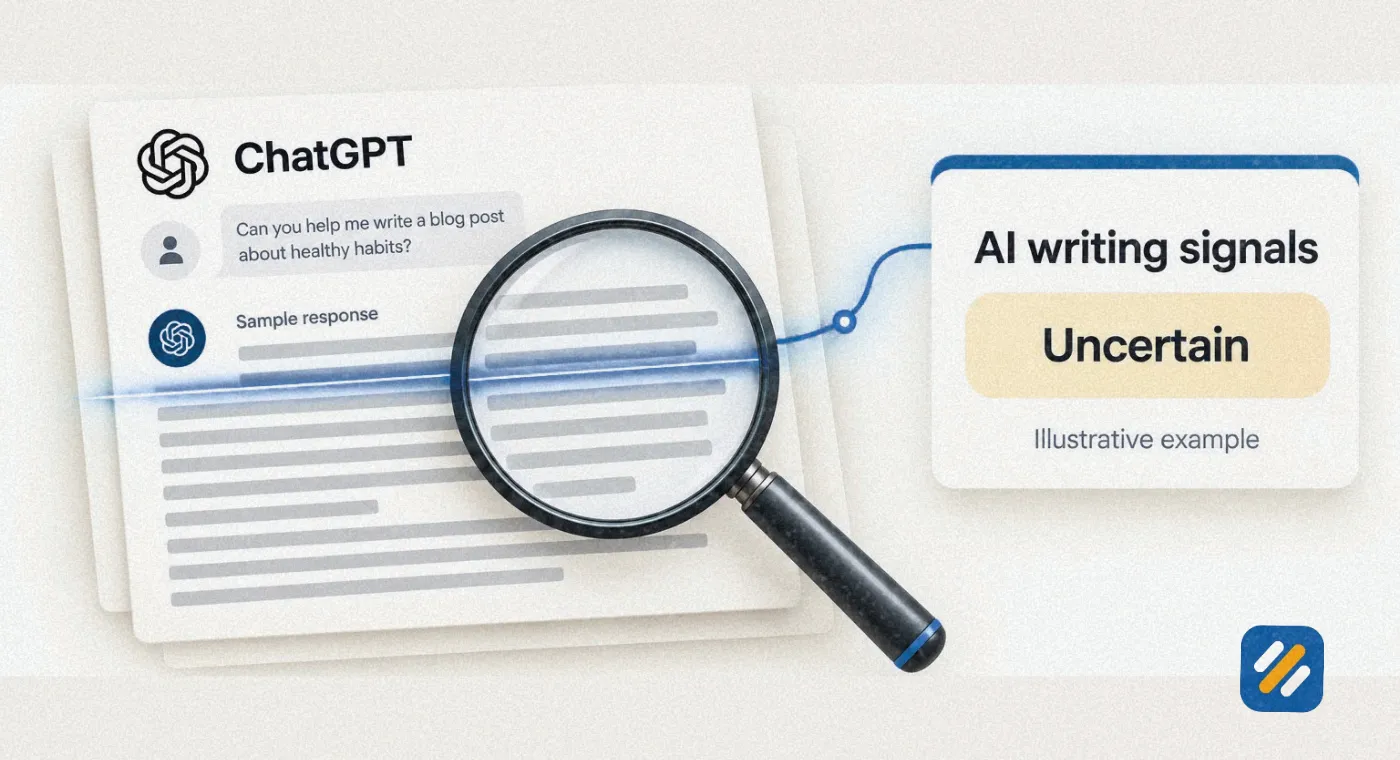
A GPT checker, also called a chat GPT checker or AI content detector, is a tool that analyses text and calculates the probability that it was generated by an AI model such as ChatGPT, Claude, Google Gemini, or Meta’s Llama. It works by comparing the submitted text against statistical patterns that AI language models consistently produce, including predictable sentence structures, overused transitional phrases, unusually uniform paragraph lengths, and a distinctive lack of genuine personal perspective.
The reason every serious content creator, SEO specialist, and blogger needs one in 2026 comes down to two things.
First, the volume of AI-generated content online has exploded. Educators, publishers, hiring managers, and brands now actively screen content for AI fingerprints before accepting, ranking, or publishing it. If you use AI to assist your writing and never check it, you are flying blind.
Second, Google’s quality systems have become significantly better at identifying content that was generated at scale without genuine human expertise layered on top. In many years of doing SEO professionally, I have watched the gap between AI-assisted content that ranks and AI-generated content that gets filtered widen dramatically with each major algorithm update.
A GPT checker is the quality control step between generating a draft and publishing something you are proud to put your name on.
2 How Does a GPT Checker Actually Work | The Technology Behind the Detection
Understanding how a GPT checker works helps you use it more intelligently and understand why no detector is 100% accurate.
AI language models like ChatGPT generate text by predicting the most statistically likely next word based on everything that came before it in the prompt. This process is called next-token prediction and it creates a measurable characteristic called low perplexity. Low perplexity means the text is highly predictable at a statistical level.
Human writing, by contrast, is less predictable. Real writers make unexpected word choices, use varied sentence rhythms, include specific personal details, go off on tangents, and occasionally break grammatical conventions in ways that feel authentic rather than mechanical.
GPT checker tools are trained on large datasets of both human-written and AI-generated text. They learn to recognise the statistical signatures of AI output: the low perplexity score, the consistent burstiness pattern, the overuse of words like “crucial,” “delve,” “leverage,” and “comprehensive,” and the tendency to structure every paragraph with the same opening-explanation-example-summary pattern.
Most modern GPT checkers use one or a combination of three detection methods
Perplexity scoring measures how predictable the text is at the word level. Lower scores indicate AI-generated content.
Burstiness analysis measures variation in sentence length and complexity. Human writing tends to have high burstiness with dramatic swings between short punchy sentences and longer detailed ones. AI writing tends to have low burstiness with consistent, medium-length sentences throughout.
Model fingerprinting compares the text against known output patterns from specific models like GPT-4, Claude, or Gemini. Some advanced detectors can identify which AI model likely produced the text.
3 GPTZero | The Most Recognised Free GPT Checker for Bloggers and Educators
GPTZero is one of the oldest and most widely recognised GPT checker tools available. It was built by Princeton student Edward Tian in 2023 and has since grown into a full platform used by educators, content managers, and SEO professionals worldwide.
What makes GPTZero stand out is its five-layer detection model that checks for perplexity, burstiness, sentence-level AI highlighting, and specific AI vocabulary patterns. It also includes protection against common bypassing techniques like paraphrasing tools that try to make AI text look more human.
How to use GPTZero as a free ChatGPT checker:
Visit gptzero.me, paste your text into the input field (minimum 250 characters, maximum 5,000 characters on the free plan), and click Predict. The results show a document-level classification, a probability breakdown on a human-to-AI sliding scale, and sentence-level highlighting showing which specific sentences triggered the AI detection.
The free plan allows up to 10,000 words per month, which is enough for most bloggers publishing four to six articles per week. Premium plans start at $15 per month for 150,000 words.
What GPTZero does well:
It goes beyond a simple percentage score. The “Why is this text AI-like?” feature explains exactly which characteristics triggered the detection, giving you actionable guidance on where to focus your humanisation edits.
Where GPTZero falls short:
In independent testing, GPTZero tends to hedge its classifications rather than giving confident verdicts. It frequently classifies clearly AI-generated text as “human written and polished with AI” rather than fully AI, which can create a false sense of security.
4 ZeroGPT | The Best Completely Free GPT Checker With No Word Limits
ZeroGPT sits in a different position from GPTZero despite the similar name. While GPTZero requires an account and has monthly word limits on its free plan, ZeroGPT lets you check up to 15,000 characters per scan completely free with no sign-up required.
For bloggers and small business owners who want to quickly run a sanity check on AI-assisted content before publishing, ZeroGPT’s no-friction approach makes it the most accessible free GPT checker available.
The tool uses what it calls a DeepAnalyse technology that evaluates multiple AI signatures simultaneously. Beyond the overall AI probability score, it highlights individual sentences that triggered the detection, making it easier to identify exactly which parts of your content need revision.
ZeroGPT’s unique features that competitors miss:
ZeroGPT offers WhatsApp and Telegram bots that let you check content directly from messaging apps without opening a browser. For content teams that work across multiple platforms, this is a genuinely useful workflow advantage. It also supports batch file uploads and multi-language detection, making it one of the most versatile free options for international content teams.
Accuracy considerations:
ZeroGPT performs strongly on ChatGPT-generated content but can occasionally misclassify Claude-generated text, returning lower AI probability scores than the content deserves. When using ZeroGPT as your primary GPT AI checker, it is worth cross-referencing suspicious results with a second tool for important content.
5 Best GPT Checker Tools Compared in 2026
After testing these tools across multiple content types including blog posts, product descriptions, and SEO articles, here is how the leading GPT checker options compare:
| Tool | Free Plan | Best For | Accuracy | Sentence Level Detection | Pricing |
|---|---|---|---|---|---|
| GPTZero | 10,000 words/month | Bloggers and educators needing detailed analysis | Good but hedges verdicts | Yes | Free to $15/month |
| ZeroGPT | 15,000 characters per scan | Quick checks with no account needed | Strong on ChatGPT, weaker on Claude | Yes | Free to $10/month |
| Sapling AI | 2,000 characters per scan | Highest accuracy across all AI models | Near perfect in testing | Yes | Free to $25/month |
| Copyleaks | 5 free scans | Large document analysis and enterprise use | Excellent on all models | Yes | Free to $16.99/month |
| Winston AI | 14-day trial only | Teams needing integrations and reports | Very strong overall | Yes | From $12/month |
| Pangram | 4 credits per day | Lowest false positive rate | Excellent across all models | Yes | Free to $20/month |
| Writer AI | Limited free tier | Marketing teams and brand content | Good on GPT-4 | Partial | From $18/month |
My recommendation for SEO bloggers: Start with ZeroGPT for quick daily checks since it requires no account and has generous free limits. Use Sapling or Copyleaks for final verification before publishing any article you consider a cornerstone piece for your website.
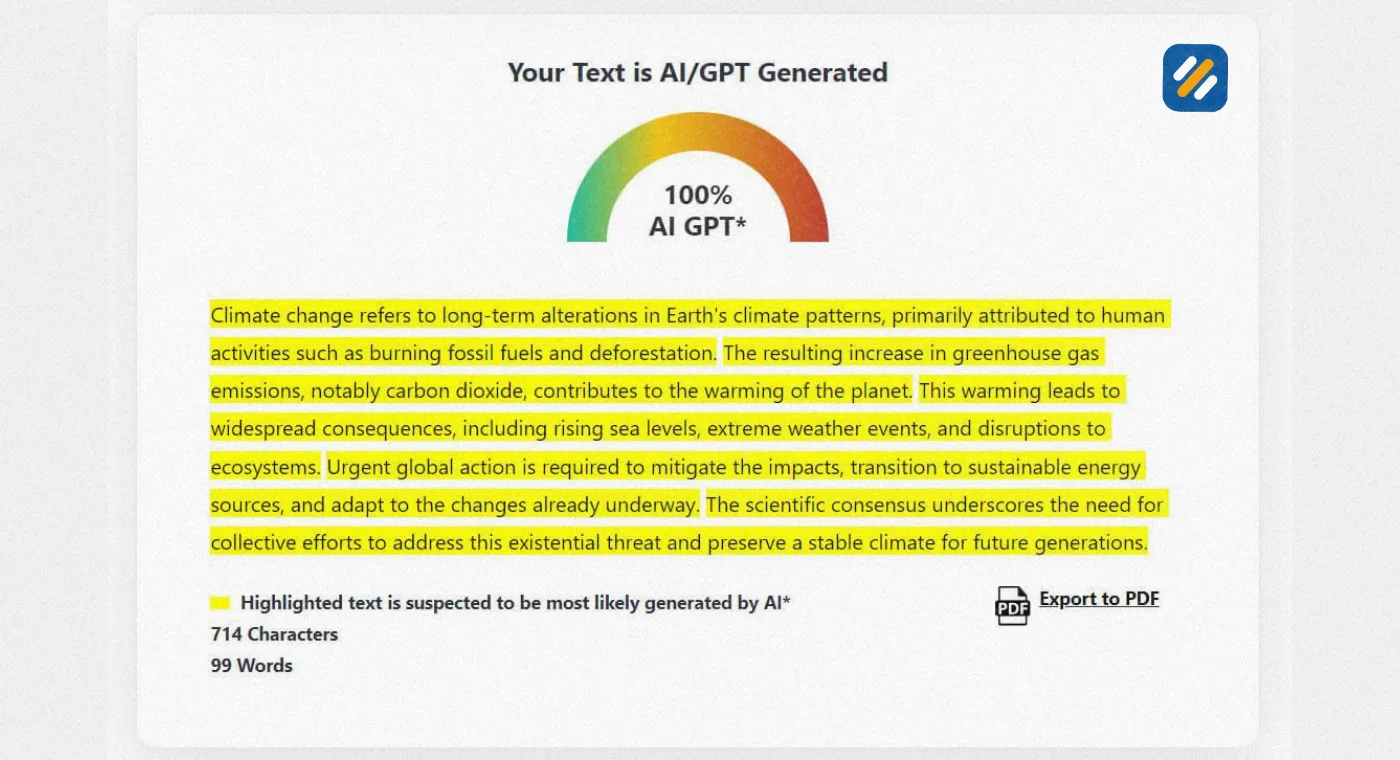
6 How to Humanize AI Content After Running a GPT Checker
Running a GPT checker is only useful if you know what to do with the results. A high AI probability score is not a reason to delete the content. It is a signal pointing you toward specific sections that need human input.
Here is the exact process I use when humanising AI-assisted content for client websites and for SEOWithRoman.com
Step 1: Identify the flagged sentences. Every major GPT checker highlights which specific sentences triggered the AI detection. These are your rewrite targets. Do not rewrite the entire article. Focus only on flagged sections.
Step 2: Add a real personal example. The fastest way to eliminate AI patterns from a flagged section is to insert a first-person experience. Not a fabricated one. A real client situation, a genuine mistake you made, or a specific outcome you observed. AI cannot replicate this and GPT checkers cannot flag it as AI-generated because it genuinely is not.
Step 3: Vary your sentence structure deliberately. AI consistently produces medium-length sentences with similar rhythms. Break this pattern by alternating between very short punchy statements and longer detailed explanations within the same paragraph. One sentence. Then a much longer sentence that builds on it with a specific detail, an example, or a contrast that adds genuine depth. Then another short one.
Step 4: Replace generic AI vocabulary. Words like “crucial,” “delve,” “leverage,” “comprehensive,” “it is worth noting,” and “in today’s digital landscape” are statistical fingerprints of AI output. Search your document for these words and replace each one with your natural speaking voice equivalent.
Step 5: Add a genuine opinion or disagreement. AI tools are trained to be agreeable and balanced. Real experts have opinions. They disagree with conventional wisdom. They call out bad advice. Adding one or two sentences where you express a direct personal view on something in your article eliminates a significant portion of AI pattern signals.
Step 6: Re-run the GPT checker. After making your edits, paste the revised content back into your GPT checker. A well-humanised article should come back below 30% AI probability on most detectors.
7 What Is an AI Humanizer and Should You Use One Instead of Manual Editing
An AI humanizer is a tool that automatically rewrites AI-generated text to reduce its AI detection probability score. Tools like Undetectable AI, HIX Bypass, and StealthWriter market themselves as the solution to high GPT checker scores.
The appeal is obvious. Instead of manually rewriting flagged sections, you paste your AI content into a humanizer and it spits out a version designed to fool detectors.
Here is my honest professional view on this approach.
AI humanizers create a significant quality risk that most users do not recognise. When you run AI-generated text through an AI humanizer, you are putting AI content through another AI system. The output is often grammatically awkward, factually imprecise, and structurally inconsistent. It may fool a GPT checker but it reads strangely to an actual human reader, which is the one audience you actually need to impress.
More importantly, Google’s ranking systems do not use GPT checkers. They evaluate content quality through user engagement signals, content depth, E-E-A-T indicators, and helpfulness. A humanizer-processed article that fools ZeroGPT but reads unnaturally will still perform poorly in search because real readers do not engage with it the way they engage with genuinely well-written content.
The right use case for an AI humanizer is as a first-pass tool to reduce the most obvious AI patterns before you go in and make real human edits. It should never be the final step. It should be one early step in a process that ends with genuine human review, personal additions, and expert knowledge layered on top.
8 3 Expert Tips for Using a GPT Checker Like an SEO Professional
Tip 1: Do Not Chase a Zero Percent AI Score
A 100% human score from a GPT checker does not mean your content is good. Some GPT checkers flag highly structured, expert content as AI-generated simply because it is well-organised. Aim for below 30% on most tools, but focus your real energy on whether the content genuinely helps the reader.
Tip 2: Use Two Different GPT Checkers for Important Content
No single tool is accurate across all AI models. GPTZero misses some Claude patterns. ZeroGPT can struggle with mixed content. For any article targeting a competitive keyword, run it through both ZeroGPT and Sapling before publishing to get a more complete picture.
Tip 3: Check Your Competitor Content Before You Write
Before writing any article, paste the top three ranking competitor articles into a GPT checker. If they are all returning 60% or higher AI scores and still ranking, that keyword has lower content quality standards. If competitors are all returning under 20%, that niche demands genuinely high quality human writing and you need to match that standard to compete.
9 Conclusion
A GPT checker is not a tool for hiding AI use. It is a quality control instrument that helps you identify where your content needs genuine human expertise before it goes live on your website.
The best workflow in 2026 is not choosing between AI and human writing. It is using AI to handle the structural and research-heavy first draft, then using a GPT checker to identify exactly where your personal experience, expert knowledge, and authentic voice need to replace what the AI generated.
Run the check. Find the flagged sections. Add what only you can add. Publish something you are proud to put your name on.
That is how GPT checkers protect your SEO, and that is how content actually earns rankings in 2026.
Have a question about any of these GPT checker tools or how to humanise your AI content? Leave a comment below and I will answer it personally.
Join 1,000+ business owners and bloggers who get one actionable SEO tip every week — straight to their inbox. Free forever.
Get Free Weekly Tips →