- Competitor analysis is the process of studying what your competitors do well in SEO, content, backlinks, and AI search so you can do it better
- Your SEO competitors are not always your business competitors. The websites ranking for your target keywords are your real competition
- Content gap analysis, backlink gap analysis, and keyword overlap reports are the three most valuable outputs of any competitor analysis
- In 2026 competitor analysis must include AI search visibility since Google AI Overviews, ChatGPT, and Perplexity now send traffic independently of traditional rankings
- Free tools including Google Search Console, Ahrefs Webmaster Tools, and SEMrush free version give you enough data to run a complete competitor analysis with zero budget
1 What Is Competitor Analysis and Why Every SEO Strategy Depends on It
Here is the honest truth about SEO that most beginner guides skip over entirely.
You are never ranking in a vacuum. Every keyword you target already has pages competing for it. Every backlink opportunity you identify already has websites earning those links. Every piece of content you publish enters a space where other websites have been publishing for months or years before you arrived.
Competitor analysis is the process of studying those websites systematically so you can understand exactly what they are doing to rank, where their weaknesses are, and where you can outperform them with less effort than starting from scratch.
In many years of running SEO campaigns for clients across B2b, SaaS, healthcare, and ecommerce, I have never built a successful strategy without starting with competitor analysis. It is not optional. It is the foundation every other decision builds on.
A proper competitor analysis tells you which keywords are winnable right now based on your current domain authority. It shows you which content topics your competitors have left underserved. It reveals which websites are linking to your competitors but not to you, representing direct backlink opportunities. And in 2026, it now includes understanding which competitors are being cited by AI search engines like Google AI Overviews, ChatGPT, and Perplexity, because AI visibility is becoming a traffic source that rivals traditional organic rankings.
2 SEO Competitors vs Business Competitors | The Difference That Changes Everything
Before you run a single report, you need to understand one distinction that most beginners get completely wrong.
Your business competitors and your SEO competitors are not the same websites
Your business competitor is another company selling the same product or service to the same customers. Your SEO competitor is any website ranking in the top ten for the keywords your target audience is searching on Google.
A B2B software company selling project management tools competes directly with Asana and Monday.com as a business. But its SEO competitors for the keyword "how to manage remote teams" might include Forbes, Harvard Business Review, and a dozen independent productivity bloggers, none of which sell software at all.
This distinction matters because your competitor analysis strategy changes completely depending on which type of competitor you are studying.
| Competitor Type | Who They Are | What to Analyse | Your Goal |
|---|---|---|---|
| Direct business competitors | Same product, same audience | Their full SEO strategy, keywords, backlinks, content | Beat them comprehensively across all channels |
| Indirect SEO competitors | Different business, same keywords | Their content format, depth, keyword targeting | Outperform their specific pages, not their whole site |
| Authority publishers | Media sites, educational resources | Their content structure, E-E-A-T signals, topic coverage | Match their depth and credibility on shared topics |
| AI citation competitors | Sites cited in AI Overviews and LLM answers | Their structured data, Semantic SEO, brand mentions | Optimise for AI visibility and answer engine optimisation |
3 How to Identify Your Real SEO Competitors in Under 10 Minutes
Finding your true SEO competitors is the first step and it is faster than most people expect
Method 1: Google your most important keyword
Open an incognito browser window and search for your primary target keyword. The websites appearing in positions one to ten on page one are your direct SEO competitors for that keyword. Write down the domains appearing most frequently across your top five to ten most important keywords. Those recurring domains are your core SEO competitors.
Method 2: Use Ahrefs Webmaster Tools free
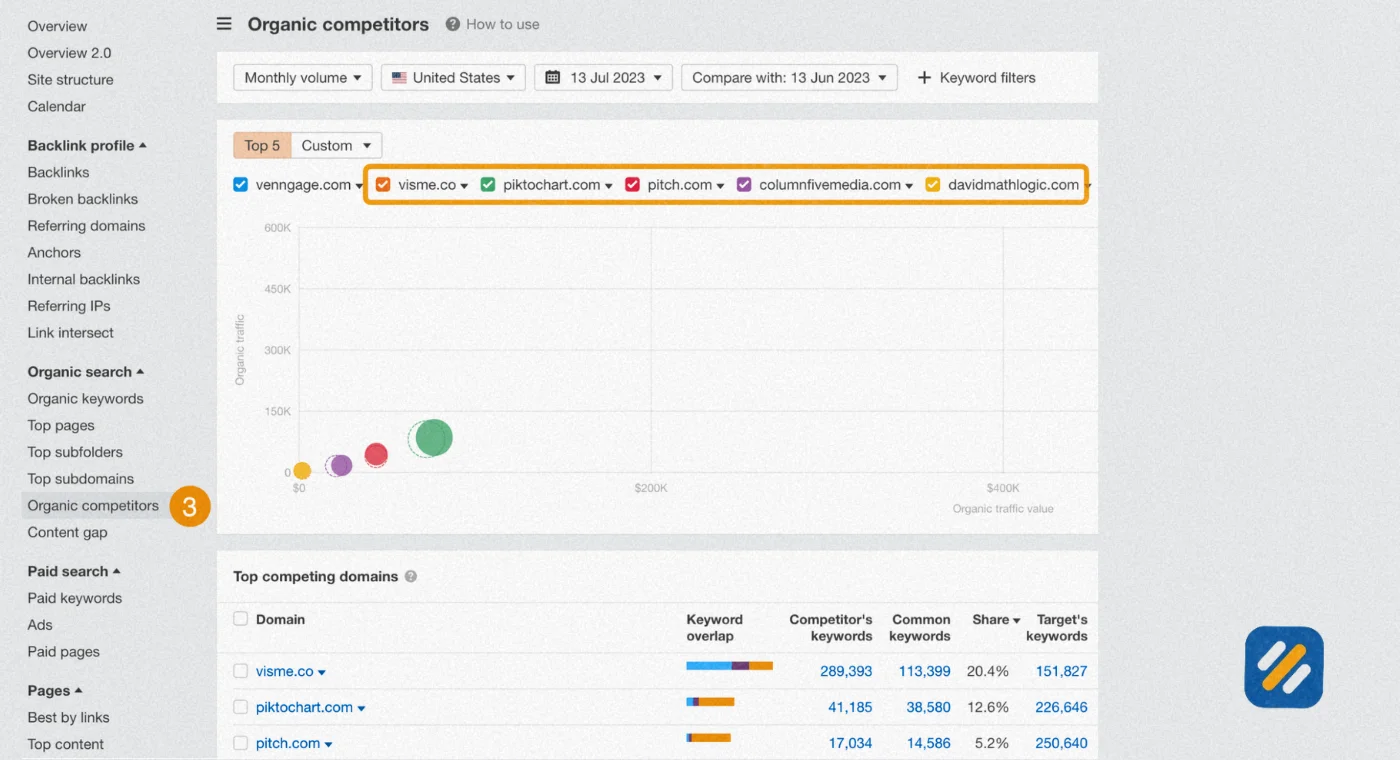
Enter your domain into Ahrefs Webmaster Tools and open the Organic Competitors report. This shows every website ranking in the top ten for at least one keyword you also rank for, sorted by the number of overlapping keywords. The websites at the top of this list with the highest keyword overlap are the competitors your analysis should focus on first.
Method 3: Use SEMrush free version
Enter your domain into SEMrush and look at the Organic Research section. SEMrush shows a competitors map plotting websites by keyword overlap and traffic volume. The websites closest to yours on this map are your highest priority SEO competitors.
Method 4: Search for your product or service category
Type your product category or service type directly into Google without any modifiers. "SEO consultant," "project management software," "accounting services for small business." The websites appearing consistently across these broad searches are the authority players in your space whose SEO strategies are worth studying in detail.
4 How to Do a Complete Competitor Analysis Step by Step
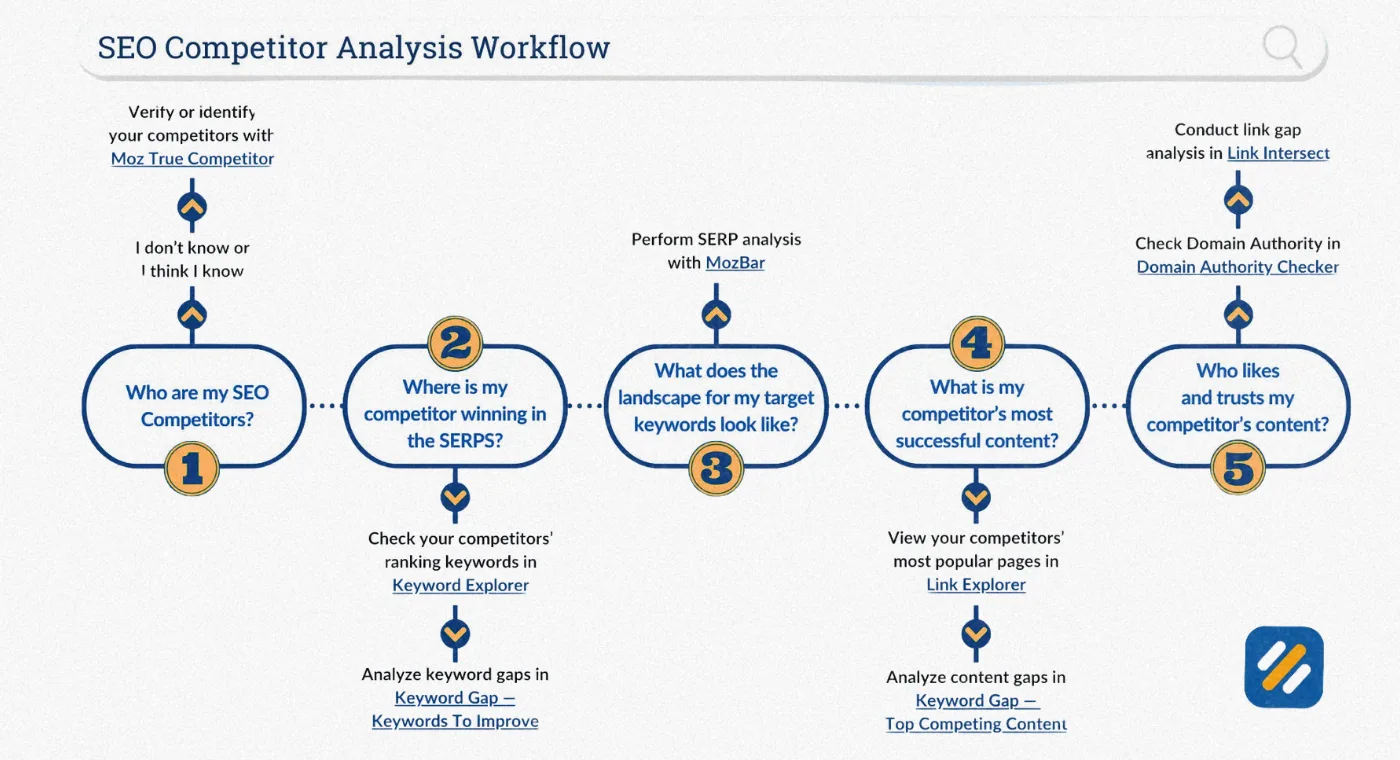
This is the full process I follow when running a competitor analysis for a new client website. Work through each step in order and document your findings as you go.
Step 1: Build your competitor list
Identify three to five primary SEO competitors using the methods above. Do not try to analyse ten or twenty websites at once. Three well-analysed competitors give you more actionable intelligence than twenty surface-level reviews.
Step 2: Analyse their organic keyword profile
For each competitor, find out which keywords are driving the most traffic to their website. In SEMrush free, enter their domain and look at their top organic keywords sorted by estimated traffic. In Ahrefs Webmaster Tools, use the Content Gap report to find keywords your competitors rank for that your site does not.
Look specifically for:
- Keywords with high traffic volume where your competitor ranks in positions four to ten. These are opportunities where their ranking is weak enough to challenge.
- Keywords with low difficulty scores that multiple competitors rank for but you do not. These are your fastest wins.
- Question-based keywords your competitors rank for that have featured snippet potential.
Step 3: Audit their top performing content
Find your competitor's highest traffic pages using SEMrush or Ahrefs. Open each of these pages and answer these questions:
How long is the content? What format does it use: guide, list, comparison, or tool? How many images, tables, or visuals does it include? Does it have an FAQ section? Is there a downloadable resource or template? How is the internal linking structured?
The answers tell you exactly what content format Google is rewarding in your niche and what benchmark your own content needs to meet or exceed.
Step 4: Analyse their backlink profile
Understanding where your competitors' authority comes from tells you exactly where to focus your link building efforts. In Ahrefs free Webmaster Tools, run a Link Intersect report showing websites that link to your competitors but not to you. These are your highest priority backlink targets because they have already demonstrated willingness to link to content in your niche.
Step 5: Assess their technical SEO health
Run your competitor's homepage through Google PageSpeed Insights and compare their Core Web Vitals scores to your own. Check whether they use schema markup by right-clicking their page and viewing page source, then searching for "schema.org." Look at their URL structure, internal linking patterns, and whether they use breadcrumb navigation.
Step 6: Evaluate their AI search visibility
This is the step that almost no competitor analysis guide includes yet and it is increasingly important. Open ChatGPT, Perplexity, and Google with AI Overviews enabled and ask questions related to your target keywords. Note which competitor websites are cited in AI-generated answers. These citations represent a new form of brand visibility in AI search that operates independently of traditional ranking positions.
5 Content Gap Analysis | Finding the Keyword Opportunities Your Competitors Left Open
Content gap analysis is the single highest-return activity in competitor analysis for a website that is building its content library from scratch.
A content gap is any keyword that your competitors rank for in the top ten that your website does not rank for at all. Each gap represents a traffic opportunity your competitor is currently capturing that you are missing entirely.
Here is how to run a content gap analysis with free tools
Using SEMrush free:
Enter your domain and navigate to the Keyword Gap tool. Enter two to three competitor domains alongside your own. SEMrush will show you keywords where competitors rank but you do not, filtered by your target country. Sort the results by search volume and filter for keywords with a difficulty score under 30 to find your fastest-win opportunities.
Using Google Search Console:
Export your current keyword rankings from GSC. Manually search for your ten most important keywords and note which competitor pages appear for each one. Any keyword where a competitor appears on page one and you do not is a content gap requiring either a new article or an improvement to an existing one.
Content gap priority matrix:
| Gap Type | Search Volume | Keyword Difficulty | Your Action |
|---|---|---|---|
| High priority gap | 500 or more monthly searches | Under 30 | Create new article targeting this keyword immediately |
| Medium priority gap | 100 to 499 monthly searches | 30 to 50 | Create article after completing high priority gaps |
| Low priority gap | Under 100 monthly searches | Under 20 | Include as secondary keyword in a related article |
| Aspirational gap | Any volume | Over 50 | Target after your domain authority reaches KD level |
6 Backlink Gap Analysis | Stealing Your Competitors' Link Building Opportunities
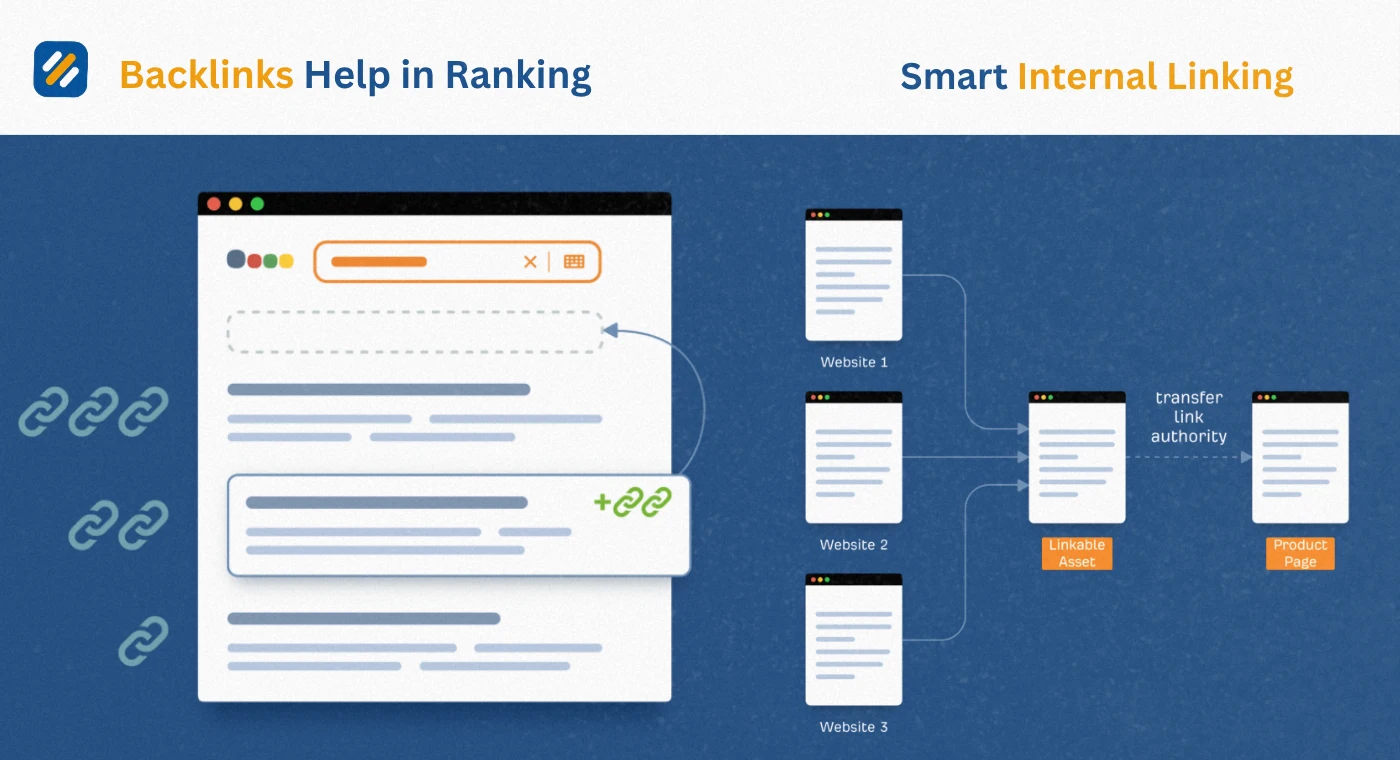
Every backlink your competitor has earned represents a website that was willing to link to content in your niche. That willingness does not disappear when you approach them with equally good or better content.
Backlink gap analysis identifies websites linking to your competitors but not to you, so you can prioritise your outreach toward the highest probability targets.
Here is the process
Step 1: Open Ahrefs free Webmaster Tools and navigate to the Link Intersect report. Enter your two to three primary competitors and run the report.
Step 2: Filter the results by Domain Rating above 40 to focus on high-authority linking opportunities rather than low-quality directory sites.
Step 3: For each linking domain in the report, click through to understand why they linked to your competitor. Was it a resource page, a statistics roundup, a guest post, a tool listing, or editorial coverage?
Step 4: Categorise the link opportunities by type and create a prioritised outreach list starting with resource pages and statistics roundups, which have the highest acceptance rates for cold outreach.
Step 5: Create or identify the specific page on your website you would pitch to each linking domain. The page you pitch must be as good as or better than the competitor page that earned the original link.
7 Competitor Analysis for AI Search
Traditional competitor analysis looks at Google rankings, backlinks, and content performance. In 2026, this picture is incomplete without understanding how your competitors are performing in AI-generated search results.
Generative engine optimisation, known as GEO, is the practice of optimising your content to appear in AI-generated answers from tools like Google AI Overviews, ChatGPT, Perplexity, and other large language model-powered search interfaces. AI search engine optimisation is becoming as important as traditional SEO for certain query types, particularly informational and research-oriented searches.
When I audit competitor visibility for clients today, I run searches across both traditional Google and AI search engines separately because the pages that rank in traditional results and the pages that get cited in AI-generated answers are not always the same.
Here is how to include AI visibility in your competitor analysis
Check Google AI Overviews: Search your target keywords in Google and note which websites are cited in the AI Overview boxes that appear at the top of results. These citations represent the highest visibility position in modern search and your competitors appearing there are earning brand impressions before any traditional result is seen.
Check Perplexity AI: Search the same keywords in Perplexity and look at the sources cited in each answer. Perplexity's citation patterns reveal which websites AI systems consider the most authoritative and trustworthy sources in your niche.
Check ChatGPT: Ask ChatGPT questions related to your target keywords and note which brands, websites, or experts it references in its answers. Competitors being mentioned by name in LLM outputs have achieved a level of answer engine optimisation that translates directly into brand awareness and referral traffic.
What makes a competitor visible in AI search:
| AI Visibility Factor | What It Means | How to Compete |
|---|---|---|
| Structured, answer-first content | Content that directly answers questions in the first paragraph | Rewrite introductions to lead with direct answers |
| Strong E-E-A-T signals | Clear author credentials, real experience shown in content | Add detailed author bios, cite original research |
| Semantic SEO coverage | Content covers related concepts comprehensively, not just exact keywords | Use topic clusters, cover related questions in each article |
| Schema markup implementation | FAQ, Article, and HowTo schema help AI systems understand content | Add schema to every article using Rank Math |
| Brand mentions across the web | Being cited by other websites increases LLM familiarity with your brand | Pursue guest posts, press mentions, and industry citations |
| Consistent topical authority | Publishing deeply on one subject builds AI system recognition | Stick to your six content categories and publish consistently |
8 Competitor Analysis Tools | Free vs Paid Options Compared
You do not need to spend money to run a comprehensive competitor analysis. Here is a complete comparison of the tools available at every budget level:
| Tool | Cost | Best For | Key Competitor Features | Limitation |
|---|---|---|---|---|
| Google Search Console | Free | Your own keyword data to compare | Shows your rankings to compare against competitors manually | Only shows your site data, not competitors |
| Ahrefs Webmaster Tools | Free | Backlink gap and content gap analysis | Link Intersect, Content Gap, Organic Competitors reports | Limited to your own verified domain |
| SEMrush Free | Free | Competitor keyword overview | 10 daily searches, organic keyword snapshot, competitor map | 10 searches per day limit |
| Ahrefs Free Keyword Generator | Free | Competitor keyword ideas | Enter competitor topics and find related keywords | No competitor domain input |
| Google PageSpeed Insights | Free | Technical competitor comparison | Compare Core Web Vitals against competitors | Manual, one page at a time |
| Ubersuggest Free | Free | Basic competitor overview | Three competitor searches per day, keyword gap data | Very limited on free plan |
| Ahrefs Paid | From $129/month | Full competitor analysis at scale | Complete backlink profiles, full keyword data, historical trends | Cost prohibitive for beginners |
| SEMrush Paid | From $139/month | Enterprise competitor intelligence | Full keyword gap, backlink gap, traffic analytics, ad research | Cost prohibitive for beginners |
For a new website with zero budget, the combination of Google Search Console, Ahrefs Webmaster Tools free, SEMrush free ten daily searches, and manual Google search analysis gives you everything you need to build a solid competitor analysis with no financial investment.
9 Competitor Analysis Template | Copy This for Every Analysis You Run
Use this template as your starting point every time you run a competitor analysis. Fill in one column per competitor.
Section 1: Competitor Overview
| Data Point | Competitor 1 | Competitor 2 | Competitor 3 |
|---|---|---|---|
| Domain | |||
| Domain Authority or Rating | |||
| Estimated Monthly Traffic | |||
| Total Keywords Ranking | |||
| Total Backlinks | |||
| Primary Content Focus | |||
| AI Search Visibility | High / Medium / Low | High / Medium / Low | High / Medium / Low |
Section 2: Keyword Gap Findings
List the top ten keywords each competitor ranks for that you do not, sorted by search volume.
Section 3: Content Audit Findings
For each competitor's top five pages: URL, target keyword, estimated traffic, word count, content format, number of backlinks to that page.
Section 4: Backlink Gap Findings
List the top twenty linking domains that link to competitors but not to you, with their Domain Rating and the link type.
Section 5: Technical Comparison
Compare your Core Web Vitals scores, mobile performance, schema implementation, and site structure against each competitor.
Section 6: AI Visibility Findings
Note which competitors appear in Google AI Overviews, Perplexity, and ChatGPT responses for your target keywords.
Section 7: Priority Actions
Based on findings, list your top five content gaps to fill, top five backlink targets to pursue, and top three technical fixes to implement.
10 3 Expert Tips for Running a Competitor Analysis That Actually Changes Your Rankings
Most competitor analysis guides give you the process but skip the strategic thinking that separates a useful analysis from one that collects dust in a Google Doc.
Expert Tip 1: Analyse Competitor Content That Is Ranking Between Positions 4 and 10, Not Position 1
Position one competitors are usually the hardest to beat and studying them first is a mistake for new websites. The real opportunity is in competitors ranking between positions four and ten. These pages are indexed and trusted by Google but their rankings are vulnerable. Google is essentially telling you these pages are good but not perfect. Your job is to find out why they are not at position one and publish something that fixes whatever they are missing.
Expert Tip 2: Track Your Competitors Monthly, Not Just Once
A competitor analysis run once and never revisited is almost useless within six months. Competitors publish new content, earn new backlinks, and change their strategies constantly. Set a calendar reminder to run a lightweight version of your competitor analysis every month. You are specifically looking for new keywords your competitors started ranking for, new backlinks they earned in the past 30 days, and any new content they published that is outranking your existing articles. Monthly tracking turns competitor analysis from a one-time project into a continuous intelligence advantage.
Expert Tip 3: Look for Content Your Competitors Publish That Gets Backlinks but No Traffic
This is the most underused insight in competitor analysis. Some content earns lots of backlinks because it is highly citable, meaning researchers, journalists, and bloggers reference it, but gets relatively little organic traffic because it targets low-volume keywords. These are your best link bait opportunities. Create a better version of this content, promote it to the same websites that linked to your competitor's version, and you earn high-quality backlinks without needing to rank for a high-competition keyword first.
11 Conclusion
Competitor analysis is not a one-time activity you do when you launch a website and then file away forever. It is an ongoing intelligence process that feeds every decision you make in SEO, from which keywords to target next week to which websites to approach for backlinks next month.
The websites that grow fastest on Google are almost never the ones with the biggest budgets or the most staff. They are the ones that understand their competitive landscape clearly and make smarter decisions because of that understanding.
Start with three competitors. Run through the template above. Document your findings. Then take the single highest-priority action your analysis reveals, whether that is writing a content gap article, reaching out to a backlink opportunity, or updating a page that a competitor is outranking you on.
One insight acted on is worth more than a hundred insights left in a spreadsheet.
Have a question about how to run a competitor analysis for your specific industry or website? Drop a comment below and I will answer it personally.
Join 1,000+ business owners and bloggers who get one actionable SEO tip every week — straight to their inbox. Free forever.
Get Free Weekly Tips →