- Integrated marketing means delivering one consistent message across every channel your audience uses, from social media to email to SEO
- The 4 Cs of integrated marketing are Coherence, Consistency, Continuity, and Complementary messaging
- The 4 pillars of IMC are Advertising, Public Relations, Direct Marketing, and Digital Marketing
- Brands that use integrated marketing campaigns see stronger brand recall, higher conversion rates, and lower cost per acquisition
- SEO is one of the most powerful and most underused channels inside an integrated marketing strategy
1 What Is Integrated Marketing and Why Every Business Needs to Understand It
Most businesses market in silos. Their social media team posts one message. Their email team sends a different one. Their website says something else entirely. And their sales team is pitching a fourth version of the same product.
This is the opposite of integrated marketing. And it is costing those businesses customers every single day.
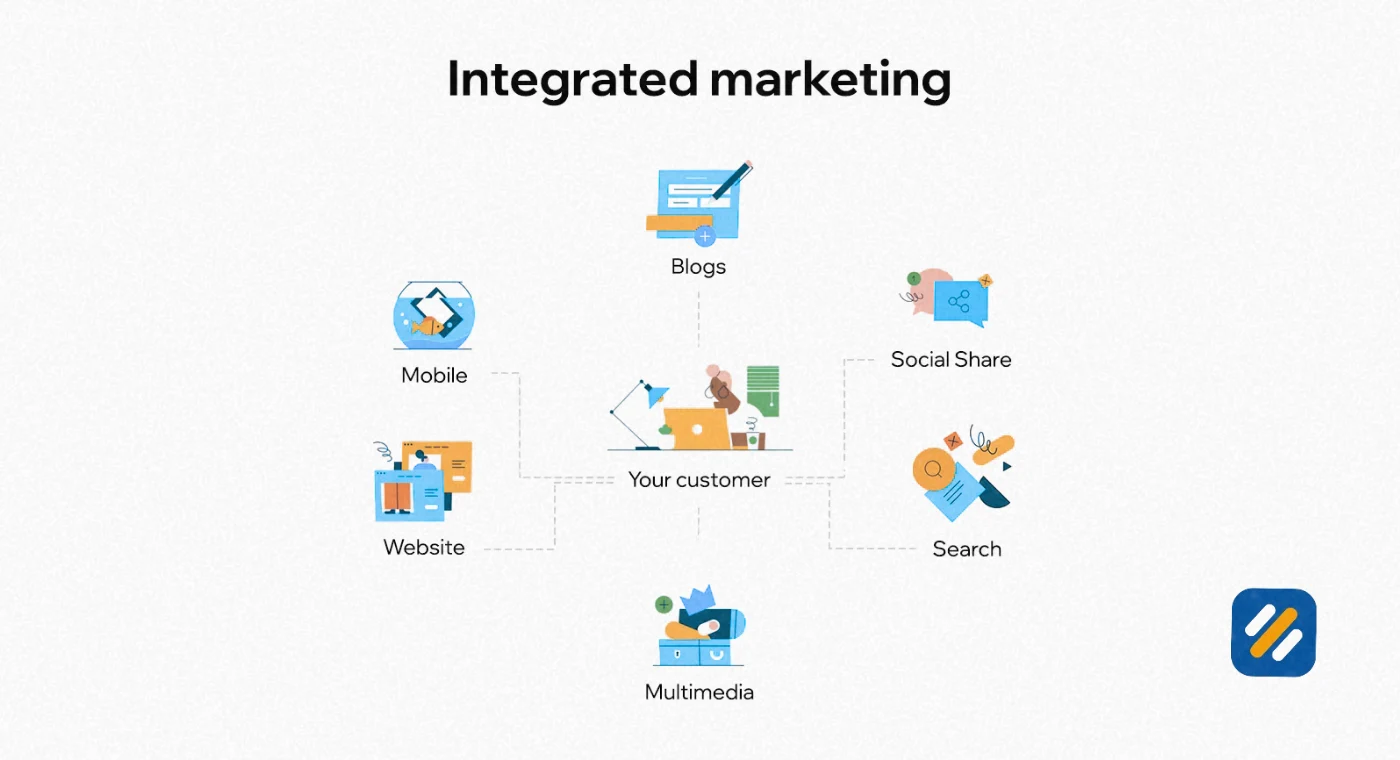
Integrated marketing is the practice of unifying every marketing channel, message, and piece of content around one consistent core idea. It means that whether a potential customer finds you through Google, sees your Instagram post, receives your email, or walks into your store, they encounter the same story, the same tone, and the same value proposition.
The formal definition is straightforward. Integrated marketing is a strategic approach that aligns all marketing communications across multiple channels to deliver a seamless, consistent brand experience to the customer at every touchpoint.
But the practical reality is even simpler. When your message is the same everywhere your audience finds you, they trust you faster, remember you longer, and buy from you more readily.
Research consistently supports this. Customers need an average of six to eight touchpoints before making a purchase decision. Integrated marketing ensures that every one of those touchpoints reinforces the same message rather than creating confusion or contradiction.
In many years of working on SEO and digital marketing strategies for B2B and B2C clients, I have seen integrated campaigns outperform siloed ones in every measurable metric including organic traffic, conversion rate, and customer lifetime value.
2 What Is the Difference Between Marketing and Integrated Marketing
This is one of the most searched questions on this topic and the distinction is more important than most guides acknowledge.
Traditional marketing refers to individual tactics used in isolation. A company runs a Google Ads campaign. Another company sends a monthly email newsletter. A third company posts on Instagram three times a week. Each of these is marketing. But none of them are integrated marketing.
Integrated marketing is what happens when all of those tactics work together toward a single unified goal with a single unified message.
Here is the clearest way to think about the difference
| Factor | Traditional Marketing | Integrated Marketing |
|---|---|---|
| Approach | Separate tactics, separate teams | Unified strategy, coordinated teams |
| Messaging | Each channel has its own message | One core message adapted across all channels |
| Brand experience | Inconsistent, varies by channel | Seamless and consistent everywhere |
| Campaign planning | Reactive, channel by channel | Proactive, cross-channel from day one |
| Customer journey | Fragmented, gaps between touchpoints | Connected, continuous across touchpoints |
| Cost efficiency | Higher, duplicate efforts across teams | Lower, shared assets and messaging across channels |
| Measurement | Each channel measured in isolation | Cross-channel attribution and unified reporting |
| SEO role | Separate activity managed by SEO team | SEO integrated into overall content and messaging strategy |
The shift from traditional to integrated marketing is not just a tactical change. It is a strategic mindset shift. You stop thinking about channels and start thinking about your customer’s complete journey with your brand.
3 What Is an Example of Integrated Marketing That Actually Worked
Real examples teach integrated marketing better than any definition. Here are three campaigns that demonstrate the strategy at its best, followed by one that shows what happens when integration breaks down.
Coca-Cola’s Share a Coke Campaign
Coca-Cola replaced its iconic logo on bottles with 250 popular first names. The campaign ran simultaneously across TV ads, in-store displays, social media, outdoor billboards, and a personalised website where customers could order bottles with any name.
Every channel told the same story. Find your name. Share a Coke. The hashtag shareable went viral, generating over 500,000 social media photos in the first year and adding 25 million new Facebook followers. The consistency of messaging across every channel is exactly what made it work.
Apple’s Entire Brand Experience
Apple does not run integrated marketing campaigns. Apple IS an integrated marketing campaign. Every product, every store, every advertisement, every website page, and every piece of packaging shares the same minimalist aesthetic, the same tone of voice, and the same core message: simplicity and premium quality.
When you walk into an Apple store, you feel like you are inside an Apple website. When you open an Apple product, it feels like an Apple ad came to life. That seamlessness is the product of decades of disciplined integrated marketing thinking.
Old Spice’s Smell Like a Man Campaign
Old Spice launched a TV commercial featuring Isaiah Mustafa. The same character then appeared on YouTube, responded to consumer tweets from the same shower set, and starred in additional ads as the campaign grew. Sales increased 55% in the first three months and 107% by the fourth month.
The integration of TV, digital video, social media, and user engagement into a single character-driven story is a masterclass in what integrated marketing campaigns can achieve.
4 The 4 Cs of Integrated Marketing Every Marketer Must Know
The 4 Cs framework is the practical foundation of any successful integrated marketing strategy. These are the four qualities your campaign must have to qualify as truly integrated.
Coherence
Every piece of your campaign must connect logically to every other piece. A customer who sees your Instagram post and then visits your website should feel like they are in the same conversation. A customer who reads your email and then searches your brand on Google should find messaging that matches what they already encountered.
Coherence means your audience can follow a clear narrative thread no matter which channel they encounter first.
Consistency
Consistency goes beyond coherence. It means your logo, colour palette, tone of voice, typography, and core message are identical across every channel. Not similar. Identical.
This is harder than it sounds because different channels have different formats and audiences. The discipline is adapting your message to each channel’s format without changing the underlying message itself.
Continuity
Continuity means your campaign tells a story that builds over time. Each new touchpoint adds to what came before rather than starting from scratch. A customer who sees your campaign in January should feel that your February content picks up where January left off.
This is particularly relevant for integrated marketing campaigns that run over weeks or months. The story evolves but the core message remains anchored.
Complementary
The most powerful integrated campaigns are ones where the whole is greater than the sum of its parts. Each channel should amplify the others. Your SEO content drives search traffic that reinforces your social media message. Your email campaign reminds subscribers of the content they found through search. Your paid ads retarget visitors who came through organic channels.
When channels complement each other this way, you multiply the impact of every individual channel without multiplying the cost.
5 The 4 Pillars of IMC | What Integrated Marketing Communications Is Built On
Integrated Marketing Communications, commonly shortened to IMC, is the formal discipline that underlies integrated marketing strategy. It has four foundational pillars that every integrated plan must address.
| IMC Pillar | What It Covers | Role in Integration | Channel Examples |
|---|---|---|---|
| Advertising | Paid promotion of your brand message | Creates initial awareness at scale | TV, Google Ads, display ads, paid social |
| Public Relations | Managing how the public perceives your brand | Builds credibility and authority | Press releases, media coverage, influencer partnerships |
| Direct Marketing | Communicating directly with specific audience segments | Drives conversion through personalised outreach | Email, SMS, direct mail, retargeting |
| Digital Marketing | Online channels including SEO, social media, and content | Builds long-term visibility and engagement | SEO, content marketing, social media, video |
The power of IMC comes from how these four pillars support each other. Advertising creates awareness. PR builds trust. Direct marketing converts. Digital marketing sustains visibility. When all four operate from the same messaging framework, the customer experience becomes seamless.
Most small businesses operate one or two pillars in isolation and wonder why their marketing does not compound. Integrated marketing is what makes the compounding happen.
6 Integrated Marketing Strategy | How to Build One Step by Step
Building an integrated marketing strategy is not as complicated as most marketing frameworks make it sound. Here is the process I follow when helping clients shift from siloed to integrated marketing:
Step 1: Define your one core message. Before you touch any channel, write down the single most important thing you want your audience to understand about your brand. Not three things. One thing. Everything else in your integrated marketing plan flows from this.
Step 2: Map your customer’s complete journey. List every touchpoint where a potential customer encounters your brand from the moment they first become aware of you to the moment they purchase and beyond. This map becomes the foundation of your channel strategy.
Step 3: Audit your existing channels. Review every channel you currently use and assess whether the messaging is consistent with your core message. Identify the gaps and contradictions. These are your integration priorities.
Step 4: Build a unified content calendar. Create a single content calendar that covers all channels simultaneously. Every piece of content planned for email, social media, SEO, and paid ads should be visible in one place so your team can see how all channels work together each week.
Step 5: Adapt your message to each channel’s format without changing the core. A blog post, an Instagram caption, and an email subject line cannot be identical. But the underlying message they communicate should be. This is the creative discipline at the heart of integrated marketing.
Step 6: Set cross-channel metrics. Instead of measuring each channel in isolation, define KPIs that measure the customer journey across channels. Track how many customers discovered you through SEO and then converted through email. Track how many social media followers eventually became organic search visitors. This cross-channel view is what reveals the true return on integrated marketing.
7 Integration Marketing vs SEO | How Organic Search Fits Into Your Integrated Strategy
This is the section most integrated marketing guides completely skip and it is the section most relevant to the long-term growth of any small business or personal brand.
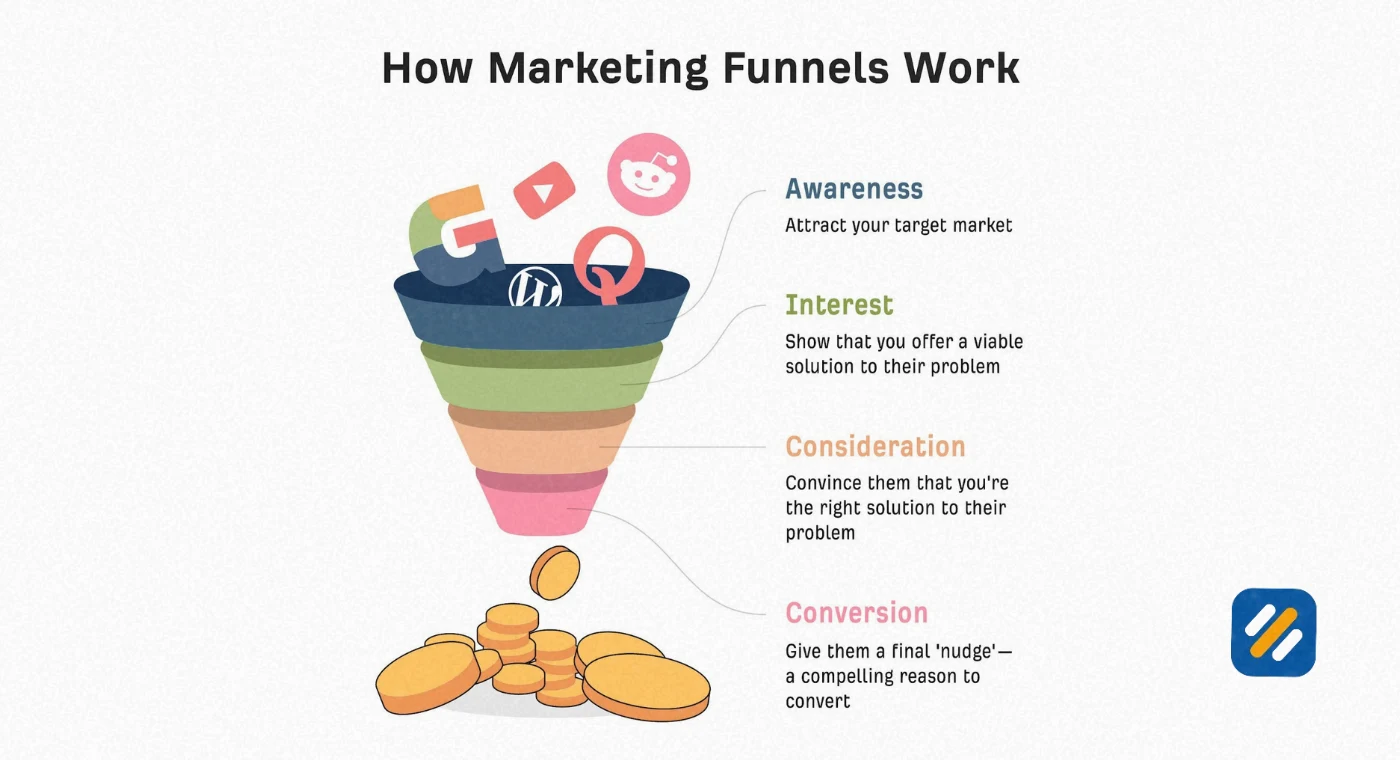
SEO is not a standalone channel that sits outside your integrated marketing strategy. It is arguably the most powerful channel inside it, because organic search is where your audience goes when they are actively looking for exactly what you offer.
Here is how SEO fits into an integrated marketing campaign
SEO provides the content foundation: The keyword research process for SEO reveals exactly what language your audience uses when they search for solutions. That language should inform the messaging across every other channel in your integrated plan. If your audience searches “how to reduce customer churn” they are telling you exactly what words to use in your email subject lines, your social media posts, and your ad copy.
SEO content amplifies paid campaigns: When you run a paid search or social campaign, the landing page the ad points to must deliver on the ad’s promise. An SEO-optimised landing page that ranks organically for the same keywords your ad targets creates a reinforcing loop where both organic and paid visibility increase simultaneously.
SEO builds the authority that PR and backlinks support: Every press mention, influencer reference, and publication feature that comes from your PR pillar generates backlinks to your website. Those backlinks increase your domain authority and improve the rankings of your SEO content. The PR and SEO pillars of your IMC strategy directly amplify each other.
Organic content drives email list growth: The long-form SEO content on your blog or website is the highest-quality traffic source for email sign-ups. Visitors who found you through a specific search query are more engaged than social media followers who scrolled past your post. Capturing those visitors into your email list connects the SEO and direct marketing pillars of your integrated strategy.
The businesses that understand this relationship between SEO and integrated marketing build compounding growth engines that paid advertising alone cannot replicate.
8 Integrated Marketing Automation | How Technology Makes Integration Scalable
One of the biggest barriers small businesses face when implementing integrated marketing is the operational challenge of coordinating multiple channels consistently. This is where integrated marketing automation becomes essential.
Marketing automation tools allow you to connect your channels so that customer behaviour on one channel automatically triggers relevant communication on another.
Here is how an integrated automation sequence works in practice
A visitor finds your blog post through organic search. They read the article and sign up for your email list. Your email automation tool sends a welcome sequence that delivers additional content matching the topic they found you through. Seven days later, the same visitor sees a retargeting ad on social media featuring the same topic. They return to your website, read a second article, and book a consultation.
Every step in that sequence is triggered automatically and each message is consistent with the core brand message the visitor encountered in the original blog post. That is integrated marketing automation in action.
Tools that support integrated marketing automation include email platforms with behavioural triggers, CRM systems that track cross-channel customer interactions, social media scheduling tools that connect to your content calendar, and SEO platforms that feed keyword data back into your content strategy.
9 3 Expert Tips for Running a Successful Integrated Marketing Campaign
Tip 1: Start With SEO Data Before Planning Any Other Channel
Your keyword research reveals exactly what your audience is searching for right now. Build your integrated campaign messaging around the language real searchers use, not the language your internal team prefers. This single shift makes every other channel in your campaign more relevant from day one.
Tip 2: Create One Asset, Distribute It Across Every Channel
Write one comprehensive long-form article. Turn it into a social media carousel. Record a short video summarising its key points. Send the main insight as an email. This approach keeps your messaging perfectly consistent while multiplying your reach without multiplying your workload.
Tip 3: Measure Channel Contribution, Not Just Channel Performance
Most marketers measure each channel in isolation and give credit to the last channel before conversion. Instead, track which channels introduce new customers and which channels close them. SEO often introduces, email often closes. Understanding this relationship tells you where to invest more, not just which channel looks best on its own.
10 Conclusion
Integrated marketing is not a complicated concept. It is the discipline of saying the same thing in the same way everywhere your audience finds you, and making sure every channel in your marketing mix amplifies every other channel rather than working in isolation.
The businesses that master this in 2026 will not be the ones with the biggest budgets. They will be the ones with the clearest message, the most consistent brand voice, and the strategic discipline to connect their SEO, email, social media, PR, and paid channels into one compounding growth system.
Start with your core message. Build your content around what your audience is actually searching for. Make sure every channel tells the same story. Measure how channels work together, not just how they perform alone.
That is what integrated marketing looks like when it actually works.
Have a question about building your own integrated marketing strategy? Leave a comment below and I will answer it personally.
Join 1,000+ business owners and bloggers who get one actionable SEO tip every week — straight to their inbox. Free forever.
Get Free Weekly Tips →