- Competitive analysis is the process of researching your competitors’ strategies to find gaps, opportunities, and advantages you can use in your own business
- A complete competitor analysis covers three areas: their products, their marketing, and their SEO and content strategy
- The 4Ps framework covers Product, Price, Place, and Promotion and gives you a structured lens to analyse any competitor
- SWOT analysis and competitive analysis are related but different. SWOT looks inward at your own business. Competitive analysis looks outward at rivals
- How to do competitor analysis in SEO involves studying their keywords, backlinks, content gaps, and traffic sources using free tools like Ahrefs and Google Search Console
1 What Do You Mean by Competitive Analysis and Why Every Business Needs One
Most businesses know who their competitors are. Very few actually know what their competitors are doing, how well it is working, and what they can learn from it.
That is exactly the gap competitive analysis fills
Competitive analysis is the structured process of researching your competitors’ products, pricing, marketing strategies, SEO performance, and customer positioning so you can use those insights to sharpen your own approach and find opportunities they have missed.
It is not about copying what competitors do. It is about understanding the market landscape clearly enough to make smarter decisions than the people you are competing against.
In many years of doing SEO and digital marketing across B2b, healthcare, ecommerce, and SaaS industries, I have seen the same pattern repeat itself constantly. The businesses that grow consistently are not always the ones with the best product. They are the ones who understand their competitive landscape and use that knowledge to position themselves more precisely, market more effectively, and serve their customers better.
A competitive analysis gives you that understanding in a systematic and repeatable way.
What competitive analysis is not: it is not a one-time report you file and forget. The most valuable competitive research is done regularly, at least every quarter, because markets shift, competitors change strategy, and new players enter constantly.
2 Types of Competitors You Must Identify Before You Start
One of the most common mistakes in competitor research is analysing the wrong businesses. Before you start gathering data, you need to understand that not all competitors are the same and each type teaches you something different.
Direct competitors target the same audience with the same type of product or service. These are your priority. If you run an SEO agency serving US small businesses, another SEO agency targeting the same audience is a direct competitor. Studying them shows you how the market is currently being served and where you can differentiate.
Indirect competitors solve the same core problem but through a different product or approach. An SEO software tool that helps small businesses do their own SEO is an indirect competitor to your agency. They are capturing the same demand through a different solution. Understanding indirect competitors helps you identify whether your market is shifting toward self-service or managed service models.
Aspirational competitors are market leaders you are not currently competing with directly but whose strategies you can learn from and eventually aim to match. Studying them shows you what excellence looks like in your space and what your roadmap should eventually include.
For most small businesses and personal brand websites, start by identifying three direct competitors. That is enough to generate meaningful, actionable insight without overwhelming yourself with data.
3 Why Competitive Analysis Matters for Marketing and SEO
Competitive analysis is not just a business strategy exercise. For anyone doing digital marketing or SEO, it is one of the most practical and high-return research activities you can do.
Here is why it matters specifically for SEO and marketing:
It shows you which keywords are already proven to drive traffic in your niche. Instead of guessing which topics to cover, you can see exactly which content is sending your competitors thousands of visitors per month and build a smarter content plan around those insights.
It reveals content gaps where competitors rank but you do not. These gaps represent keyword opportunities where there is proven search demand but your website currently has no presence.
It shows you where competitors are getting their backlinks. Replicating the best backlink sources your competitors have is one of the most reliable link building strategies available, especially for newer websites.
It benchmarks your performance against real market standards. Instead of measuring yourself against abstract targets, you can see exactly how your traffic, rankings, and domain authority compare to the businesses you are actually competing with.
It informs your positioning. Understanding how competitors describe themselves, what pain points they address, and what audiences they target helps you find the angle that makes your brand clearly different and more relevant to the specific customers you want to reach.
For a personal brand website like SEOWithRoman.com, competitive analysis is especially valuable because it shortens the learning curve dramatically. You are entering a market where other SEO blogs already exist and already rank. Rather than starting from zero, you can study what the top performing SEO blogs do consistently and build a content and link strategy based on what is already proven to work.
4 The 5 Steps of a Competitive Analysis | The Complete Framework
This is the step by step process I follow when doing competitive analysis for client websites and my own projects. Each step builds on the previous one and together they give you a complete picture of your competitive landscape.
Step 1: Identify your real competitors
Do not assume you know who your competitors are. Confirm it with data. Search your primary keyword on Google and note the top five to ten organic results. These are your SEO competitors. Search for your product or service type and note which brands appear repeatedly across review sites, comparison articles, and industry directories. These are your business competitors. The two lists will overlap but are rarely identical.
Step 2: Analyse their products, pricing, and positioning
Study each competitor’s core offering. What problem do they solve? Who do they help? How do they describe the value they provide? What is their pricing model? Understanding this lets you identify where competitors are strong, where they are weak, and which customer segments they are overlooking.
Step 3: Research their marketing and content strategy
Look at which marketing channels drive the most traffic to their websites. Study their blog, social media presence, email marketing, and paid advertising if any. For SEO specifically, analyse which keywords they rank for, which pages bring the most traffic, and how often they publish new content.
Step 4: Study customer feedback and market sentiment
Search for competitor reviews on G2, Trustpilot, Google Reviews, and Reddit. What do customers repeatedly praise? What do they consistently complain about? Competitor weaknesses revealed in customer reviews are your most direct opportunities to win business from their dissatisfied customers.
Step 5: Establish your positioning based on the gaps you found
After completing steps one through four, you have a clear view of what competitors do well and where they fall short. Use this to define your positioning. What do you offer that they do not? Which customer need is currently underserved in the market? This is where your competitive advantage lives.
5 The 4Ps of Competitor Analysis | A Framework That Goes Deeper Than Most Guides Cover
The 4Ps framework is one of the most useful structures for analysing competitors in a consistent and comparable way. Originally developed as a marketing mix model, the 4Ps work equally well as a competitor analysis framework because they force you to examine every dimension of how a competitor goes to market.
Product: What exactly does the competitor offer? What are the core features, the unique capabilities, and the gaps in what they provide? How does the product quality compare to what customers actually need? For a service business or blog, the “product” is the quality, depth, and format of the service or content they deliver.
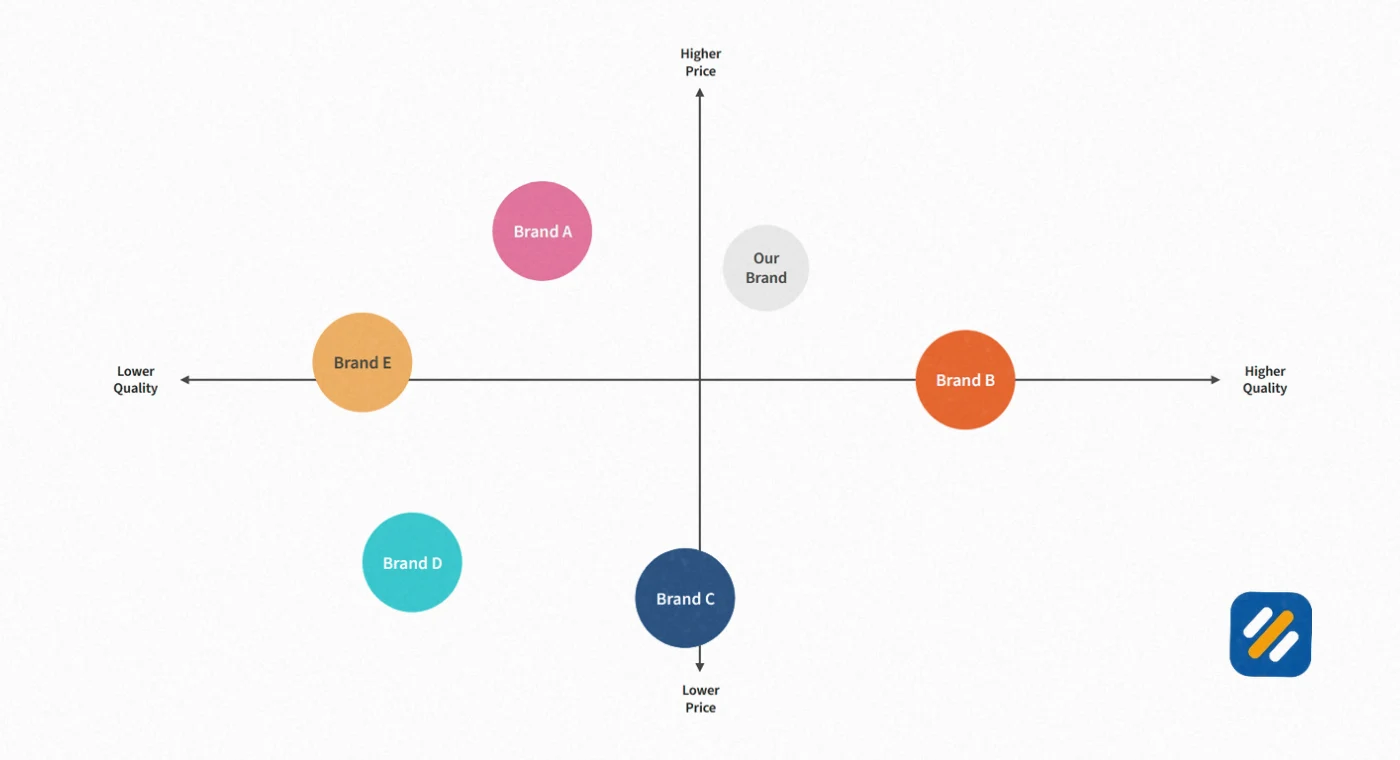
Price: How does the competitor price their offering and what does that signal about who they are targeting? A premium price signals a premium positioning and attracts customers who prioritise quality over cost. A low price signals volume and attracts price-sensitive buyers. Understanding competitor pricing tells you which market segment they are serving and whether there is space for a differently priced alternative.
Place: Where does the competitor distribute their product or reach their audience? For a physical business, this means their distribution channels and locations. For a digital business or website, it means which platforms they are active on, which traffic channels they use, and where their content appears. An SEO blog that gets traffic primarily from Google is in a different competitive position than one that gets most of its visitors from LinkedIn or YouTube.
Promotion: How does the competitor communicate their value to potential customers? What messaging do they use? What tone do they take? Which content formats and marketing channels do they invest in most heavily? Understanding promotion helps you identify both what works in your market and which promotional angles are currently overused and therefore less effective.
| 4P Element | What to Analyse in a Competitor | What It Tells You |
|---|---|---|
| Product | Features, quality, depth, uniqueness | Where they excel and what gaps exist |
| Price | Pricing model, tiers, free vs paid | Which market segment they target |
| Place | Traffic sources, platforms, distribution | Which channels drive their audience |
| Promotion | Content type, tone, frequency, messaging | What marketing approach works in your niche |

6 What Is the Difference Between a SWOT Analysis and a Competitive Analysis
This question comes up constantly when people start doing structured business or marketing research and the confusion is understandable because both frameworks involve looking at strengths and weaknesses.
The key difference is direction. Competitive analysis looks outward. SWOT analysis looks inward and outward together.
Competitive analysis focuses entirely on your competitors. You are studying what rivals do, how well it works, and what you can learn from their strategies, keywords, content, pricing, and customer feedback. The output is insight about your market and the businesses you are competing against.
SWOT analysis focuses primarily on your own business. Strengths and Weaknesses examine your internal capabilities and limitations. Opportunities and Threats examine the external environment, which includes competitors, market trends, and industry changes. The output is a clear picture of your own competitive position.
Here is how they work together in practice. You do competitive analysis first. Then you use what you learned about competitors to inform the Opportunities and Threats sections of your SWOT. The two frameworks are most powerful when used in sequence, not as alternatives to each other.
| Framework | Primary Focus | What It Analyses | Best Used For |
|---|---|---|---|
| Competitive Analysis | External (competitors) | Rival strategies, keywords, content, pricing, positioning | Understanding the market and what competitors do |
| SWOT Analysis | Internal and External | Your own strengths, weaknesses, market opportunities, threats | Defining your strategy and positioning |
| Competitive Matrix | Comparative | Side by side feature and attribute comparison | Quickly visualising where you win and where you lose |
| Porter’s Five Forces | Industry level | Market power, supplier dynamics, threat of new entrants | Long term strategic planning for established businesses |
The practical takeaway: do your competitive analysis first to understand the landscape. Then use a SWOT to decide how your business should position itself given what you found.
7 How to Do Competitor Analysis in SEO | The Practical Step by Step
SEO competitor analysis is a specific application of competitive research focused entirely on organic search performance. It is one of the highest-value activities you can do for a new or growing website because it shows you exactly which content, keywords, and links are already driving real traffic in your niche.
Here is the exact process I use when doing SEO competitor analysis for new client websites:
Step 1: Find your SEO competitors. These are the websites ranking on page one for your target keywords. They are not always the same as your business competitors. Search your three to five most important keywords and note which domains appear consistently in the top results.
Step 2: Analyse their top performing pages. Use Ahrefs free webmaster tools or Ubersuggest to see which pages on a competitor’s website generate the most organic traffic. These are their highest value content assets. Study the topics, formats, word counts, and keyword targeting of these pages.
Step 3: Find their ranking keywords. Look at which keywords send the most traffic to competitor pages. Focus specifically on keywords with difficulty scores under 30 that you do not currently rank for. These are your priority content opportunities.
Step 4: Analyse their backlink profile. Identify the websites linking to your competitors most frequently. Many of these sites will also link to your content if it is high quality and relevant. This is called the skyscraper technique applied to link building.
Step 5: Identify their content gaps. Find keywords that multiple competitors rank for but your website does not. These represent topics where there is proven search demand that your content strategy has not yet addressed.
Step 6: Assess their technical SEO health. Check their page speed, mobile usability, and Core Web Vitals scores. If a competitor has weak technical SEO but strong content, that is an opportunity to outrank them by combining equally strong content with better technical performance.
8 Competitive Landscape Analysis | Tools You Can Use for Free
You do not need an enterprise budget to do meaningful competitive landscape analysis. Here are the best free and low cost tools available in 2026:
| Tool | What It Shows | Cost | Best For |
|---|---|---|---|
| Google Search | Organic competitors for any keyword | Free | Identifying who you are competing with |
| Ahrefs Free Webmaster Tools | Your own backlinks and organic keywords | Free with verification | Benchmarking your own SEO data |
| Ubersuggest Free | Competitor keyword rankings and traffic estimates | Free tier available | Quick competitor keyword overview |
| SEMrush Free | 10 competitor searches per day | Free tier | Keyword difficulty and competitor snapshots |
| Google Keyword Planner | Search volume for competitor keywords | Free with Google Ads account | Validating keyword opportunities |
| SimilarWeb Free | Traffic source breakdown for any domain | Free tier | Understanding competitor traffic channels |
| BuiltWith Free | Technology stack any website uses | Free | Understanding competitor tools and infrastructure |
| Google Alerts | Monitoring competitor brand mentions | Free | Tracking competitor news and content |
For a personal brand SEO blog, the combination of Ahrefs free tools, Ubersuggest, and Google Search gives you everything you need to run a thorough competitive analysis without spending anything.
9 Competitive Analysis Example | What This Looks Like in Practice
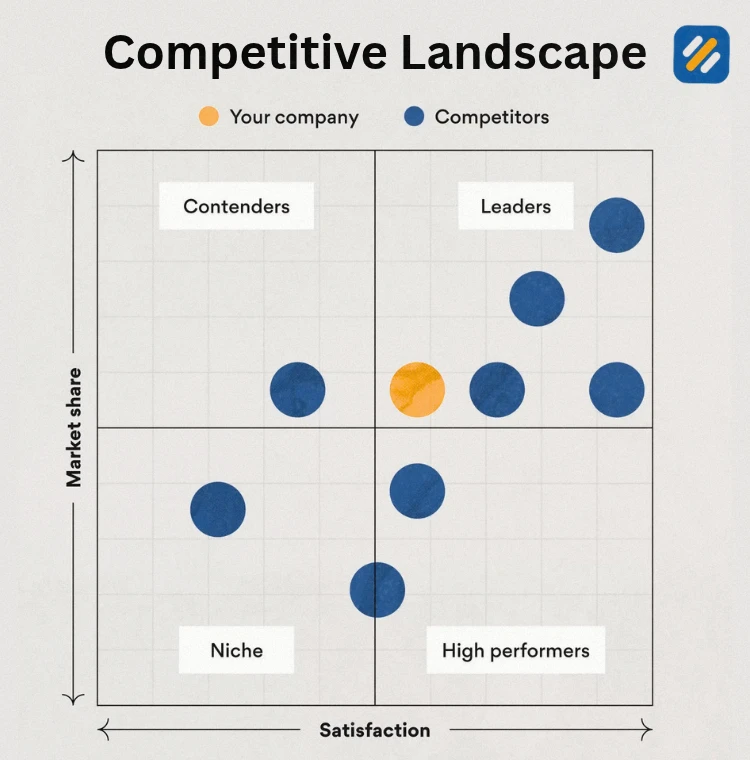
To make this concrete, here is a simplified competitive analysis example for an SEO education blog targeting US small business owners.
You identify three direct competitors: a well-known SEO blog, a popular digital marketing newsletter that covers SEO topics, and a freelance SEO consultant’s personal blog. You run each through Ahrefs and note their top five ranking pages by traffic.
You discover that all three competitors rank strongly for beginner SEO guides but none of them have deep coverage of technical SEO for WordPress specifically. That gap represents a content opportunity. You also notice that one competitor gets a significant portion of its traffic from a single high-authority guest post on an industry website. That domain becomes a priority for your own outreach.
You then run a 4Ps analysis on each competitor. The first competitor has excellent content depth but slow page speed and no personal author bio, which weakens its E-E-A-T signals. The second has strong promotion through email but thin on-page optimisation. The third has a strong personal brand but inconsistent publishing frequency.
From this analysis, your positioning becomes clear. You will combine genuine personal expertise shown through your author bio and real client examples, with consistent publishing, strong on-page optimisation, and a focus on technical WordPress SEO content that none of your direct competitors cover in depth.
That is a competitive analysis turning directly into a content and SEO strategy.
10 3 Expert Tips for Running a Competitive Analysis That Actually Improves Your Rankings
Tip 1: Focus on competitor content that is ranking but outdated
Find competitor articles ranking in positions 4 to 10 that were last updated more than 18 months ago. These are the easiest pages to outrank because Google already values the topic and the existing content is stale. Write a more current, more comprehensive version and you have a realistic path to page one.
Tip 2: Use competitor review complaints as your content brief
The most common complaints customers leave in competitor reviews are your most valuable content ideas. If customers repeatedly say a competitor’s guides are too technical or lack real examples, your version of that guide should be simpler and filled with examples. You are literally writing content based on what the market is already asking for.
Tip 3: Analyse competitor internal linking, not just backlinks
Most people focus entirely on external backlinks during competitor research. But competitor internal linking patterns reveal which pages they consider most important and how they build topical authority across their site. If a competitor links to the same pillar page from every article in a category, that page is a priority target for a competing piece of content.
11 How Often Should You Run a Competitive Analysis
One competitive analysis is a starting point, not a strategy. Markets change. Competitors update their content. New players enter your niche. Google algorithm updates shift rankings. All of these changes affect your competitive landscape and require regular monitoring.
Here is a practical cadence for different types of competitive research:
Monthly: Check if competitor rankings have shifted significantly for your target keywords. This takes fifteen minutes in Google Search or any rank tracking tool and tells you quickly if a competitor has made a major SEO push or if rankings have reshuffled.
Quarterly: Run a full content gap analysis to identify new keywords competitors are ranking for that you are not. Update your content calendar based on what you find.
Every six months: Do a complete competitive analysis covering products, marketing channels, SEO performance, and customer sentiment. This is the full process described in this article.
Annually: Reassess who your competitors actually are. The list changes more than most business owners expect, especially in fast-moving digital markets.
12 Conclusion
A competitive analysis is not a complicated or expensive exercise. It is a structured way of paying attention to what is already working in your market and using that information to make better decisions than the people you are competing against.
The businesses and websites that consistently grow are not necessarily the most talented or best resourced. They are the most informed. They understand their market, they know what competitors are doing, and they use that knowledge to publish better content, target smarter keywords, and position themselves more precisely for the customers they want to reach.
Start your competitive analysis this week. Pick three direct competitors. Run their domains through Ahrefs or Ubersuggest. Find the keywords they rank for that you do not. Write better content on those topics than anything that currently exists.
That single process, repeated consistently, is how new websites build real authority in competitive niches.
Have a question about competitive analysis or competitor research? Leave a comment below and I will answer it personally.
Join 1,000+ business owners and bloggers who get one actionable SEO tip every week — straight to their inbox. Free forever.
Get Free Weekly Tips →