- A keyword research checklist keeps your SEO strategy structured, repeatable, and free from costly guesswork
- Seed keywords are your starting point but long-tail keywords are where new websites win their first rankings
- Search intent is the single most important factor when evaluating whether a keyword is worth targeting
- Keyword clustering and keyword mapping prevent cannibalization and help every page rank for multiple related terms
- Competitor keyword analysis reveals proven opportunities your audience is already searching for right now
1 Why You Need a Keyword Research Checklist Before Writing a Single Word
Every article I have seen fail on Google shares one thing in common. It was written before the keyword research was done properly.
The writer had a topic in mind, searched it briefly, decided it seemed popular, and started writing. Six months later the article sits on page four with eleven visitors per month and no clear path to improvement.
A keyword research checklist fixes this problem at the source. It gives you a repeatable process that removes guesswork, prevents wasted effort, and ensures every piece of content you publish has a realistic chance of ranking before you invest a single hour in writing it.
In many years of doing SEO across B2b, ecommerce, healthcare, and personal brand websites, I have followed the same structured keyword research process for every client and every article. The results are consistent precisely because the process is consistent.
This checklist covers every step from finding your first seed keywords all the way through to keyword mapping and tracking. Follow it in order for every article you publish and your content library will build ranking momentum instead of sitting in silence.
2 Step 1: Define Your Niche and Audience Before Touching Any Tool
The single biggest mistake beginners make with keyword research is opening a tool before they know who they are trying to reach.
Before you search for a single keyword, answer these three questions clearly
Who is your target reader? Be specific. Not "small business owners" but "US-based small business owners with a WordPress website who want to rank on Google without hiring an agency." The more precisely you define this person, the more accurately your keyword list will reflect how they actually search.
What stage of awareness are they at? A complete beginner searching for the first time uses completely different language than someone who has been doing SEO for six months. A beginner searches "what is keyword research." Someone with experience searches "keyword clustering strategy for topical authority." Both are valid audiences but they need completely different content.
What action do you want them to take after reading? This determines whether you target informational, commercial, or transactional keywords. A blog post designed to build trust and drive newsletter signups targets informational keywords. A service page designed to drive enquiries targets transactional ones.
Write these answers down before you start. They become your filter for every keyword decision that follows.
3 Step 2: Build Your Seed Keyword List
Seed keywords are the broad root terms that describe your niche, topic, or business. They are not the keywords you will ultimately target. They are the starting points from which your full keyword list grows.
Think of seed keywords the way a botanist thinks about parent plants. The parent plant does not produce fruit directly. But every fruit-bearing branch grows from it.
To build your seed keyword list, think about
- The main topics your website covers
- The problems your target reader is trying to solve
- The products, services, or tools you discuss
- The questions your target audience asks most often
- The categories and subcategories of your niche
For an SEO education website targeting US small business owners, seed keywords would include: SEO, keyword research, on-page SEO, backlinks, Google rankings, technical SEO, WordPress SEO, and Google Search Console.
Each of these seeds will generate dozens to hundreds of keyword variations when entered into a research tool. Your goal at this stage is breadth, not precision. Capture every relevant seed topic and move to the next step.
4 Step 3: Expand Seed Keywords Into a Full Keyword List
With your seed keywords listed, the next step is to expand them into specific, searchable terms that real people actually type into Google.
Here is how to do this systematically across four sources
Google Autocomplete: Type each seed keyword into Google and note every autocomplete suggestion that appears. These are real searches happening right now, drawn from actual user behaviour. Each suggestion is a confirmed keyword with real search volume.
Google People Also Ask: After searching a seed keyword, expand every question in the People Also Ask box. These are structured keyword opportunities with clear informational intent already built in. Each question becomes a potential H2 heading for an article targeting that keyword.
Google Related Searches: Scroll to the bottom of any search results page and note the eight related searches listed there. These represent queries Google considers semantically connected to your seed term. Many of these are long-tail keywords with low competition.
Keyword Research Tools: Enter each seed keyword into Google Keyword Planner, Ahrefs free keyword generator, or the free version of Semrush. Each tool generates hundreds of keyword variations with search volume and difficulty data attached.
Export everything into a spreadsheet. At this stage quantity matters. You will refine this list in the steps that follow.
5 Step 4: Find Long-Tail Keywords That New Websites Can Actually Rank For
This is the step that separates websites that start ranking within three to six months from websites that publish for a year and see almost nothing.
Long-tail keywords are specific multi-word phrases that target a narrow, precise search query. They have lower search volume than broad terms but significantly lower competition and significantly higher conversion intent.
The keyword "SEO" has a difficulty score above 90 and millions of competing pages. No new website can rank for it. The keyword "how to do keyword research for a new WordPress website" might have 50 to 200 monthly searches and a difficulty score under 15. A new website publishing quality content on that specific question can rank for it within three to four months.
Here is the formula for finding valuable long-tail keywords
| Long-Tail Type | Structure | Example | Best For |
|---|---|---|---|
| Question-based | How to + verb + topic | How to find low competition keywords | Informational blog posts |
| Comparison-based | X vs Y for Z | Ahrefs vs Semrush for beginners | Commercial intent content |
| Location-based | Topic + city or region | Keyword research for UK small businesses | Local SEO content |
| Audience-specific | Topic + for + audience | SEO keyword research for bloggers | Niche targeting |
| Problem-based | How to fix + problem | How to fix keyword cannibalization | Troubleshooting content |
| Tool-specific | How to use + tool + task | How to use Google Keyword Planner for free | Tutorial content |
For a new website, build your first 30 articles entirely around long-tail keywords with difficulty scores under 20. This is not a limitation. It is a strategy. You are building domain authority and topical coverage before competing for harder terms.
6 Step 5: Analyse Keyword Search Volume and Difficulty
With a long list of potential keywords, you now need to evaluate each one against two core metrics: keyword search volume and keyword difficulty.
Keyword Search Volume is the average number of times a keyword is searched per month in your target location. It tells you how much traffic opportunity exists if you rank for that term.
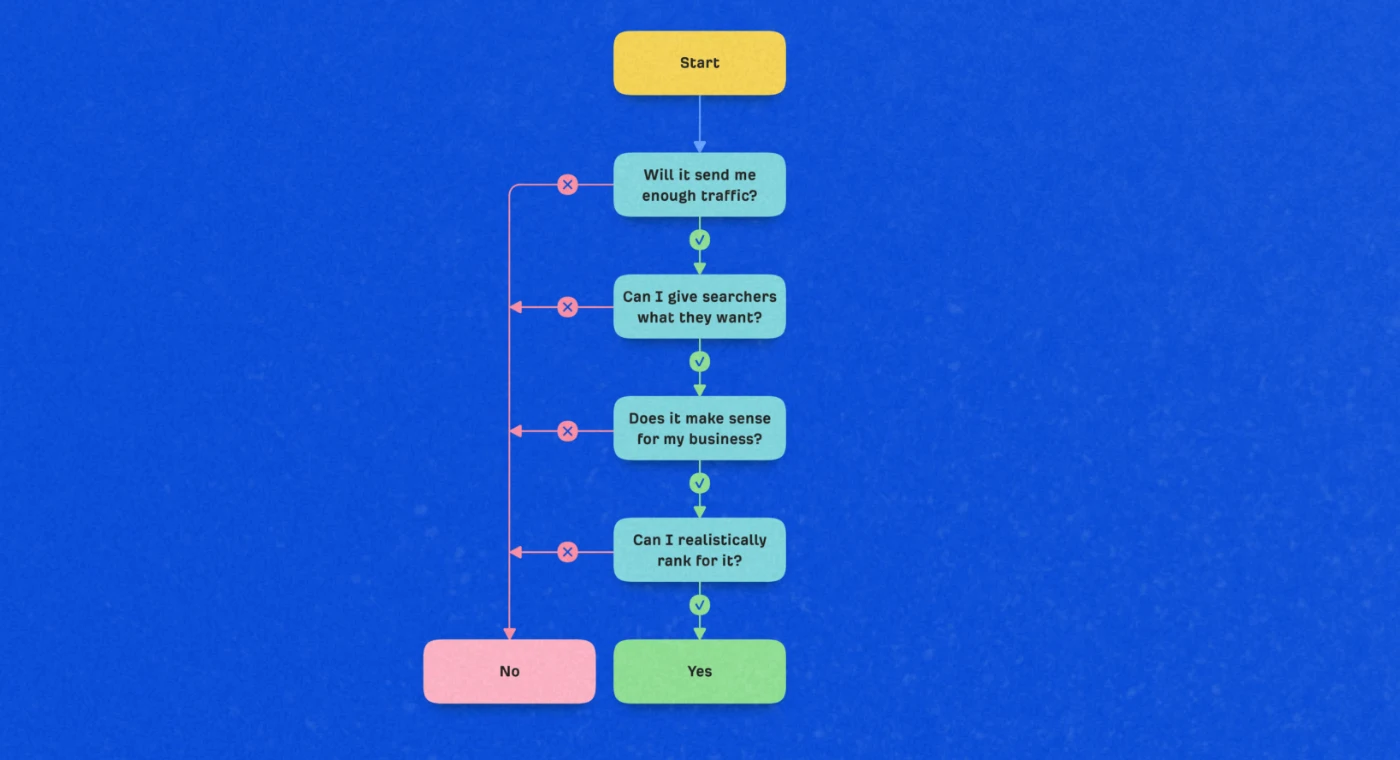
What most beginners get wrong is chasing the highest volume keywords without considering whether ranking is realistic. A keyword with 50,000 monthly searches that you will never rank for is worth zero. A keyword with 300 monthly searches that you rank number one for is worth every search.
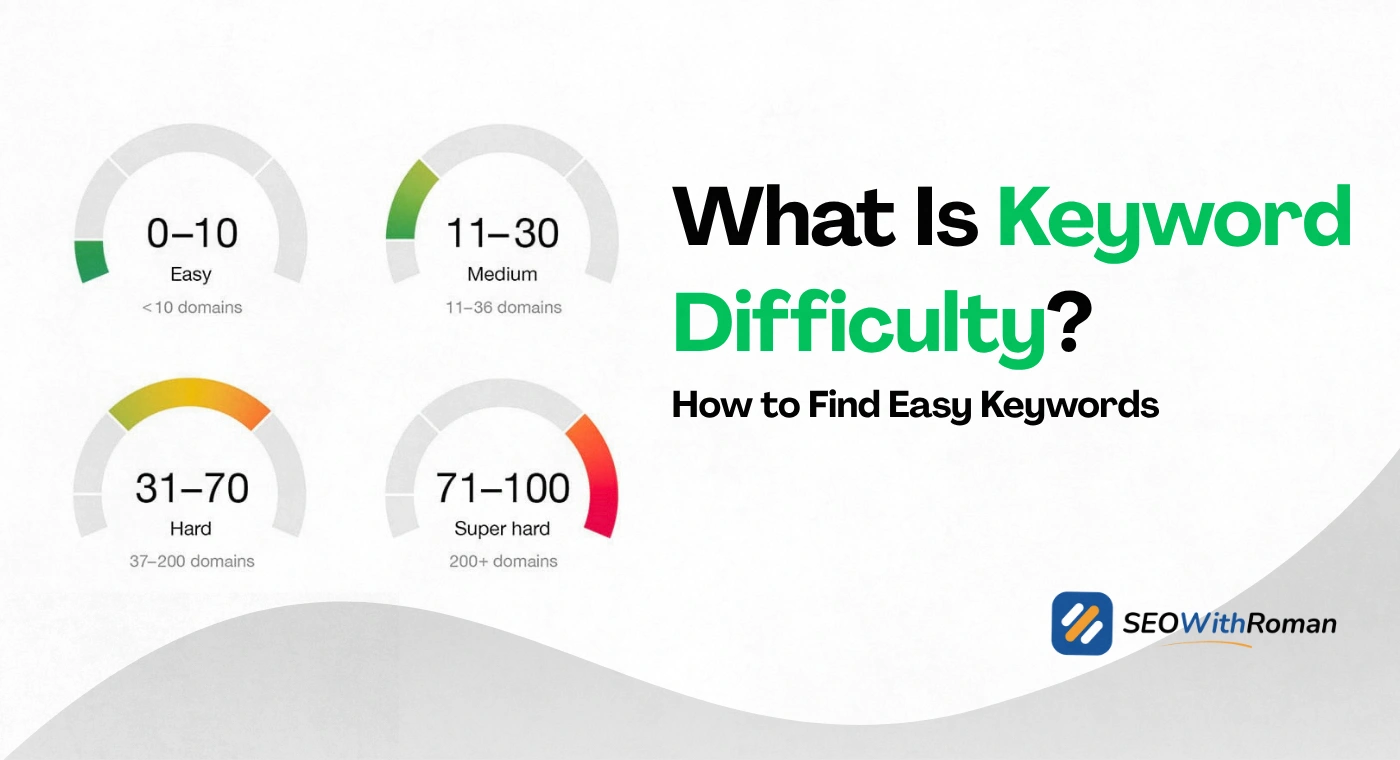
Keyword Difficulty is a score from 0 to 100 that estimates how hard it would be to rank on page one for a given keyword. Different tools calculate this differently but most factor in the number and quality of backlinks pointing to the currently ranking pages.
Here is the framework I use when evaluating keywords for new and growing websites
| Website Stage | Target Search Volume | Target Keyword Difficulty | Expected Timeline |
|---|---|---|---|
| Brand new, 0 to 10 articles | 50 to 500 monthly searches | Under 15 | First rankings in 2 to 4 months |
| Growing, 10 to 30 articles | 100 to 1,000 monthly searches | Under 25 | Rankings in 3 to 5 months |
| Established, 30 to 60 articles | 500 to 5,000 monthly searches | Under 40 | Rankings in 4 to 7 months |
| Authority, 60+ articles, backlinks | 1,000 to 50,000+ monthly searches | Under 60 | Rankings in 6 to 12 months |
Never target a keyword purely because it has high search volume. Target it because it has the right combination of volume, difficulty, and relevance for your website's current authority level.
7 Step 6: Identify and Match Search Intent
Search intent is the single most overlooked factor in keyword research. You can find the perfect keyword with ideal volume and manageable difficulty and still fail to rank if your content does not match what the searcher actually wants.
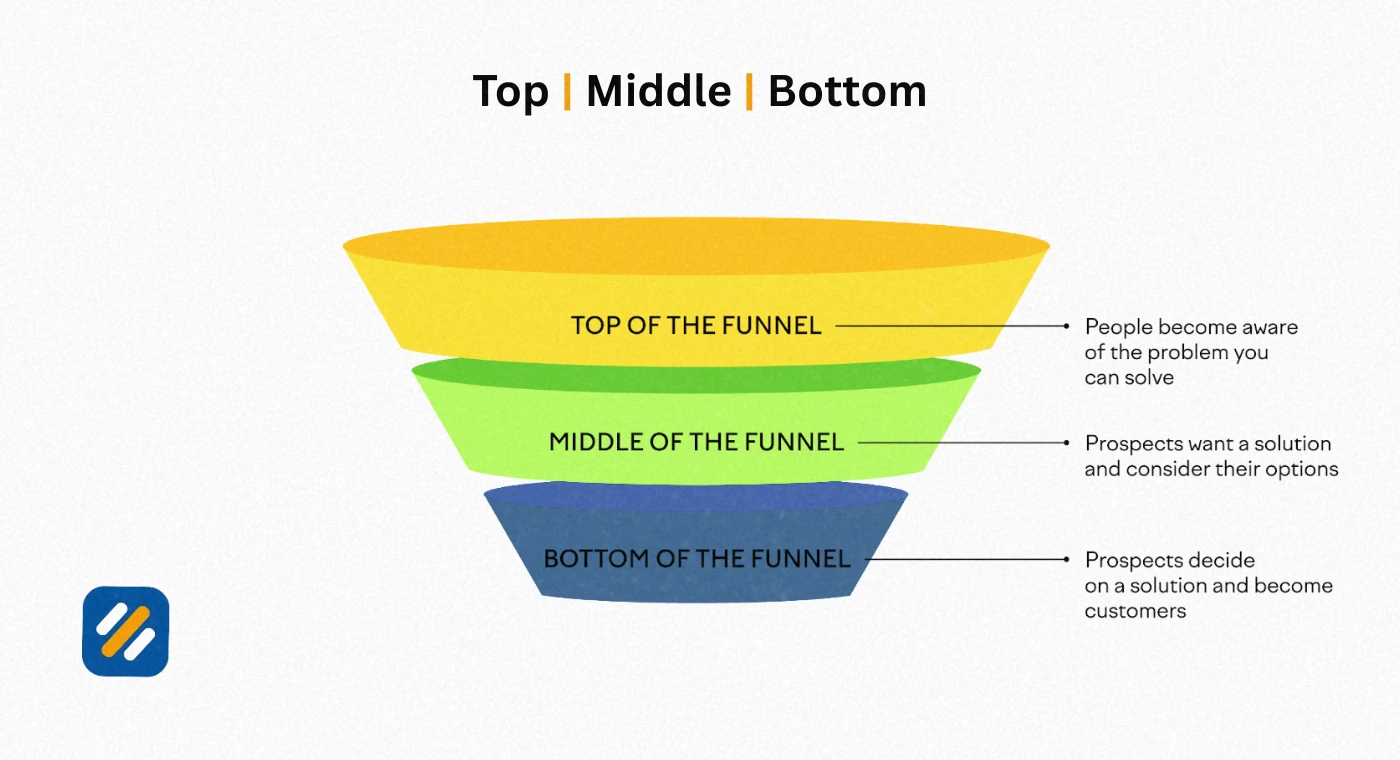
Google defines search intent across four categories
Informational intent means the searcher wants to learn something. Keywords like "what is keyword research" or "how does Google rank pages" signal informational intent. The content format Google rewards here is guides, explainers, and how-to articles.
Navigational intent means the searcher is looking for a specific website or brand. Keywords like "Ahrefs login" or "Semrush keyword tool" signal navigational intent. These keywords are almost impossible to rank for unless you are the brand being searched.
Commercial intent means the searcher is comparing options before making a decision. Keywords like "best keyword research tools" or "Ahrefs vs Semrush" signal commercial intent. The content format that ranks here is comparison articles, reviews, and ranked lists.
Transactional intent means the searcher is ready to take action or make a purchase. Keywords like "buy Semrush subscription" or "Ahrefs free trial" signal transactional intent. Landing pages and product pages rank best here.
The fastest way to identify search intent for any keyword is to Google it and study the top three to five ranking results. Are they blog posts, videos, product pages, or comparison articles? Whatever format dominates the first page is what Google has determined users want for that query. Match that format.
8 Step 7: Conduct Competitor Keyword Analysis
Competitor keyword analysis is one of the most time-efficient steps in the entire keyword research checklist. Instead of starting from scratch, you are identifying keywords that someone has already proven are worth targeting in your niche.
The process is straightforward
Identify your top three to five SEO competitors: These are not necessarily your business competitors. They are the websites that rank for the keywords you want to rank for. Search your main seed keyword and note which websites appear most frequently in the top five results.
Analyse their top ranking keywords: Enter each competitor URL into Ahrefs free Webmaster Tools or the free version of Semrush's Domain Overview. Look at which keywords are sending them the most organic traffic. These are proven keywords with confirmed audience demand in your niche.
Find the gaps: The most valuable output of competitor keyword analysis is identifying keywords your competitors rank for that you do not yet have content covering. Each gap is a content opportunity.
Filter for achievable targets: From the competitor keyword list, select only keywords that match your current website's authority level. A competitor with 5,000 backlinks may rank for keywords that are completely unrealistic for a new website. Filter by difficulty and select the ones you can compete for now.
This process takes two to three hours once and gives you a content roadmap that is entirely grounded in proven market demand rather than assumptions.
9 Step 8: Find LSI Keywords and Related Keywords
LSI keywords, which stands for Latent Semantic Indexing keywords, are terms that are semantically related to your primary keyword. Google uses these related keywords to understand the full context of your content and determine whether it genuinely covers a topic with depth.
The concept is straightforward. An article about keyword research that never mentions search intent, keyword difficulty, seed keywords, or long-tail keywords is signalling to Google that it has shallow topical coverage. An article that naturally covers all of these related concepts signals genuine expertise.
Where to find LSI and related keywords
Google autocomplete variations: Type your primary keyword and note every variation Google suggests. These are semantically related terms Google considers part of the same topic.
People Also Ask questions: Each PAA question represents a related sub-topic that searchers want answered alongside your main topic.
Wikipedia related topics: Search your keyword on Wikipedia and look at the internal links within the article. Each linked term is a semantically related concept worth including.
Competitor heading structures: Open the top three ranking articles for your keyword and note every H2 and H3 heading they use. These headings reveal which related subtopics Google considers part of a complete answer to the search query.
The goal is not to stuff these terms into your content. It is to ensure your article naturally covers the full topic landscape that a genuine expert would address.
10 Step 9: Cluster Your Keywords by Topic
Keyword clustering is the process of grouping related keywords together so that one page can rank for multiple terms simultaneously rather than targeting a single keyword in isolation.
This step is what separates amateur keyword research from professional keyword strategy. Instead of creating one page per keyword, you create one page per topic cluster. That single page can then rank for the primary keyword, multiple secondary keywords, and dozens of long-tail variations all at once.
Here is how keyword clustering works in practice
Imagine you are building a content cluster around the topic of keyword research. Your seed keyword is "keyword research." From your expanded list, you group related keywords together:
Cluster 1: How-to keyword research
Primary: how to do keyword research
Secondary: keyword research process, keyword research strategy, how to find keywords for SEO, seo keyword research checklist
Cluster 2: Keyword research tools
Primary: free keyword research tools
Secondary: best keyword research tools, Google keyword planner tutorial, Ahrefs keyword tool
Cluster 3: Keyword metrics
Primary: keyword difficulty
Secondary: keyword search volume, what is keyword difficulty, how to check keyword difficulty
Each cluster becomes one article. One URL targeting one primary keyword and multiple supporting secondary keywords. This approach builds topical authority faster than scattering individual keyword articles across your site with no structural connection between them.
11 Step 10: Map Keywords to Specific Pages
Keyword mapping is the process of assigning specific keywords to specific pages on your website. It ensures every page has a clear primary keyword, prevents two pages from competing for the same term, and gives you a complete editorial calendar built on search data.
Without keyword mapping, websites inevitably create keyword cannibalization problems where multiple pages target the same keyword and compete against each other in Google's index. This splits the ranking signals that would otherwise strengthen one page and weakens both.
Here is a simple keyword mapping structure for an SEO blog
| Page URL | Primary Keyword | Secondary Keywords | Content Type | Priority |
|---|---|---|---|---|
| /what-is-seo | what is seo | seo basics, seo definition, seo for beginners | Beginner guide | High |
| /keyword-research-checklist | keyword research checklist | how to do keyword research, seo keyword research | Step by step guide | High |
| /on-page-seo | on page seo | on page seo checklist, on page optimization | How-to guide | Medium |
| /keyword-difficulty | keyword difficulty | what is keyword difficulty, kd score | Explainer | Medium |
| /long-tail-keywords | long tail keywords | long tail keyword examples, how to find long tail keywords | Guide with examples | Medium |
| /keyword-clustering | keyword clustering | keyword grouping, keyword clusters for seo | Strategy guide | Low |
Build this map in a spreadsheet before writing any content. Update it every time you publish a new article. Check it before starting any new article to confirm your chosen keyword is not already assigned to an existing page.
12 Step 11: Evaluate Keywords for GEO and AIO Visibility
This is the step that most keyword research checklists published before 2025 completely miss. In 2026, Google's AI Overviews and Generative Engine Optimisation have changed how keyword research needs to be approached.
When you research keywords today you need to consider not just whether you can rank in the traditional blue link results but whether your content can be extracted and cited by Google's AI Overview, ChatGPT, Perplexity, and other AI search platforms.
Keywords that appear in AI Overviews share specific characteristics
- They are informational queries asking "what is," "how to," or "why does"
- They have a clear, definable answer that can be extracted in one to three sentences
- They are covered by content that demonstrates genuine expertise with specific data and examples
- The pages that get cited have strong E-E-A-T signals including author credentials and firsthand experience
When evaluating keywords for your checklist, add a column for "AIO potential" and mark any informational keyword with a clear definition or step-by-step answer as high priority for AIO targeting. Write the opening definition of these articles to be self-contained and directly quotable in two to three sentences, as this is the format AI systems prefer to extract and cite.

13 Step 12: Track, Review, and Refresh Your Keyword Strategy
The final step in the keyword research checklist is the one most people skip entirely. Keyword research is not a one-time task. It is an ongoing process that needs to be reviewed and refreshed at regular intervals.
Here is the review schedule I follow for every website I manage
Monthly: Check Google Search Console Performance report. Look for keywords that are generating impressions but sitting between positions 5 and 20. These pages are close to page one and deserve priority updates. Adding more depth, better examples, and stronger internal links to these pages is the highest ROI SEO activity available to any website.
Quarterly: Run a fresh competitor keyword analysis. New competitors enter niches constantly. Keywords that were too competitive three months ago may now be achievable as your domain authority has grown.
Annually: Audit your full keyword map. Remove keywords from articles that have been replaced by better targets. Update keyword difficulty estimates as your website's authority increases. Identify entirely new topic clusters that have emerged in your niche over the past year.
Keyword research done once and never revisited is a strategy that peaks early and stagnates. Keyword research done as an ongoing monthly habit is what separates websites with compounding traffic growth from websites that plateau.
14 Keyword Research Tools Compared | Free and Paid Options
| Tool | Cost | Best Feature | Keyword Difficulty Score | Search Volume Data | Competitor Analysis |
|---|---|---|---|---|---|
| Google Keyword Planner | Free | Direct Google data, volume ranges | No | Yes, ranges | No |
| Google Search Console | Free | Real ranking data for your own site | No | Impression data | No |
| Ahrefs Free Webmaster Tools | Free | Backlink and keyword data for your site | Yes | Yes | Limited |
| Ahrefs Keyword Generator | Free | Long-tail keyword suggestions | Yes, limited | Yes, limited | No |
| Semrush Free | Free | 10 searches per day, competitor overview | Yes | Yes | Yes, limited |
| Ubersuggest Free | Free | Basic keyword suggestions | Yes, limited | Yes | Limited |
| Google Trends | Free | Trend direction and seasonal patterns | No | Relative only | No |
| Claude AI | Free tier | Search intent analysis, question angles | No | No | No |
| ChatGPT | Free tier | Natural language keyword variations | No | No | No |
| Ahrefs Paid | From $129/month | Full keyword database, SERP analysis | Yes, full | Yes, exact | Yes, full |
| Semrush Paid | From $139/month | Full suite, keyword clustering, position tracking | Yes, full | Yes, exact | Yes, full |
For a new website with zero budget, the combination of Google Keyword Planner, Google Search Console, Ahrefs free Webmaster Tools, and Google Trends covers every essential step in this checklist at zero cost.
15 3 Expert Tips to Get More From Your Keyword Research
Expert Tip 1: Research Keywords in Batches, Not One at a Time
The most time-efficient way to do keyword research is to dedicate one session per month to researching and validating keywords for your next 8 to 10 articles at once. This batching approach means you enter keyword research mode with full focus rather than interrupting your writing workflow every time you need a new keyword. It also lets you spot clustering opportunities across your planned articles that you would miss when researching one article at a time.
Expert Tip 2: Use Google Search Console as Your Best Keyword Tool
Once your website has been live for three months, Google Search Console becomes more valuable than any paid tool for finding keyword opportunities. Go to the Performance report, filter for queries where your average position is between 5 and 20, and sort by impressions. Every query on that list is a keyword Google is already showing your pages for. These are not new targets. They are existing opportunities already in motion that need content improvements to push them onto page one.
Expert Tip 3: Check the GEO Strategy for Every Informational Keyword
Before finalising any informational keyword target, search it on Perplexity AI and ChatGPT. Look at which websites they cite as sources in their answers. If the same three or four domains appear repeatedly across AI answers for keywords in your niche, those are your true authority benchmarks. Study their content depth, their E-E-A-T signals, and their internal linking structures. Building your content to that standard is what gets you cited in AI answers alongside ranking in traditional search.
16 Conclusion
A keyword research checklist is not a bureaucratic exercise. It is the difference between a content strategy that builds compounding traffic over 12 months and a content strategy that produces articles nobody ever finds.
Every step in this checklist exists because skipping it produces a specific, predictable failure. Skip seed keyword research and you miss entire topic clusters. Skip search intent analysis and you write the wrong type of content for keywords you could have ranked for. Skip keyword mapping and you create cannibalization problems that split your own rankings.
Follow this checklist for every article you publish. The first time it takes 90 minutes per keyword. The twentieth time it takes 20 minutes and the results it produces keep improving as your domain authority grows.
Start with Step 1 right now. Write down your three seed keywords. Everything else builds from there.
Have a question about any step in this keyword research checklist? Drop a comment below and I will answer it from real experience.
Join 1,000+ business owners and bloggers who get one actionable SEO tip every week — straight to their inbox. Free forever.
Get Free Weekly Tips →