- Anchor text is the visible clickable text of a hyperlink and it tells both users and Google what the linked page is about
- Google uses anchor text as one of its strongest signals for understanding page relevance and topic relationships
- There are 8 types of anchor text and using the right mix is what separates natural link profiles from penalised ones
- Over-optimised exact match anchor text in backlinks is one of the fastest ways to trigger a Google Penguin penalty
- A balanced anchor text strategy uses branded, partial match, and descriptive anchors far more than exact match
1 What Is Anchor Text and Why Every SEO Specialist Pays Close Attention to It
Most beginners focus on getting backlinks. Experienced SEO specialists focus on what those backlinks actually say. That difference in thinking is what separates websites that rank sustainably from websites that get hit by algorithm updates.
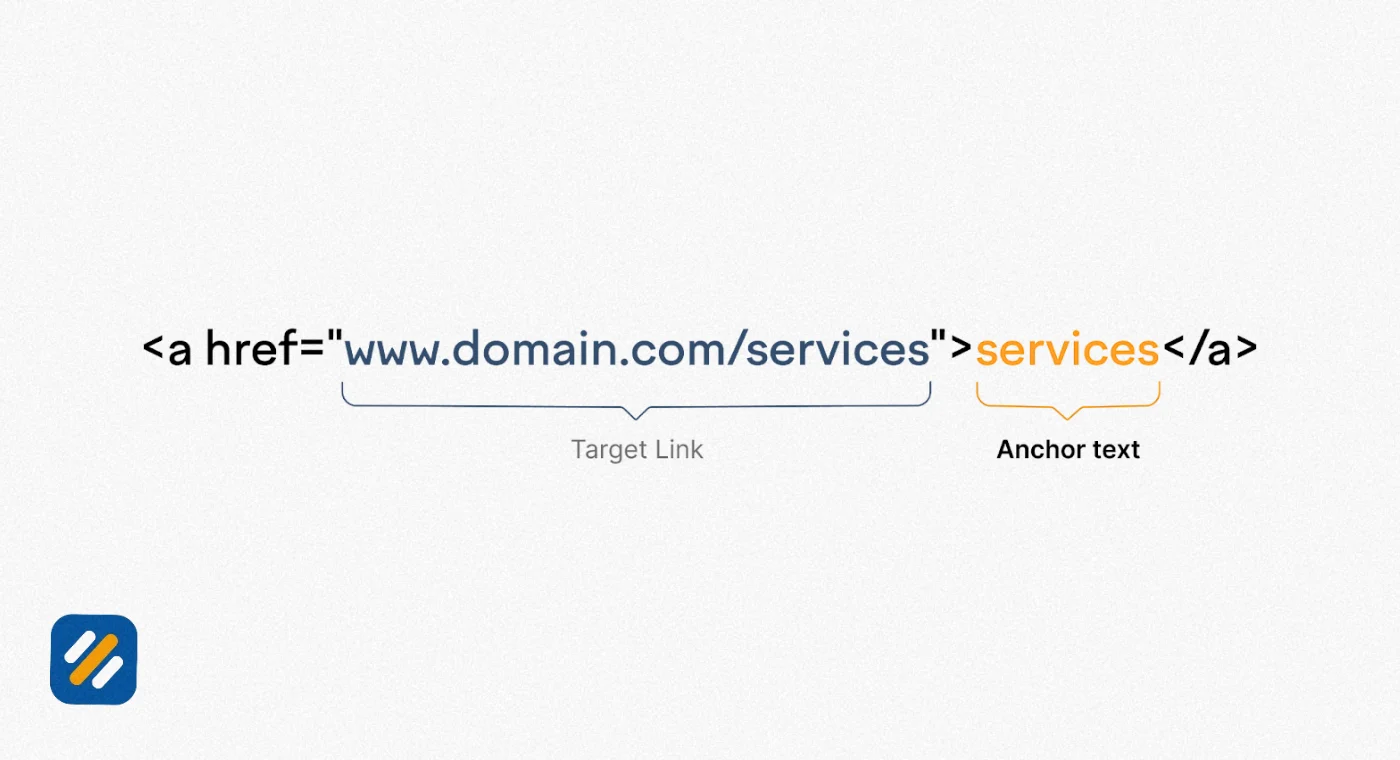
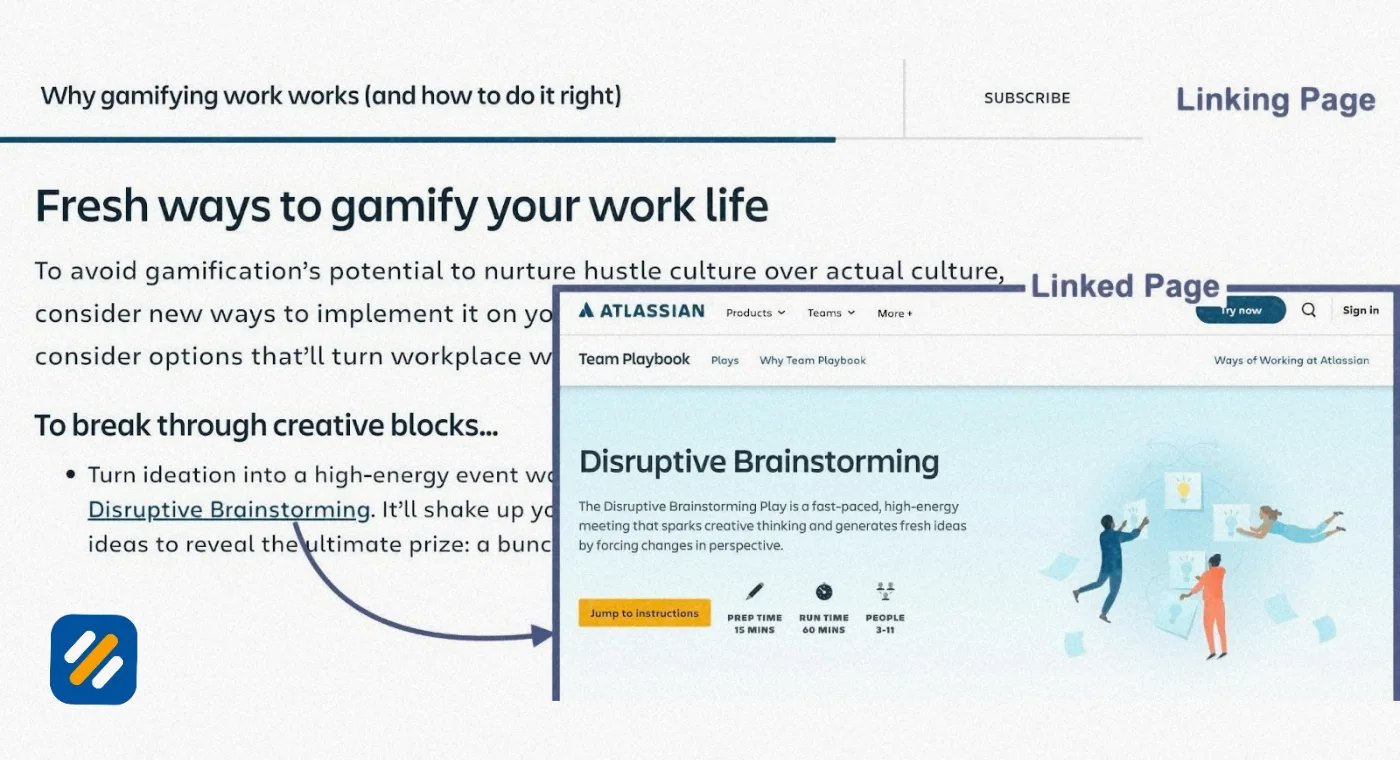
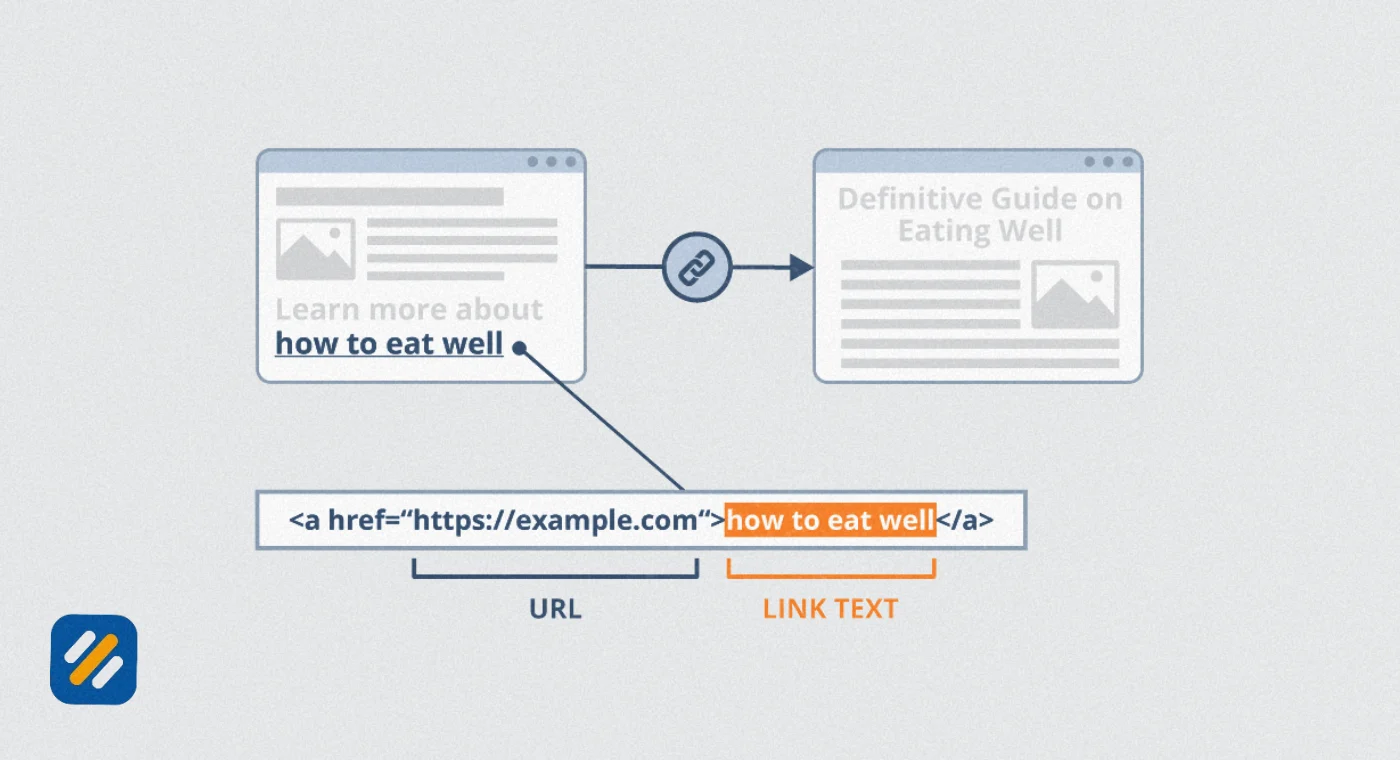
Anchor text is the visible, clickable text of a hyperlink. It is the words a reader sees and clicks on to navigate from one page to another. In most browsers it appears underlined and in a different colour from the surrounding text, which is how users identify it as a link.
In HTML, anchor text sits between the opening and closing anchor tags like this: a href="https://seowithroman.com/keyword-research" how to do keyword research /a. The phrase "how to do keyword research" is the anchor text. Everything else is the technical structure that makes the link work.
Why does this matter so deeply to SEO? Because Google reads anchor text as a description of the page being linked to. When a trusted website links to your page using the anchor text "free keyword research tools," Google takes that as a strong signal that your page is about free keyword research tools. Multiply that signal across dozens of quality backlinks and your page has a significantly higher chance of ranking for that keyword.
After many years of building and auditing link profiles for clients across multiple industries, I can tell you that anchor text is one of the most misunderstood and most abused elements in SEO. When used correctly it accelerates rankings. When over-optimised it triggers penalties that take months to recover from.
2 How Google Uses Anchor Text as a Ranking Signal
To understand why anchor text matters, you need to understand how Google processes it when it crawls the web.
When Googlebot visits a webpage and finds a link, it reads three things simultaneously: the destination URL, the surrounding context of the link, and the anchor text itself. All three together help Google form an understanding of what the destination page is about and whether it deserves to rank for related queries.
Google confirmed in its original PageRank patent that anchor text from external links is one of the most reliable signals for determining page relevance. This is because anchor text represents how other website owners describe your content in their own words. It is an independent, third-party endorsement that is difficult to fake at scale.
Here is what Google specifically looks at when processing anchor text signals
Relevance: Does the anchor text relate logically to the content on the destination page? A link using the anchor text "technical SEO checklist" pointing to a page that is genuinely about technical SEO sends a strong positive relevance signal.
Diversity: Does the page receive links with varied anchor text from multiple sources? A natural backlink profile has dozens of different anchor text variations pointing to the same page. Identical anchor text across many links looks manipulated.
Authority of the linking page: Anchor text from a high-authority domain carries significantly more weight than the same anchor text from a low-authority or newly created website.
Quantity and pattern: If a sudden spike in exact match anchor text backlinks appears overnight, Google's algorithms flag this as unnatural regardless of the source quality.
3 The 8 Types of Anchor Text Every SEO Must Know
Not all anchor text is equal. There are eight distinct types and each one sends a different signal to Google. Understanding when to use each type is what makes the difference between a link profile that builds authority and one that attracts penalties.
1. Exact Match Anchor Text
Exact match anchor text uses the precise keyword the destination page is targeting. If a page targets "anchor text SEO," an exact match backlink uses exactly those words as the clickable text. It is the most powerful type for rankings but also the most dangerous when overused. Google's Penguin algorithm specifically targets websites with unnaturally high percentages of exact match backlink anchor text.
2. Partial Match Anchor Text
Partial match anchor text includes the target keyword alongside additional words. "Learn about anchor text SEO best practices" or "complete guide to anchor text in SEO" are partial match variations. This type sends a relevance signal without looking manipulated and is one of the safest and most effective anchor text types for link building.
3. Branded Anchor Text
Branded anchor text uses your brand name as the clickable link. "SEOWithRoman" or "SEO With Roman" as anchor text linking to your homepage is a branded anchor. A healthy backlink profile should have branded anchors making up a significant portion of all incoming links because they mirror how genuine editorial mentions naturally occur online.
4. Naked URL Anchor Text
Naked URL anchor text displays the actual URL as the clickable link. "https://seowithroman.com/keyword-research" written out as the link text is a naked URL. This type is common in citations, directories, and resource lists. It carries moderate SEO value and looks completely natural because it is how many non-SEO websites naturally link to sources.
5. Generic Anchor Text
Generic anchor text uses non-descriptive phrases that give no information about the destination page. "Click here," "read more," "visit this page," and "find out more" are all generic anchors. They add almost no SEO value because they tell Google nothing about the destination page's topic. Use these sparingly and only when the surrounding context makes the destination completely clear to both users and search engines.
6. Descriptive Anchor Text
Descriptive anchor text clearly describes what the reader will find on the destination page without necessarily matching the exact target keyword. "This guide on writing SEO optimised content" or "Roman's article about keyword difficulty" are descriptive anchors. They are excellent for internal linking because they provide useful context for readers while still giving Google topical relevance signals.
7. Image Anchor Text
When a linked image has no visible text, Google uses the image's alt text as the effective anchor text for that link. This means every linked image on your website needs descriptive, keyword-relevant alt text. Leaving alt text blank on a linked image is a missed internal linking optimisation opportunity that most beginners never think about.
8. LSI and Related Keyword Anchor Text
LSI anchor text uses semantically related terms rather than the exact keyword. If your page targets "backlink building," a related anchor might use "link acquisition strategies" or "earning editorial links." Google's natural language processing in 2026 is sophisticated enough to understand semantic relationships between anchor text and destination page topics, making this type increasingly valuable for natural-looking link profiles.
4 All 8 Anchor Text Types at a Glance
| Anchor Text Type | Example | SEO Value | Risk Level | Best Used For |
|---|---|---|---|---|
| Exact Match | "anchor text SEO" | Very High | High if overused | 5 to 10% of backlink profile maximum |
| Partial Match | "guide to anchor text for SEO" | High | Low to Medium | 20 to 30% of backlink profile |
| Branded | "SEOWithRoman" | High | Very Low | 30 to 40% of backlink profile |
| Naked URL | "https://seowithroman.com" | Medium | Very Low | Directories, citations, resource lists |
| Generic | "click here" | Very Low | Low | Occasional UX contexts only |
| Descriptive | "Roman's SEO beginners guide" | Medium to High | Low | Internal linking, editorial mentions |
| Image Alt Text | Alt: "anchor text types infographic" | Medium | Low | All linked images on your site |
| LSI Related | "link acquisition strategies" | Medium to High | Low | Natural editorial backlinks |
5 Anchor Text for Internal Links vs Backlinks | Two Different Strategies
One mistake beginners consistently make is applying the same anchor text thinking to both internal links and backlinks. These two link types serve different purposes and need different strategies.
Internal Link Anchor Text Strategy
Internal links connect pages within your own website. The anchor text you choose for internal links tells Google how the topics on your site relate to each other and helps it understand your site's content hierarchy.
For internal links, descriptive and partial match anchor text is almost always the right choice. When you link from your keyword research article to your article about long tail keywords, use anchor text like "how to find long tail keywords" rather than just "keywords" or "click here."
The most important internal linking rule is to never use your exact focus keyword as the anchor text when linking from one of your own pages to another page targeting that same keyword. This creates what Yoast SEO calls a "competing links" issue. Google sees two pages on your site fighting for the same keyword signal and may not rank either one confidently.
Use internal link anchor text to build topic clusters. Link from supporting articles to your main pillar pages using varied but topically relevant anchor text. This distributes authority across your site and helps Google understand your topical expertise in a given area.
Backlink Anchor Text Strategy
Backlinks come from other websites and you have less direct control over the anchor text they choose. However, for links you earn through outreach and guest posting, the anchor text is something you can negotiate or suggest.
The golden rule for backlink anchor text is diversity. A natural backlink profile for any website looks approximately like this:
- 30 to 40% branded anchor text
- 20 to 30% partial match anchor text
- 15 to 20% naked URL anchor text
- 10 to 15% descriptive or related keyword anchor text
- 5 to 10% exact match anchor text
- 5% generic anchor text
A website where 60% or more of backlinks use exact match keyword anchor text is a website at serious risk of a Google Penguin penalty regardless of how high-quality those links are.
6 Anchor Text Optimisation | How to Write Anchor Text That Works
Writing effective anchor text is a skill that improves with practice. Here are the principles that guide every anchor text decision I make for client websites:
Keep it concise and specific. The most effective anchor text is between two and five words. Long anchor text loses the signal-to-noise ratio that makes short, specific anchor text so powerful. "keyword research guide" outperforms "our comprehensive beginners guide to doing keyword research for free step by step."
Match the anchor text to the destination page's topic. This sounds obvious but it is violated constantly. If your anchor text says "SEO tools comparison" the linked page should be specifically about comparing SEO tools. Mismatched anchor text confuses users and sends mixed relevance signals to Google.
Write anchor text for the reader first. A user reading your article should be able to predict exactly what they will find on the linked page based on your anchor text alone. If they land on a page that does not match their expectation, they leave immediately and your bounce rate climbs.
Avoid repeating the same anchor text for the same destination page. If you link to your keyword research guide from ten different articles on your website, use ten different but related anchor text variations. "keyword research for beginners," "how to find keywords," "free keyword research process," and "keyword difficulty explained" are all better internal link anchors than using "keyword research guide" ten times.
Never optimise anchor text in isolation from the surrounding content. Google reads anchor text in the context of the paragraph it appears in. An anchor text that flows naturally from the surrounding sentences carries more weight than the same anchor text forced into an otherwise unrelated sentence.
7 Keyword-Rich Anchor Text and the Google Penguin Risk | What You Must Understand
Keyword-rich anchor text, specifically exact match anchor text in backlinks, is the single most misused tactic in all of SEO. Understanding the risk is not optional if you want to build rankings that last.
Google launched the Penguin algorithm update in April 2012 specifically to target websites that were artificially manipulating their rankings through over-optimised anchor text in backlink profiles. Since 2016 Penguin runs in real time as part of Google's core algorithm, meaning the penalty is applied and reversed continuously rather than in periodic updates.
Here is what triggers a Penguin anchor text penalty in 2026
A sudden spike in backlinks with identical or near-identical exact match anchor text pointing to the same page. This pattern is the clearest signal of a paid link scheme or a private blog network, both of which violate Google's guidelines.
A backlink profile where exact match anchor text makes up more than 20 to 30% of all incoming links to a specific page. Natural editorial links almost never concentrate this heavily on one anchor text variation.
Guest posts published at scale using exact match anchor text in the author bio or within the body text rather than in natural editorial contexts.
The recovery process from a Penguin penalty can take anywhere from three months to over a year. During that time your rankings for the affected keywords often drop dramatically. The only fix is to identify the over-optimised anchor text through a backlink audit in Ahrefs or Google Search Console and either remove those links or disavow them through Google's Disavow Tool.
The lesson is simple. Use exact match anchor text sparingly, never in a pattern, and always as a small minority of your total backlink anchor text distribution.
8 How to Audit and Fix Anchor Text Issues on Your Website
Anchor text problems fall into two categories. Issues with your internal linking anchor text and issues with your backlink anchor text profile. Both need separate auditing approaches.
Auditing Internal Anchor Text
The fastest free method for auditing internal anchor text is Screaming Frog's free version which crawls up to 500 URLs. After crawling your site, go to the Bulk Export tab and select All Anchor Text. This gives you a spreadsheet showing every internal link on your site alongside the anchor text used.
Look for these problems in the output:
Pages with multiple internal links all using identical anchor text. Vary these across different related phrases.
Pages receiving zero internal links, which means Google has difficulty discovering and prioritising them. Add at least two internal links to every published page from topically relevant existing content.
Generic anchor text like "click here" or "read more" on internal links. Replace these with descriptive anchors that tell Google what the destination page is about.
Auditing Backlink Anchor Text
For backlink anchor text auditing, Ahrefs Webmaster Tools free version is the most accurate option. After verifying your site, go to Backlinks then Anchors. This report shows every anchor text variation pointing to your site along with the number of backlinks using each variation.
If you see one specific keyword phrase dominating your anchor text profile at over 30% of all backlinks, that is a signal to slow down or stop building links with that anchor and focus on earning more branded and naked URL backlinks to dilute the ratio.
9 Anchor Text Best Practices Checklist for 2026
| Best Practice | Internal Links | Backlinks |
|---|---|---|
| Use descriptive, specific anchor text | Always | Always |
| Keep anchor text under 5 words where possible | Yes | Yes |
| Vary anchor text across multiple links to same page | Yes | Yes |
| Limit exact match anchor text | Not required internally | Under 10% of profile |
| Use branded anchor text regularly | Not applicable | 30 to 40% of profile |
| Match anchor text to destination page topic | Critical | Critical |
| Avoid generic anchors like click here | Yes | Yes |
| Add alt text to all linked images | Yes | Not controllable |
| Never use focus keyword as anchor on competing internal pages | Critical | Not applicable |
| Monitor anchor text distribution monthly | Every 3 months | Monthly |
3 Expert Tips for Anchor Text That Most SEO Guides Never Tell You
Expert Tip 1: Use Google Search Console to Discover Your Natural Anchor Text
Before building any new links, go to Google Search Console and check which anchor text Google is already associating with your pages. The Links report under the left sidebar shows your top linked pages and the most common anchor text used to link to them. This tells you which keyword signals Google is already receiving for each page and helps you decide whether to reinforce or diversify before running any outreach.
Expert Tip 2: Your Internal Link Anchor Text Influences Which Page Ranks for a Keyword
Most SEOs treat internal linking as a traffic distribution tool. It is also a ranking tool. If you have two pages on your website that both cover overlapping topics, the internal link anchor text from your other pages acts as a vote for which one Google should rank higher. Consistently linking to your preferred page using keyword-relevant anchor text and linking to the supporting page using broader or branded anchors trains Google to understand which page is your primary resource for that topic.
Expert Tip 3: Anchor Text Context Matters as Much as the Words Themselves
Google reads the full sentence and paragraph surrounding a link, not just the anchor text in isolation. A link using the anchor text "SEO guide" placed inside a paragraph that discusses technical SEO, keyword research, and on-page optimisation carries more topical signal than the same anchor text placed in a paragraph about an unrelated topic. When writing content that includes internal or external links, build the surrounding sentences to reinforce the relevance of the anchor text. This is one of the most underused on-page optimisation techniques available to any content writer.
10 Conclusion
Anchor text is not a minor technical detail. It is one of the most direct ways you communicate with Google about what your pages are about and how they relate to each other. Used correctly, it accelerates rankings, distributes authority efficiently, and builds a backlink profile that earns trust over time. Used incorrectly, it is one of the fastest routes to a Google penalty.
The formula is straightforward. Keep anchor text descriptive and specific. Vary it naturally across all links to the same page. Keep exact match anchor text as a small minority of your backlink profile. Prioritise branded and partial match anchors for external links. Use descriptive anchors for internal links and never compete with your own pages for the same keyword signal.
Audit your anchor text every few months using the free tools outlined in this guide. Fix what is broken. Strengthen what is working.
That is how anchor text becomes an asset rather than a liability in your SEO strategy.
Have a specific anchor text question about your own website? Drop it in the comments below and I will answer it personally.
Join 1,000+ business owners and bloggers who get one actionable SEO tip every week — straight to their inbox. Free forever.
Get Free Weekly Tips →