- AI SEO combines traditional search engine optimisation with AI-powered tools to build brand awareness faster and at scale
- The best AI SEO tools in 2026 cover keyword research, content optimisation, AI visibility tracking, and brand monitoring simultaneously
- Brand awareness through SEO works by getting your brand mentioned consistently across Google, AI Overviews, ChatGPT, Perplexity, and Gemini
- ChatGPT, Claude AI, and Perplexity can all assist with SEO tasks but are not replacements for dedicated AI SEO platforms
- A combined strategy of traditional SEO plus AI visibility optimisation is what separates growing brands from invisible ones in 2026
1 What is the best AI SEO for brand awareness?
Something fundamental changed in how people find brands in 2024 and 2025. It did not happen overnight but the shift is now impossible to ignore.
People no longer only search Google to discover new products, services, or experts. They ask ChatGPT. They ask Perplexity. They ask Google’s AI Overview. They use Gemini and Claude to research purchasing decisions. And the brands that appear consistently in those AI responses are the ones building real awareness in 2026.
AI SEO is the practice of optimising your website and content so that both traditional search engines and AI-powered answer engines surface your brand as a trusted, authoritative answer. It covers everything from keyword research and content creation to ensuring that large language models cite your website when answering questions in your niche.
In many years of doing SEO across B2B, ecommerce, and personal brand websites, the biggest shift I have seen is this. Getting to page one of Google used to be the goal. In 2026, the goal has expanded. You need to appear on page one of Google and inside the AI answers that now appear above those organic results on almost every search.
Research from Search Engine Journal shows that Google’s AI Overviews appear in nearly half of all searches. That means for nearly half the keywords you are targeting, an AI-generated answer appears before any organic result. If your brand is not being cited inside that AI answer, you are invisible to half your potential audience even when you rank on page one.
That is what makes AI SEO for brand awareness the most important strategic decision a small business or personal brand can make right now.
2 How AI SEO Actually Works | The Two Layers You Need to Understand
Most guides treat AI SEO as a single concept. It is actually two distinct layers working together, and confusing them leads to wasted effort and money.
Layer 1: AI-powered SEO tools
These are tools that use artificial intelligence to help you do traditional SEO faster and better. They automate keyword research, generate content briefs, analyse competitor gaps, suggest on-page optimisations, and identify technical issues. Tools like Surfer SEO, Clearscope, SEMrush Writing Assistant, and Ahrefs all use AI in this way.
Layer 2: AI visibility optimisation (also called GEO)
This is the newer layer. It focuses on making your brand appear inside AI-generated answers in tools like ChatGPT, Perplexity, Google AI Overviews, Gemini, and Claude. This discipline is called Generative Engine Optimisation or GEO. It is less about keywords and more about being cited as a trustworthy source by large language models.
For brand awareness, you need both layers working together. AI-powered SEO tools help you rank in traditional search. GEO helps you appear in the AI answers that are increasingly replacing traditional search for discovery queries.
| Layer | What It Does | Primary Goal | Key Tools |
|---|---|---|---|
| AI-Powered SEO Tools | Automates research, content, and technical optimisation | Rank higher in Google organic results | Surfer SEO, Clearscope, Ahrefs, SEMrush |
| AI Visibility Optimisation (GEO) | Gets your brand cited in AI-generated answers | Appear in ChatGPT, Perplexity, AI Overviews | OtterlyAI, Ahrefs Brand Radar, ZipTie, Semrush AI Toolkit |
| Traditional SEO Foundation | Content, backlinks, technical health | Overall domain authority and indexing | Google Search Console, Rank Math, Screaming Frog |
| Brand Monitoring | Tracks how AI talks about your brand | Protect and improve brand sentiment in AI | Peec AI, Petra Labs, Similarweb AI Brand Visibility |
3 Which AI Is Best for SEO | The Honest Answer for 2026
This is one of the most searched questions about AI and SEO right now. The honest answer is that no single AI is best for all SEO tasks. Different AI tools excel at different parts of the SEO workflow.
Here is how the main AI tools compare when used specifically for SEO work:
ChatGPT (GPT-4o)
ChatGPT is excellent for content ideation, generating first drafts, creating FAQ sections, writing meta descriptions at scale, and brainstorming keyword angles. It has broad general knowledge but its training data has a cutoff, meaning it does not know current search volumes or live ranking data. It is a writing and ideation assistant, not a keyword research tool.
Claude AI
Claude is particularly strong at analysing long documents, rewriting content for clarity and tone, understanding search intent nuance, and generating structured content that reads naturally. For SEO, Claude handles content briefs, article rewrites, and intent-matching analysis better than most other AI tools. It is also better at following specific formatting instructions, which makes it valuable for maintaining content consistency across a large site.
Perplexity AI
Perplexity is uniquely useful for SEO because it searches the live web and cites sources in its answers. This makes it valuable for understanding what sources Google and AI are currently treating as authoritative on any given topic. For brand awareness specifically, searching your brand name or your target keywords in Perplexity shows you exactly how AI currently perceives your brand and which competitors are being cited instead.
Google Gemini
Gemini is integrated directly into Google’s ecosystem, making it useful for understanding how Google itself is processing and categorising information. For content that targets Google AI Overviews specifically, testing your content’s framing in Gemini gives you useful signals about how Google’s AI is likely to interpret it.
Dedicated AI SEO Platforms
For serious SEO work, pure AI chatbots are supplements, not replacements. Tools like Surfer SEO, Clearscope, and Ahrefs combine real keyword data with AI suggestions in ways that ChatGPT and Claude alone cannot replicate.
4 Which AI Is Best for Branding Ideas | Building Recognition Through Content
Brand awareness is not just about ranking. It is about being remembered. The AI tools that help most with branding ideas are the ones that understand your audience’s psychology and help you communicate in ways that stick.
For brand voice and messaging:
Claude AI consistently produces the most nuanced brand voice work among the major AI tools. Its ability to maintain a consistent tone across long documents and adapt writing style to specific audiences makes it the strongest choice for developing brand guidelines, About page copy, and the kind of content that defines how a brand sounds to its readers.
For brand positioning and differentiation:
ChatGPT is strong here because of its broad training data. Asking ChatGPT to analyse how ten competitors in your niche describe themselves, then identify the positioning gaps none of them are occupying, produces genuinely useful strategic insight that would take hours of manual research to replicate.
For visual brand concepts and creative direction:
Tools like Midjourney, DALL-E 3, and Adobe Firefly generate visual brand concepts and mood boards that give you a starting point for logo direction, colour palette exploration, and visual identity development without needing to brief a designer at every stage.
For audience insight and brand messaging angles:
Perplexity AI’s live search capability makes it excellent for researching what your target audience is actually saying about brands in your category right now. The questions your audience is asking Perplexity are the branding problems you need to solve with your content.
5 The Best AI SEO Tools for Brand Awareness in 2026 | Complete Breakdown
Here is the complete breakdown of the best AI SEO tools available in 2026, organised by what they do best for brand awareness specifically:
| Tool | Best For | Free Version | Starting Price | Brand Awareness Strength |
|---|---|---|---|---|
| Ahrefs Brand Radar | AI visibility tracking for existing Ahrefs users | Yes (limited) | $199/month add-on | Tracks brand mentions across ChatGPT, Perplexity, Gemini, Google AI |
| Semrush AI Toolkit | All-in-one SEO plus AI visibility for Semrush users | No | $99/month add-on | 317 million prompt database, sentiment tracking |
| OtterlyAI | Affordable AI visibility monitoring | Free trial | $29/month | Converts SEO keywords into LLM prompts |
| Clearscope | Content optimisation for GEO | No | $129/month | Topic clustering approach beats single keyword focus |
| Surfer SEO | On-page content optimisation with AI | No | $89/month | AI content editor with real-time NLP optimisation |
| Peec AI | Smart AI visibility suggestions for agencies | Free trial | $95/month | Daily tracking, unlimited countries, competitor benchmarking |
| ZipTie | Deep AI visibility analysis and reporting | No | $35.63/month | AI Success Score, URL-level filtering, technical GEO audit |
| Perplexity AI | Live AI search monitoring and brand research | Yes | $20/month (Pro) | Shows exactly how AI answers describe your brand right now |
| Claude AI | Content creation, brand voice, content briefs | Yes | $20/month (Pro) | Best for maintaining E-E-A-T signals and natural language content |
| ChatGPT | Content ideation, keyword angle generation | Yes | $20/month (Plus) | Broad creative range for brand messaging and FAQ content |
6 How to Use SEO to Increase Brand Awareness | The 2026 Strategy
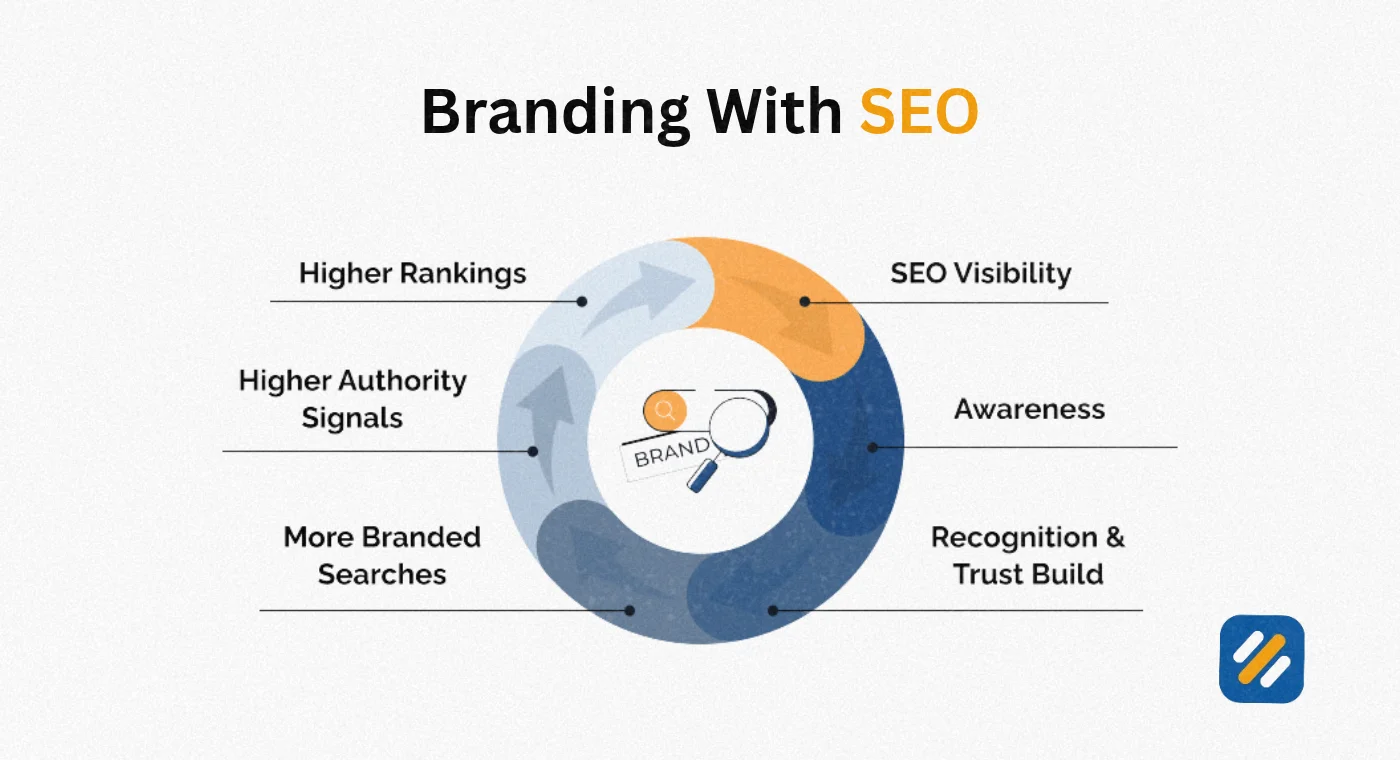
Most brands treat SEO as a traffic channel and brand awareness as a separate marketing discipline. In 2026, the most effective brand building strategies combine both deliberately. Here is exactly how SEO increases brand awareness when done correctly.
Strategy 1: Topical authority as brand positioning
When your website publishes the most comprehensive, accurate, and genuinely useful content on a specific topic, Google and AI systems begin associating your brand name with that topic. This is called topical authority and it is one of the most powerful forms of brand awareness available through SEO.
A personal brand like SEOWithRoman.com that publishes many articles on SEO topics, each one demonstrating real expertise, builds topical authority that makes the name Roman synonymous with SEO education in its niche. Every article adds to that association. Every internal link reinforces it. Every reader who shares the content spreads it.
Strategy 2: E-E-A-T signals as brand trust signals
Google’s E-E-A-T framework (Experience, Expertise, Authoritativeness, Trustworthiness) is essentially a checklist for what makes a brand credible online. Every E-E-A-T improvement you make to your website is simultaneously an SEO improvement and a brand awareness improvement.
Adding a detailed author bio, citing real data, including your professional credentials, getting backlinks from respected industry publications, and consistently publishing accurate helpful content all build both Google trust and reader trust simultaneously.
Strategy 3: Brand keyword optimisation
As your brand grows, people will start searching your name directly. Optimising your homepage, About page, and key content pages for your brand name plus related qualifiers like “SEOWithRoman reviews,” “SEOWithRoman articles,” and “Roman SEO tips” ensures that every brand search leads to content you control.
Strategy 4: GEO for AI brand awareness
This is the newest and most underused brand awareness strategy in SEO. Structured data markup, clear factual statements about your brand and expertise, regular citation of authoritative sources, and content that directly answers common questions in your niche all increase the probability that AI systems cite your brand when answering relevant queries.
7 Can ChatGPT Do SEO | What It Can and Cannot Replace
This question comes up constantly and deserves a direct, honest answer.
Yes, ChatGPT can assist with SEO. No, ChatGPT cannot replace dedicated SEO tools or professional SEO expertise.
Here is exactly what ChatGPT can and cannot do for your SEO
What ChatGPT can do for SEO:
- Generate article outlines and content briefs based on a target keyword
- Write first drafts of blog posts, meta descriptions, and title tags
- Suggest FAQ questions based on a topic for schema markup
- Rephrase existing content to improve readability and naturalness
- Generate internal linking suggestions when given a list of existing articles
- Identify content gaps by analysing a list of competitor topics
- Explain SEO concepts in plain language for client education
What ChatGPT cannot do for SEO:
- Provide accurate current keyword search volume data
- Show you actual keyword difficulty scores
- Crawl your website and identify technical errors
- Track your current Google rankings
- Show you which backlinks your competitors have
- Monitor how your brand appears in AI search results
- Analyse your Google Search Console data
The most effective SEO workflow in 2026 uses ChatGPT or Claude for the creative and writing tasks while using dedicated tools like Ahrefs, Semrush, Google Search Console, and Rank Math for the data-driven tasks. One without the other produces incomplete results.
8 Best Free AI SEO Tools for Brand Awareness — Start Without Spending
Not every business can afford $99 to $199 per month on AI SEO tools immediately. Here are the best free and freemium options that genuinely move the needle on brand awareness:
Google Search Console (Free)
The most important free tool for SEO brand awareness. Shows you which search queries are already surfacing your brand, which pages are generating impressions, and what your average position is for branded versus non-branded queries. Brand awareness through SEO is measurable here.
Ahrefs Free Webmaster Tools (Free)
Shows you backlinks pointing to your site, pages with the most organic traffic, and basic keyword rankings. The brand authority signals visible here directly reflect how Google perceives your brand.
Google Alerts (Free)
Set up alerts for your brand name, your name as an author, and your key topics. Every time a new page mentions your brand, you receive an email. This is basic brand monitoring that costs nothing.
Claude AI Free Version (Free tier)
Use Claude’s free version for content briefs, rewriting for clarity, generating FAQ sections, and maintaining brand voice consistency across articles. It handles content work better than most paid tools at the writing stage.
ChatGPT Free Version (Free tier)
Use it for keyword angle brainstorming, generating content ideas, and creating first drafts. The free version is sufficient for most content ideation tasks.
Perplexity AI (Free)
Search your brand name, your competitors, and your target topics in Perplexity’s free version. The results show you exactly how AI currently describes your industry and which brands are being cited. This is free brand awareness intelligence that most businesses are not using yet.
OtterlyAI Free Trial
The most affordable entry point into dedicated AI visibility tracking. Even the free trial gives you a snapshot of how your brand currently appears in AI search responses.
9 3 Expert Tips to Maximise Brand Awareness Through AI SEO
Tip 1: Get Your Brand Mentioned on the Sources AI Trusts
AI systems like ChatGPT and Perplexity cite specific websites consistently. These are usually authoritative industry publications, Wikipedia-adjacent reference sources, and well-linked expert blogs. Getting your brand mentioned, quoted, or linked from these high-citation sources is one of the fastest ways to increase how often AI mentions your brand in its answers.
Tip 2: Write Content That Directly Answers the Questions AI Gets Asked
AI Overviews and chatbot responses are built from content that directly and clearly answers specific questions. Structure your articles with clear H2 headings that mirror real questions, give the answer in the first sentence of each section, and back up claims with specific data. This format is what AI systems extract and cite.
Tip 3: Track Your Brand in AI Monthly and Respond to What You Find
Most businesses have no idea how AI currently describes them. Search your brand name in Perplexity, ChatGPT, and Google AI Overview once per month. If the descriptions are inaccurate, outdated, or missing entirely, that tells you exactly what content gaps to fill on your website. AI learns from what is published. Publishing better content about yourself is how you teach AI to describe you better.
10 Conclusion
This article contains answer of, what is the best ai seo for brand awareness?
The best AI SEO for brand awareness is not a single tool. It is a strategy that combines AI-powered content creation, traditional SEO fundamentals, and the new discipline of generative engine optimisation into one consistent effort.
In 2026, your brand exists in three places simultaneously. In Google’s organic results. In Google’s AI Overviews. And inside the AI chatbots your potential customers are using daily to make decisions. A strategy that ignores any one of these three places is leaving brand awareness on the table.
Start with the free tools. Use Claude or ChatGPT to create better content. Use Google Search Console to monitor what searches are finding you. Use Perplexity to see how AI currently describes your brand. Then build from there as your budget and traffic grow.
The brands that win the next five years of search will be the ones that treated AI SEO for brand awareness as a priority in 2026 rather than a trend to revisit later.
Have a question about which AI SEO tool fits your specific situation? Drop a comment below and I will give you a direct recommendation.
Join 1,000+ business owners and bloggers who get one actionable SEO tip every week — straight to their inbox. Free forever.
Get Free Weekly Tips →