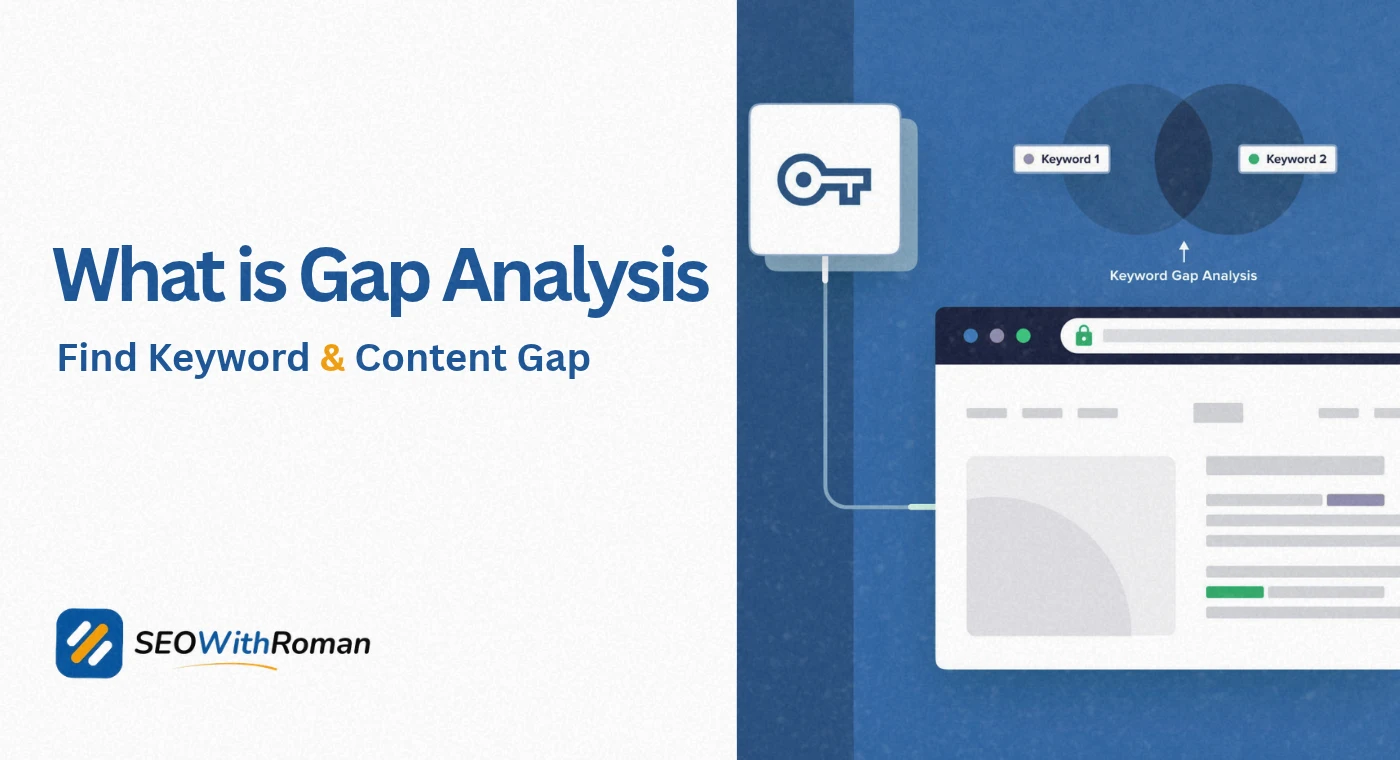
- Gap analysis in SEO means finding keywords, topics, and content your competitors rank for that you do not
- There are four main types of gap analysis: keyword gap, content gap, market gap, and performance gap
- The five steps of gap analysis are: set your goal, identify competitors, collect data, analyse the gaps, and create an action plan
- Ahrefs Content Gap tool, SEMrush Keyword Gap tool, and Claude AI are the most effective tools for finding gaps in 2026
- A single content gap analysis session can uncover dozens of rankable keyword opportunities your entire existing strategy has missed
1 What Is Gap Analysis and Why Every SEO Strategy Needs It
Here is a question most website owners never ask themselves. If your competitors are getting traffic you are not, what exactly are they doing differently?
Gap analysis is how you answer that question with data instead of guesswork.
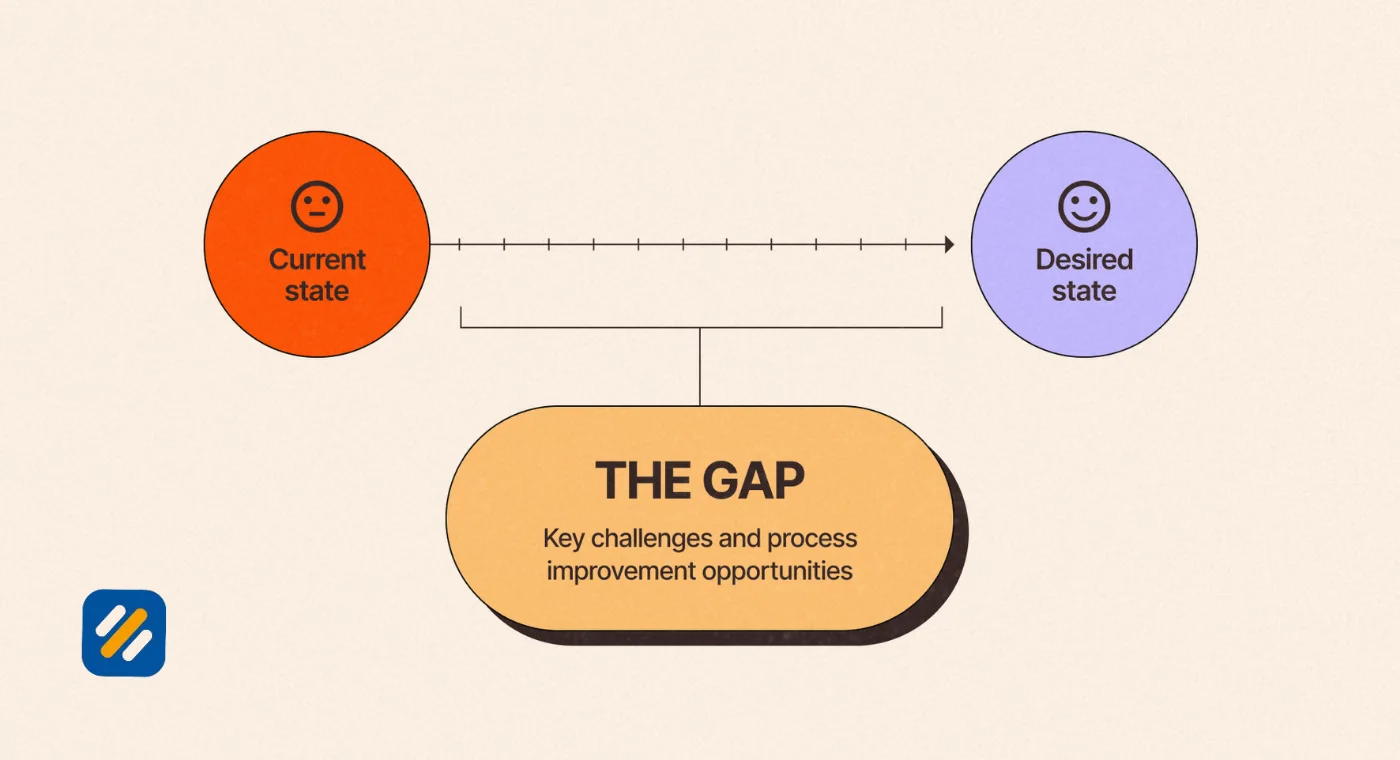
In SEO, a gap analysis is the process of comparing your website against your competitors to identify keywords, topics, and content opportunities that they are ranking for and you are not. It reveals the distance between where your website is today and where it needs to be to compete effectively in your niche.
The term comes from business strategy, where a gap analysis measures the difference between current performance and desired performance. In SEO, the gap is almost always one of three things. Either you have not written about a topic your competitors have covered. Or you have written about it but your content is too shallow to compete. Or you are targeting the wrong keywords entirely while competitors capture the traffic you should be getting.
After many years of doing SEO audits for clients across multiple industries, I have found that gap analysis consistently produces the highest ROI of any research activity. It does not just find new keywords. It tells you exactly what to write, which pages to improve, and where your competitors are beatable right now.
2 What Is a Content Gap and Why It Is Costing You Traffic Every Day
A content gap is any topic, keyword, or search question that your target audience is actively searching for in Google that your website does not currently have a page covering.
Think of it this way. Your competitor has an article answering the question “how to do keyword research for free.” You do not. Every time someone searches that phrase, your competitor gets the click and potentially the client. That single missing article is a content gap. Multiply it across hundreds of keywords and you start to understand why some websites in your niche generate ten times your traffic despite being no more expert than you are.
Content gaps exist at two levels
Domain-level content gaps happen when your competitor has entire topic clusters that you have not touched at all. For example, a competitor might have thirty articles about technical SEO while your website has none. That is a domain-level gap and it means you have zero visibility for an entire category of searches your audience makes.
Page-level content gaps happen when you and a competitor both have an article on the same topic, but theirs ranks for fifty keywords and yours ranks for five. This usually means their article covers the topic more thoroughly, answers more related questions, or is structured in a way that better matches search intent.
Both types need different fixes. Domain-level gaps require creating new content. Page-level gaps require improving existing content with more depth, better structure, and additional keyword coverage.
3 The 4 Types of Gap Analysis Every SEO Professional Should Know
Gap analysis is not a single process. There are four distinct types, and each one answers a different strategic question.
| Gap Analysis Type | What It Finds | Best Tool to Use | When to Use It |
|---|---|---|---|
| Keyword Gap Analysis | Keywords competitors rank for that you do not | Ahrefs Content Gap, SEMrush Keyword Gap | When starting a new website or entering a new niche |
| Content Gap Analysis | Topics and articles competitors have covered that you have not | Ahrefs Content Gap, Surfer SEO | When your traffic has plateaued despite consistent publishing |
| Market Gap Analysis | Audience needs and search intent nobody in your niche is fully serving | Google Trends, People Also Ask, Claude AI | When looking for untapped positioning opportunities |
| Performance Gap Analysis | Pages that exist on your site but underperform compared to competitor equivalents | Google Search Console, Ahrefs Site Explorer | When existing content ranks between positions 5 and 20 but does not convert |
Understanding which type of gap you are looking for determines which tool you use and what you do with the results. Most experienced SEO professionals run all four types in sequence when doing a full competitive audit.
4 The 5 Steps of Gap Analysis | The Exact Process I Use for Clients
This is the five step gap analysis process I follow when auditing a new client website. It works for blogs, business websites, ecommerce sites, and personal brand websites equally.
Step 1: Define your goal and current position
Before looking at competitors, you need to know where you stand. Pull up your Google Search Console and look at which keywords your site currently ranks for and at what positions. Note which topic areas have the most coverage and which have the least. This is your baseline. Without it, you cannot measure what a gap actually costs you.
Step 2: Identify your real SEO competitors
Your SEO competitors are not always your business competitors. They are the websites ranking on page one for the keywords your target audience searches. Enter your main keyword into Google and look at who dominates the first page. These are the websites you need to analyse, whether you have heard of them or not.
Step 3: Collect keyword and content data
Use Ahrefs Content Gap or SEMrush Keyword Gap tool to enter your domain and two to three competitor domains. The tool generates a list of every keyword those competitors rank for that your website does not. Export this list to a spreadsheet. Filter for keywords with at least 100 monthly searches and a difficulty score under 40.
Step 4: Analyse each gap opportunity
For each keyword cluster in your gap list, ask three questions. Does my website have a page covering this topic? If yes, is that page ranking and why is it underperforming? If no, is this topic relevant to my audience and realistic to rank for given my current domain authority? This analysis separates genuine opportunities from irrelevant keywords you should ignore.
Step 5: Build your action plan
Each gap falls into one of three action categories. Create a new article for topics you have no page covering. Update and expand an existing article for page-level gaps where you have a page but it is underperforming. Or skip and monitor for topics that are too competitive or too irrelevant for your current stage.
5 How to Do a Keyword Gap Analysis Step by Step
Keyword gap analysis specifically focuses on finding keywords your competitors rank for in Google that your website does not appear for at all. Here is the exact process:
Using Ahrefs Content Gap:
Go to Ahrefs Site Explorer and enter your domain. Click on Competitive Analysis in the left sidebar. Enter two to three competitor domains in the comparison fields. Click Show Keyword Opportunities. The result is every keyword at least one competitor ranks for that you do not.
Filter the results by
- Minimum monthly search volume of 100 to remove unprofitable keywords
- Maximum keyword difficulty of 35 for a new or growing website
- Exclude competitor brand names from the results
- Filter for keywords where at least two competitors rank in the top 10, which signals proven demand
Using SEMrush Keyword Gap:
Go to SEMrush and navigate to Keyword Gap under Competitive Research. Enter your domain and up to four competitors. Select Organic Keywords and click Compare. SEMrush shows you keywords your competitors share that you are missing, colour-coded by opportunity strength.
Using Google Search Console for free:
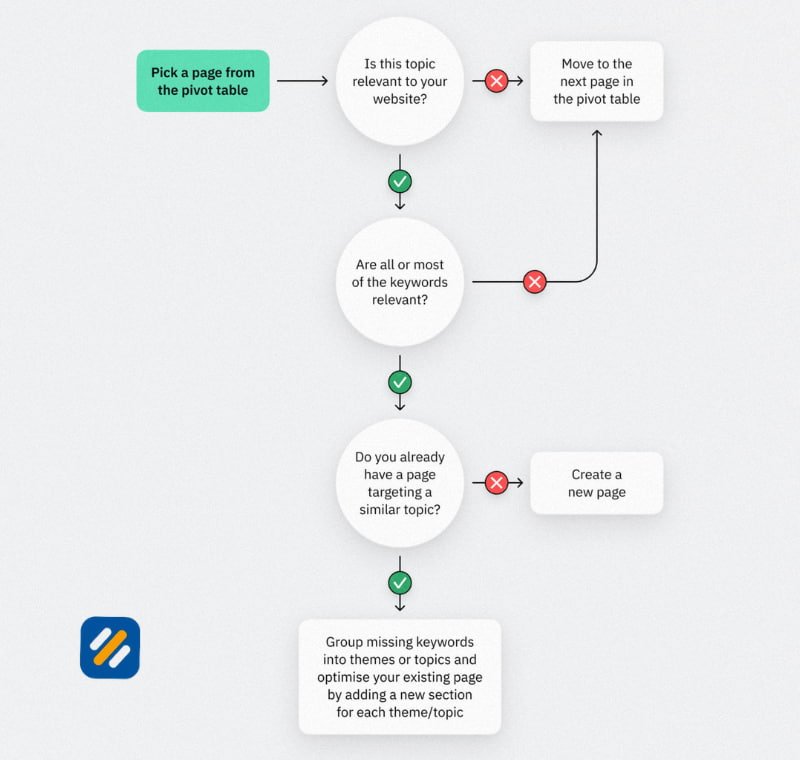
Export your current ranking keywords from GSC. Then search each of your main topic keywords in Google and manually note what your top competitors rank for that you do not have a page about. This is slower but completely free and often surfaces gaps that tool-based approaches miss because it forces you to look at search intent, not just keywords.
6 How to Do a Content Gap Analysis | Beyond Keywords to Full Topic Coverage
Keyword gap analysis tells you which keywords you are missing. Content gap analysis goes one level deeper and tells you which entire topics and subtopics your content strategy has not addressed.
Here is how content gap analysis differs from keyword gap analysis in practice
A keyword gap might show you that a competitor ranks for “how to fix crawl errors.” A content gap analysis shows you that competitor has a complete technical SEO hub with twelve articles covering every aspect of crawlability, indexing, and site structure, while your website has none. The content gap is the entire topic cluster, not just one keyword.
How to do a content gap analysis manually
Go to your top competitor’s website and look at their category structure and navigation. Note every topic category they have that you do not. Then go to Ahrefs Site Explorer, enter their domain, and click Top Pages. Sort by traffic. The pages sending them the most visitors are the topics your strategy is most urgently missing.
For each topic area in their top pages list, check whether your website has equivalent content. If not, that topic goes straight onto your content creation priority list.
7 Best Tools for Gap Analysis in 2026
| Tool | Type | Cost | Best Feature | Gap Analysis Use |
|---|---|---|---|---|
| Ahrefs Content Gap | Keyword and content | Paid, free trial available | Side by side competitor keyword comparison | Find every keyword multiple competitors rank for that you do not |
| SEMrush Keyword Gap | Keyword | Paid, limited free | Colour-coded opportunity scoring | Quickly identify shared competitor keywords by opportunity strength |
| Google Search Console | Performance | Free | Real Google ranking data | Find your own pages that rank between positions 5 and 20 needing improvement |
| Surfer SEO | Content | Paid | NLP-based content scoring against top results | Identify missing subtopics and questions on existing pages |
| Claude AI | Content and market | Free tier available | Natural language gap identification | Discover audience question gaps and market positioning gaps |
| ChatGPT | Content and market | Free tier available | Brainstorming topic clusters | Generate gap hypotheses before running tool-based analysis |
| Google Trends | Market | Free | Rising topic identification | Find growing topics competitors have not yet covered |
| People Also Ask | Content | Free | Real search question data | Find question-based content gaps directly from Google |
8 Can ChatGPT Do a Gap Analysis?
Yes, ChatGPT can help with gap analysis, but not in the way most people assume.
ChatGPT cannot access live search data. It cannot tell you which keywords your competitors rank for because it does not have access to Google’s index or any SEO tool’s database. If you ask ChatGPT to do a keyword gap analysis between your website and a competitor, it will generate plausible-sounding answers based on its training data, not real ranking data.
Where ChatGPT and Claude AI genuinely add value in gap analysis is in a different role entirely
Use AI tools to identify audience intent gaps that keyword tools miss. Ask Claude AI: “What questions would a small business owner in the US have about SEO that most SEO blogs have not fully answered?” The output surfaces content angle gaps based on how real people think about a topic, not just which keywords they type.
Use ChatGPT to build topic cluster maps. Once you have your keyword gap data from Ahrefs or SEMrush, paste it into ChatGPT and ask it to group the keywords into topic clusters and identify which clusters have the highest concentration of missing keywords on your site. This turns a raw keyword list into a structured content plan in minutes.
Use Claude AI to analyse search intent gaps. Take your competitor’s top-performing article on a topic and paste the outline into Claude. Ask it to identify angles, questions, and subtopics the article does not cover. These are the content gaps at the page level that you can exploit by writing a more complete article on the same topic.
The most effective gap analysis workflow in 2026 combines Ahrefs or SEMrush for keyword data with Claude AI or ChatGPT for intent and topic cluster analysis.
9 What Is a Gap Analysis Example | A Real-World SEO Scenario
Here is a concrete gap analysis example using an SEO blog as the subject.
Imagine you run an SEO blog targeting beginners and small business owners. Your top competitor in the same niche ranks for 3,400 keywords. Your site ranks for 280. You run a content gap analysis using Ahrefs and discover the following gaps:
Domain-level gaps found:
- Competitor has 14 articles on technical SEO. You have zero.
- Competitor has 8 articles on local SEO. You have zero.
- Competitor has 6 articles on Google Search Console tutorials. You have one.
Page-level gaps found:
- Both sites have an article on keyword research. Competitor ranks for 89 related keywords. Your article ranks for 11. Checking their article reveals they cover search intent, keyword difficulty, and competitor keyword research in depth. Your article does not cover any of those angles.
Action plan produced from this gap analysis:
- Create a technical SEO category and publish the 5 highest-traffic technical SEO topics first
- Expand your keyword research article with three new sections covering search intent, keyword difficulty, and the competitor keyword research process
- Create a Google Search Console tutorial series starting with setup and expanding to advanced features
This single gap analysis session has now given you a content plan for the next three months. Every item on that plan is a proven opportunity because a competitor is already getting traffic from it.
10 How Gap Analysis Helps in AIO and GEO | The 2026 Dimension
Most gap analysis guides stop at Google rankings. In 2026, gap analysis has a second dimension that is becoming equally important: visibility in AI answers.
Google’s AI Overviews and tools like Perplexity and ChatGPT now answer millions of search queries directly. When someone asks an AI search tool about a topic in your niche, the AI pulls from sources it considers authoritative and comprehensive on that topic. If your website has content gaps on core topics in your niche, AI tools will simply not include you in their answers.
This creates what I call an AIO content gap. Your website might rank on page one for a keyword but still be excluded from AI Overview answers because your content does not comprehensively cover the surrounding topic cluster.
Closing AIO content gaps requires the same gap analysis process but with one additional filter: look for topics where your competitor’s content is cited in AI Overviews and yours is not. These are the topics where your content depth is falling short of what AI systems consider comprehensive enough to reference.
11 3 Expert Tips to Do Gap Analysis Like a Senior SEO Specialist
Tip 1: Always prioritise gaps where two or more competitors rank in the top 10
A keyword that only one competitor ranks for could be an anomaly. When two or more of your competitors rank in the top 10 for the same keyword you are missing, that is confirmed demand with proven competition that is beatable. These are your highest-priority gaps.
Tip 2: Do not just fill gaps, own them
Most websites that do gap analysis create a basic article to cover the missing topic and move on. The websites that win long term go deeper. When you find a gap, write the most comprehensive article on that topic that exists anywhere in your niche. Closing a gap with a thin article just means your competitor still outranks you. Closing it with the best article means you take the ranking permanently.
Tip 3: Run a gap analysis every quarter, not just once
Your competitors are publishing new content every week. New gaps open up constantly. A gap analysis you did six months ago is already partially outdated. Build a quarterly gap analysis review into your content calendar. Thirty minutes every three months reviewing competitor top pages in Ahrefs will consistently surface new opportunities before they become entrenched competitive advantages.
12 Conclusion
Gap analysis is the process that separates websites that grow systematically from websites that publish content and hope for the best.
When you know exactly which keywords your competitors rank for that you do not, which topics they have covered that you have not, and which of your existing pages are underperforming against equivalent competitor pages, you stop guessing about what to write next. Every article you publish from that point forward has a confirmed audience, proven demand, and a clear competitive angle.
Start with a free account on Ahrefs Webmaster Tools or SEMrush. Run your first keyword gap report against your top two competitors. Export the results and identify the ten highest-priority gaps based on search volume and keyword difficulty. Build those ten articles first.
That is how gap analysis turns into real traffic growth. Not theory. Not guesswork. Just a clear plan built on data your competitors have already validated for you.
Found this useful? Leave a comment below and tell me which tool you are using for your first gap analysis. I answer every comment personally.
Join 1,000+ business owners and bloggers who get one actionable SEO tip every week — straight to their inbox. Free forever.
Get Free Weekly Tips →