- ChatGPT is stronger for SEO content writing, meta tag creation, and creative long-form articles
- Gemini is stronger for real-time keyword research, competitor analysis, and Google Workspace SEO workflows
- Both tools can do SEO but neither replaces a proper keyword research tool like Ahrefs or SEMrush
- For on-page SEO tasks, ChatGPT produces more polished, publish-ready content with better structure
- Gemini’s deep Google Search integration makes it the better choice for trend research and up-to-date SERP analysis
1 What Are Gemini and ChatGPT | And Why SEO Professionals Are Paying Attention
A few years ago, AI tools were curiosities. Something you played with for fun but never trusted with real work. That changed fast.
Today, Gemini vs ChatGPT is the conversation happening in every SEO team, every freelancer’s Slack channel, and every digital marketing agency trying to figure out where AI actually fits into a content workflow that has to rank on Google.
Let me be clear about what these tools actually are before we compare them for SEO specifically.
ChatGPT is an AI chatbot developed by OpenAI, powered by its GPT series of large language models. As of October 2026, the free version runs on GPT-5.3 mini, while paid plans give access to GPT-5.4 Pro with advanced reasoning, deep research, and custom GPTs you can build for specific SEO tasks.
Google Gemini is Google’s AI assistant, built on the Gemini family of multimodal models. The free plan runs on Gemini 3 Flash with access to Gemini Live and basic Deep Research. Paid plans, specifically Google AI Pro at $19.99 per month, unlock Gemini 3.1 Pro with a context window of 1.04 million tokens, video generation through Veo 3.1, and native integration with every Google Workspace tool you already use for SEO including Search Console, Google Docs, and Google Sheets.
For SEO professionals, the choice between these two tools is not about which one is smarter in general. It is about which one fits better into your specific workflow, saves the most time on your highest-volume tasks, and produces content that actually ranks.
2 Gemini vs ChatGPT | Core Comparison at a Glance
Before going into SEO-specific use cases, here is how these two tools compare across the features that matter most for content creators and SEO specialists:
| Feature | ChatGPT | Google Gemini |
|---|---|---|
| Current AI Model | GPT-5.4 Pro (paid), GPT-5.3 mini (free) | Gemini 3.1 Pro (paid), Gemini 3 Flash (free) |
| Context Window | Up to 1 million tokens | Up to 1.04 million tokens |
| Real-Time Web Access | Yes via OAI-SearchBot | Yes via Google Search, more reliable |
| Knowledge Cutoff | August 2025 | January 2025 |
| Image Generation | GPT-Image-1.5, strong text rendering | Nano Banana Pro, unlimited on paid |
| Video Generation | Sora discontinued April 2026 | Veo 3.1 Fast, available on paid |
| Google Workspace Integration | Via third-party connectors | Native, seamless |
| Custom AI Assistants | Custom GPTs | Gems |
| Deep Research | Available on paid plans | Available on paid and limited free |
| Free Plan Searches Per Day | Limited | Limited |
| Pricing (Paid) | ChatGPT Plus $20/month | Google AI Pro $19.99/month |
| G2 Rating | 4.7/5 | 4.4/5 |
| Best For SEO | Content writing, meta tags, on-page SEO | Keyword research, trend analysis, GSC workflows |
3 Can ChatGPT Do SEO? Here Is What It Actually Does Well
The honest answer is yes, ChatGPT can do SEO, and it does several parts of it exceptionally well. But it cannot do everything, and understanding what it is genuinely good at versus where it falls short saves you from building the wrong workflow.
Here is what ChatGPT handles better than any other AI tool for SEO right now
SEO Content Writing
ChatGPT produces the most natural, human-sounding long-form content of any AI tool I have used. When you give it a well-structured prompt with your primary keyword, target audience, content structure, and tone requirements, it produces drafts that need significantly less editing than Gemini output. For blog articles, pillar pages, and service page copy, ChatGPT is the stronger writer.
Meta Title and Description Writing
This is one of ChatGPT’s most underused SEO applications. Feed it your target keyword, your article topic, and three competing title examples, and ask it to produce ten meta title variations under 60 characters with a power word included. The output quality is consistently high and saves meaningful time at scale.
Title Tag and Header Structure Planning
Ask ChatGPT to create a complete H1, H2, and H3 structure for a target keyword and it maps out a logical content hierarchy that covers the topic’s search intent thoroughly. This is especially useful for skyscraper content where you need to out-cover every competitor on the page.
Schema Markup Generation
ChatGPT can write FAQ schema, Article schema, and How-To schema in JSON-LD format ready to paste into Rank Math or directly into your page code. This alone saves hours for anyone managing schema across multiple pages.
Internal Linking Anchor Text Suggestions
Give ChatGPT a list of your published articles and the topic of a new article you are writing, and ask it to suggest five internal link opportunities with natural anchor text. The suggestions are consistently on-point and reduce the time spent manually planning internal link structures.
4 Can Gemini Do SEO? Where Google’s AI Has a Real Advantage
Gemini approaches SEO from a completely different angle than ChatGPT, and for certain tasks it genuinely outperforms everything else available.
Real-Time Keyword and Trend Research
Because Gemini is directly connected to Google Search, it can pull current search trend data in ways ChatGPT cannot match. Ask Gemini to identify rising search queries around a topic and it surfaces information from Google’s live index, not a training dataset from months ago. For trend-based content strategies, this is a significant advantage.
Google Search Console Workflow Integration
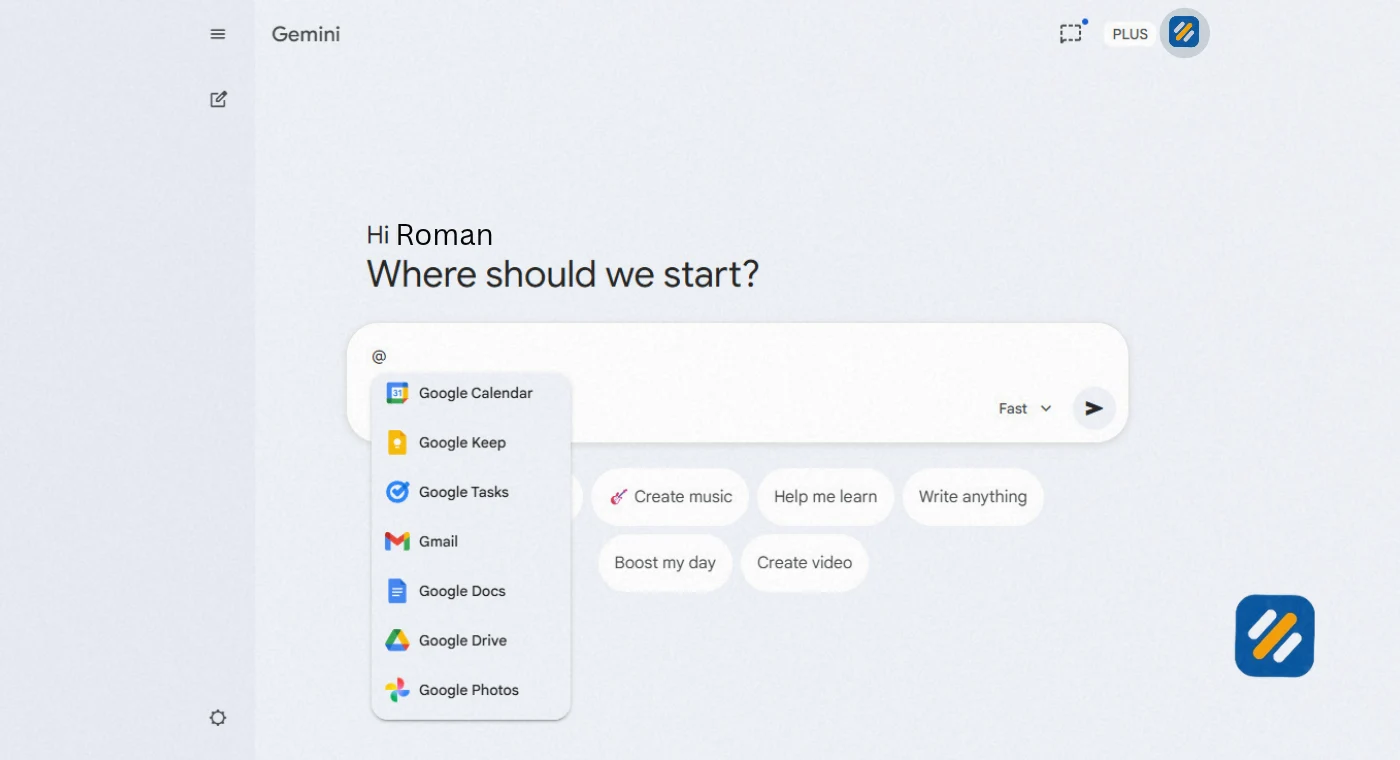
This is where Gemini’s SEO value becomes uniquely powerful. If you use Google Workspace, Gemini can work directly inside your GSC data, your Google Sheets keyword trackers, and your Google Docs content briefs without switching between tools. The workflow efficiency for SEO teams already inside the Google ecosystem is genuinely hard to match.
Competitor Research and SERP Analysis
Ask Gemini to analyse the top ranking pages for a specific keyword and it can pull live SERP data and summarise what the current top results cover. This gives you a real-time content gap analysis that ChatGPT’s training data cannot replicate.
Deep Research for Long-Form Content
Gemini’s Deep Research feature produces comprehensive, well-sourced research reports that can serve as the factual backbone for long-form SEO content. When I need to write a data-heavy article on a fast-moving topic, Gemini’s research capability with live sources outperforms what ChatGPT’s training data can provide.
Google Workspace SEO Documentation
For SEO teams that manage content calendars, keyword trackers, and editorial workflows in Google Sheets and Google Docs, Gemini’s native integration means you can ask it to update your keyword list, summarise your GSC data, or draft content briefs without leaving the tools you already use daily.
5 Gemini vs ChatGPT for Specific SEO Tasks | Head to Head
| SEO Task | Better Tool | Why |
|---|---|---|
| Writing SEO blog articles | ChatGPT | More natural writing, better structure, human-sounding output |
| Writing meta titles and descriptions | ChatGPT | Stronger creative copywriting, better power word usage |
| Keyword research and trend discovery | Gemini | Live Google Search integration, real-time data |
| Competitor SERP analysis | Gemini | Pulls live search results, not training data |
| Content brief creation | ChatGPT | Better at structured outlines and heading hierarchies |
| Schema markup generation | ChatGPT | Produces clean JSON-LD code ready to implement |
| Internal linking suggestions | ChatGPT | Understands content relationships and natural anchor text |
| Google Search Console analysis | Gemini | Native Google Workspace integration |
| Deep research for data articles | Gemini | Uses live sources, better for current statistics |
| Writing for Google AI Overviews (AIO) | ChatGPT | Better at structured, question-answer format content |
| Rewriting and improving existing content | ChatGPT | Stronger editing and tone improvement |
| Local SEO content writing | ChatGPT | Better understanding of location-specific content tone |
| Technical SEO documentation | Both equally | Both handle technical writing competently |
| AI image generation for blog posts | Gemini | Unlimited images on paid plan, higher realism |
6 Is Gemini Better Than ChatGPT in 2026? The Honest Answer
This is the question everyone is searching for and most articles refuse to answer directly. Here is my honest take after using both tools daily for SEO work.
ChatGPT is the better tool for the majority of SEO content tasks. It writes better, edits better, produces more polished meta copy, and understands content structure in a way that feels genuinely useful for someone trying to publish articles that rank.
Gemini is the better tool for research-heavy SEO tasks. When you need live SERP data, current trend information, or deep integration with Google’s own tools, Gemini wins clearly.
The difference between them is not about intelligence. Both models are sophisticated and both are improving rapidly. The difference is about purpose. ChatGPT was built to be a powerful general-purpose writing and reasoning assistant. Gemini was built to integrate with Google’s ecosystem and leverage Google’s data advantage.
For a solo blogger or small business owner doing their own SEO, ChatGPT gives you more usable output per prompt. For an SEO team working inside Google Workspace with live data needs, Gemini’s ecosystem integration saves more time overall.
The answer that actually serves you is: use both. Use ChatGPT to write and optimise content. Use Gemini to research and analyse. They are not competitors in your workflow. They are complements.
7 Which AI Is Best for SEO | Gemini vs ChatGPT vs Other Alternatives
A question worth asking honestly is whether Gemini and ChatGPT are even the best AI tools for SEO when you consider purpose-built alternatives.
| AI Tool | Best SEO Use Case | Key Limitation |
|---|---|---|
| ChatGPT (GPT-5.4) | Content writing, meta copy, schema, internal linking | No real-time keyword volume data |
| Google Gemini 3.1 Pro | Trend research, GSC workflows, SERP analysis | Weaker creative writing output |
| Claude AI | Long-form content, nuanced editing, research synthesis | Less widely integrated with SEO tools |
| Perplexity AI | Real-time research with citations | Not built for content creation |
| Ahrefs AI features | Keyword research, competitive analysis | Not a writing tool |
| SEMrush AI features | Content optimisation, topic research | Requires paid subscription |
For pure SEO content production at scale, ChatGPT remains the market leader. For research and data-driven SEO tasks with live information needs, Gemini is the strongest option in 2026.
8 ChatGPT Free vs Gemini Free | Which Is More Useful for SEO on Zero Budget
Not everyone has a budget for paid AI tools, especially when starting a new website. Here is how the free versions compare specifically for SEO tasks:
ChatGPT free gives you access to GPT-5.3 mini with limited daily messages, limited deep research access, and three file uploads per day. For basic SEO content writing, meta tag creation, and content brief building, the free version is genuinely useful. The limitation is message caps which become frustrating quickly when you are producing four articles per week.
Gemini free gives you access to Gemini 3 Flash with varying access to 3.1 Pro, unlimited image generation on the free tier, and access to basic Deep Research. For trend research and basic SERP queries, the free version works well. The Google Search integration is available on the free plan which is a significant advantage for real-time research tasks.
For a beginner blogger doing SEO on zero budget, Gemini free actually gives you slightly more usable features specifically for SEO research because the Google Search integration is available without paying. For content writing, ChatGPT free produces better output per prompt.
The practical answer: start with Gemini free for research and keyword ideas, use ChatGPT free for drafting content, and upgrade ChatGPT to Plus when your article volume increases.
9 How to Use Gemini and ChatGPT Together for a Complete SEO Workflow
The most effective SEO AI workflow in 2026 does not choose one tool over the other. It assigns each tool to the tasks it handles best.
Here is the exact workflow I use across client projects
Step 1: Keyword and topic research in Gemini
Ask Gemini to identify rising search queries around your niche topic using its live Google Search access. Use this to validate keyword opportunities before checking volume in Ahrefs or Google Keyword Planner.
Step 2: SERP analysis in Gemini
Ask Gemini to summarise what the top three ranking articles cover for your target keyword. Identify the content gaps you can fill in your article.
Step 3: Content brief and structure in ChatGPT
Take your keyword and SERP analysis findings into ChatGPT. Ask it to build a complete article structure with H1, H2, and H3 headings that covers the topic more comprehensively than the current top results.
Step 4: Full article draft in ChatGPT
Use ChatGPT to write the full article section by section, adding your personal experience and client examples as you review each section. ChatGPT produces the most publish-ready SEO content of any AI tool currently available.
Step 5: Meta title and description in ChatGPT
Ask ChatGPT to generate ten meta title variations and five meta description options for your target keyword. Select the strongest combination using the criteria we covered in the title tag article.
Step 6: Schema markup in ChatGPT
If your article has an FAQ section, ask ChatGPT to generate the FAQ schema in JSON-LD format ready for Rank Math.
Step 7: Publish and track in Google Search Console
Use Gemini’s Google Workspace integration to monitor performance data in GSC without leaving your Google tools environment.
10 3 Expert Tips for Using Gemini and ChatGPT for SEO
Tip 1: Always add your own experience on top of AI output.
Neither Gemini nor ChatGPT has your six years of client experience, your real case studies, or your specific industry knowledge. The articles that rank in 2026 are the ones where AI handles the structure and drafting while the human expert adds the insight that nobody else can provide. Add at least three personal observations or examples to every AI-drafted article before publishing.
Tip 2: Use Gemini for research then ChatGPT for writing, never the other way around.
Starting with ChatGPT for research means you are working from training data that may be months out of date. Starting with Gemini for research and then moving to ChatGPT for writing gives you the accuracy of live data combined with the quality of ChatGPT’s writing output. This sequence consistently produces better articles than using either tool alone.
Tip 3: Build custom ChatGPT instructions for your SEO style.
ChatGPT allows you to set persistent custom instructions that apply to every conversation. Set your custom instructions to include your target audience, your preferred writing style, your no-em-dash rule, your keyword density preference, and your E-E-A-T requirements. This eliminates the need to repeat instructions in every prompt and makes every ChatGPT output consistent with your SEO content standards from the first draft.
11 Conclusion
The gemini vs chatgpt debate for SEO does not have a single winner because the two tools serve genuinely different purposes within an SEO workflow.
ChatGPT writes better content, produces stronger meta copy, generates cleaner schema markup, and understands on-page SEO structure at a level that saves real hours every week. For content-heavy SEO work, it remains the most useful AI tool available in 2026.
Gemini researches better, accesses live data, integrates natively with Google’s tools, and gives you real-time SERP intelligence that no training dataset can match. For research-driven and data-heavy SEO tasks, it has a clear advantage.
The smartest SEO workflow in 2026 uses both. Research with Gemini. Write with ChatGPT. Optimise with Rank Math. Track with Google Search Console.
Stop asking which AI is better for SEO. Start asking which AI handles which part of your SEO workflow better. That question has a clear answer and it is both.
Found this comparison useful? Drop a comment below and tell me which tool you are currently using for SEO and what you think of it. I read and reply to every comment personally.
Join 1,000+ business owners and bloggers who get one actionable SEO tip every week — straight to their inbox. Free forever.
Get Free Weekly Tips →