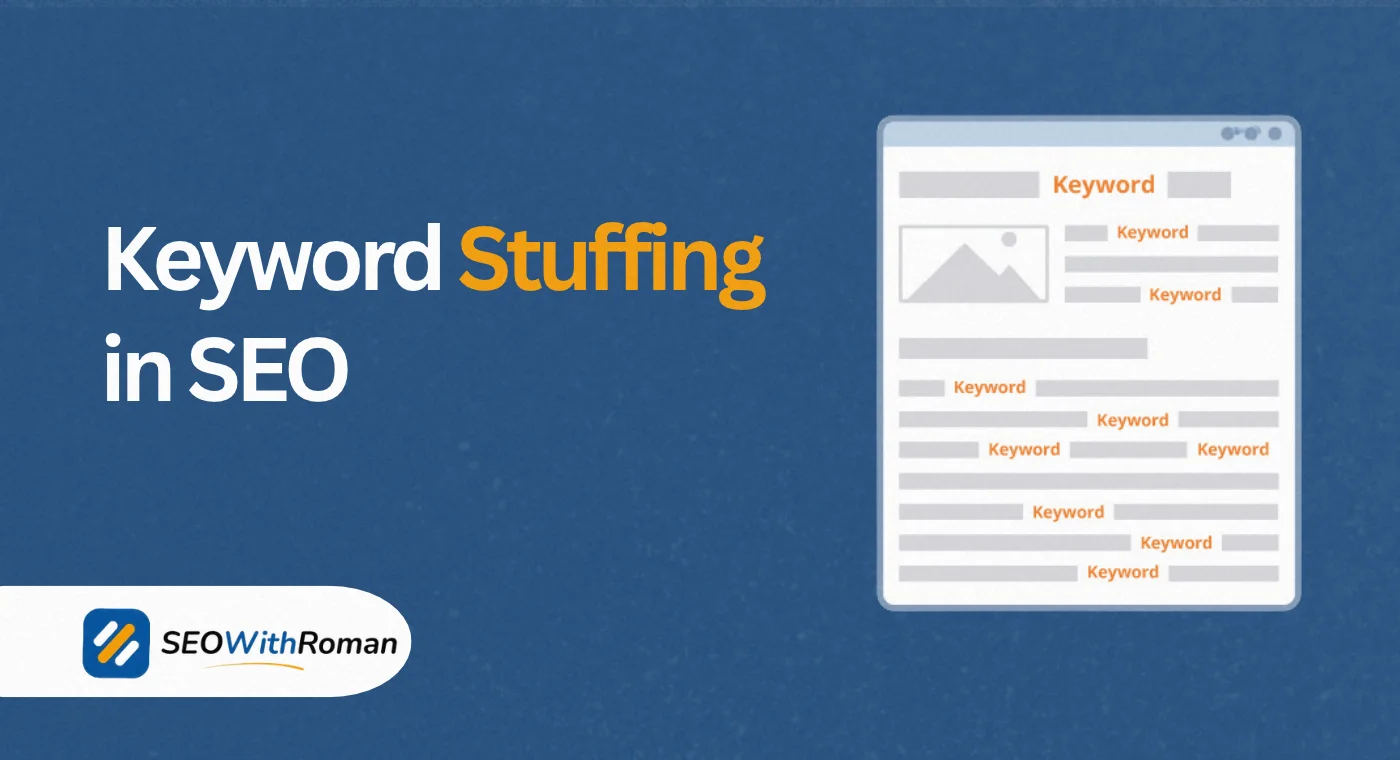
- Keyword stuffing means forcing keywords into content unnaturally with the goal of manipulating Google rankings
- Google’s spam policies explicitly prohibit keyword stuffing and can issue manual penalties that remove your site from search results
- Keyword stuffing hurts both rankings and user experience, making it a double loss for any website
- The safe keyword density for body content sits between 1% and 1.5% with natural placement across headings, intro, and body
- Semantic SEO and LSI keywords are the modern replacement for keyword stuffing and they work significantly better
1 What Is Keyword Stuffing in SEO and Why Do Beginners Still Fall Into This Trap
If you have ever read a webpage that felt robotic, repetitive, or just oddly written, there is a good chance you were looking at keyword stuffing in action.
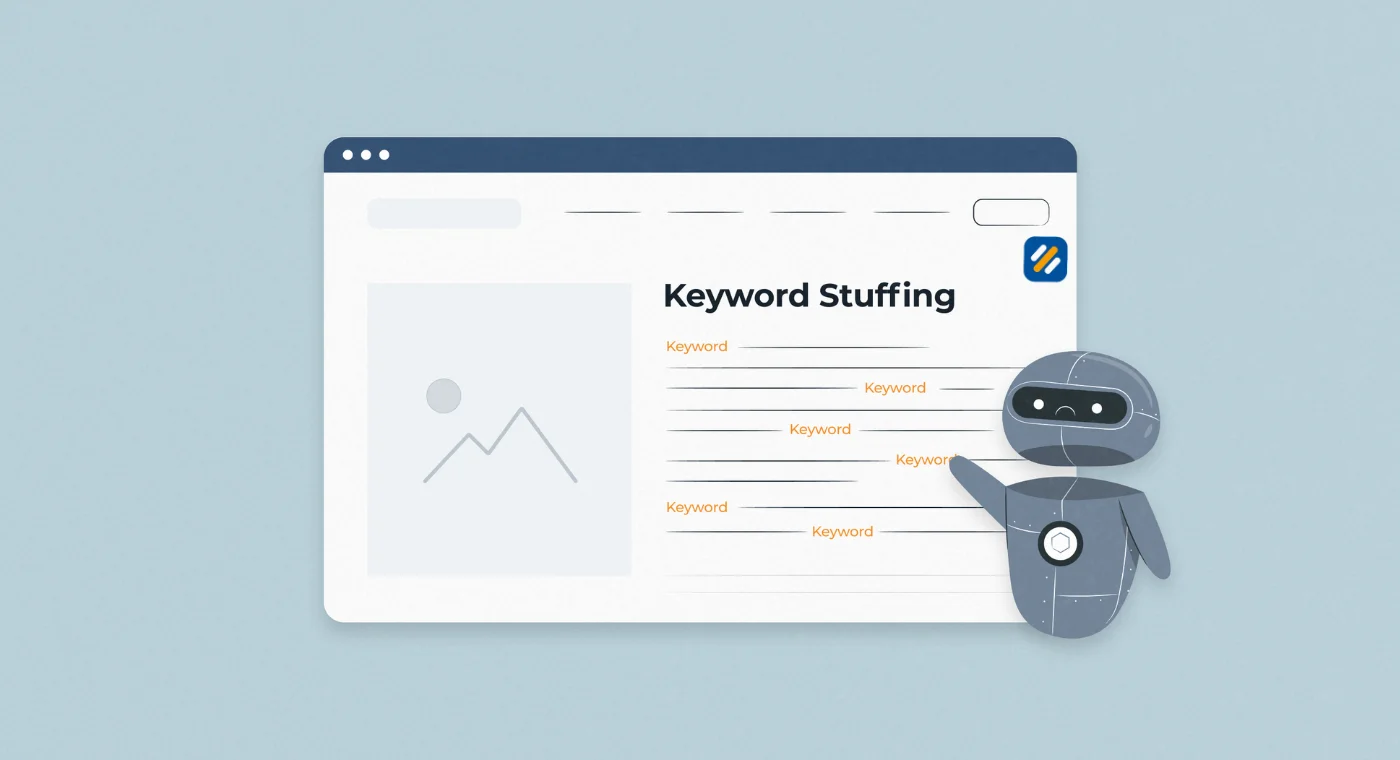
Keyword stuffing is the practice of forcing a target keyword into a webpage an excessive number of times in an attempt to manipulate Google into ranking that page higher. Instead of writing content that genuinely serves the reader, the writer prioritises keyword repetition over natural language.
Here is what keyword stuffing actually looks like in a sentence:
“Our cheap SEO services offer the best cheap SEO services for businesses looking for cheap SEO services because cheap SEO services are what we do best.”
That sentence is painful to read. It makes no logical sense. And it tells Google nothing useful about the page. Yet this exact pattern exists on thousands of websites that still think keyword frequency is a ranking shortcut.
The reason beginners fall into this trap is a misunderstanding of how Google used to work. In the late 1990s and early 2000s, Google’s algorithm was primitive enough that pages with the highest keyword frequency often ranked highest. Website owners and early SEOs exploited this aggressively.
Google noticed. And it has spent the past twenty years building increasingly sophisticated systems specifically designed to identify and penalise this behaviour. In 2026, keyword stuffing is not just ineffective. It is actively harmful to your rankings.
2 What Is Keyword Stuffing Meaning | Where It Happens Beyond Body Content
Most people think keyword stuffing only happens in the visible text of a page. That is only one of several places it appears. Understanding every location where keyword stuffing can occur is essential for auditing your own website properly.
Visible content stuffing is the most obvious form. This is where a keyword appears in the main body text far more times than natural writing would ever require.
Title tag stuffing happens when a website owner tries to squeeze multiple keyword variations into a single title tag. A title like “Cheap SEO Services | Affordable SEO Services | Best SEO Services 2026” is a clear example of title tag keyword stuffing.
Meta description stuffing repeats keywords inside the meta description to the point where it reads as a keyword list rather than a compelling summary of the page.
Alt text stuffing fills image alt attributes with keyword strings rather than genuine descriptions of what the image shows. An image with alt text reading “SEO services cheap SEO affordable SEO best SEO” is both useless for accessibility and flagged by Google as spam.
Anchor text stuffing happens when every internal or external link pointing to a page uses the exact same keyword-rich anchor text rather than natural varied language.
Hidden text stuffing is the most deceptive form. Keywords are placed in white text on a white background, hidden behind images, or positioned off-screen using CSS so users cannot see them but search engine crawlers can. Google’s algorithms detect this pattern reliably and treat it as a serious spam violation.
3 Real Keyword Stuffing Examples | Good vs Bad Keyword Placement
Seeing the difference between stuffed content and naturally optimised content makes the concept immediately clear. Here are side by side keyword stuffing examples across different content elements:
| Element | Keyword Stuffed Version | Naturally Optimised Version |
|---|---|---|
| Body paragraph | “Our keyword research services help you do keyword research better than any other keyword research tool for keyword research beginners” | “Our platform helps beginners find the right search terms quickly, using data that makes the research process straightforward and reliable” |
| Title tag | “SEO Services Cheap SEO Services Affordable SEO Agency SEO Help” | “Affordable SEO Services for Small Businesses in the US and UK” |
| Meta description | “Get SEO, cheap SEO, affordable SEO, best SEO, SEO services, local SEO from our SEO company” | “Professional SEO services for small businesses. We improve your Google rankings, drive organic traffic, and deliver real results without agency fees” |
| Image alt text | “SEO keyword research keyword tool keyword planner SEO” | “Screenshot of Google Keyword Planner showing search volume for SEO keywords” |
| H2 heading | “How to Do SEO SEO Guide SEO Tips SEO Beginners” | “How to Build an SEO Strategy That Actually Works for Beginners” |
| URL | /seo-services-cheap-seo-affordable-seo-best-seo/ | /affordable-seo-services/ |
The naturally optimised version in every example is clearer, more useful to the reader, and far more likely to rank. The stuffed version triggers Google’s spam detection systems and confuses the reader simultaneously.
4 Is Keyword Stuffing Good for SEO? The Honest Answer With Data
No. Keyword stuffing is not good for SEO in any context in 2026. This is not an opinion. It is confirmed directly by Google’s own documentation and supported by decades of algorithm updates designed specifically to eliminate this practice.
Google’s spam policies explicitly state that keyword stuffing violates their guidelines. The official language from Google’s developer documentation lists keyword stuffing as a practice that “results in a negative user experience and can harm your site’s ranking.”
Here is the timeline of Google’s major actions against keyword stuffing:
Google Panda launched in February 2011 and directly targeted low quality content including pages with unnatural keyword repetition. Thousands of websites lost over 50% of their organic traffic overnight.
Google Penguin launched in April 2012 and extended the crackdown to keyword-stuffed anchor text in backlink profiles. Sites with over-optimised incoming link anchor text were penalised even if their on-page content was clean.
Hummingbird launched in 2013 and introduced semantic search understanding, meaning Google no longer needed to match exact keyword strings. It could understand the meaning behind a query and find relevant pages even when those pages used synonyms and related phrases rather than exact keyword repetition.
BERT in 2019 and MUM in 2021 made Google’s language understanding even more sophisticated. These systems understand context, intent, and natural language at a level that makes keyword stuffing not just penalised but genuinely pointless because Google no longer needs to see exact keyword repetition to understand what a page is about.
Is keyword stuffing still a thing in 2026? Technically yes, some websites still do it. But it consistently destroys rankings for the sites that try it.
5 Google Keyword Stuffing Penalties | What Actually Happens to Your Website
When Google identifies keyword stuffing on your website, two types of consequences can follow. Understanding both helps you appreciate exactly how serious this violation is.
Algorithmic penalties happen automatically. Google’s spam detection systems crawl your pages and identify patterns consistent with keyword stuffing. When detected, your page’s rankings are suppressed algorithmically, often without any notification. You simply see your rankings drop and cannot identify why from inside Search Console because no manual action was taken.
Manual penalties are more severe and more visible. When a Google Search Quality Reviewer manually reviews your site and confirms keyword stuffing, they issue a manual action. This shows up clearly in Google Search Console under Security and Manual Actions. Manual penalties can suppress individual pages, specific sections of your site, or your entire domain from Google search results.
Recovering from a manual penalty requires:
Removing or rewriting all stuffed content across every affected page. Submitting a reconsideration request through Google Search Console explaining what you found and what you fixed. Waiting for Google to review your request, which typically takes two to four weeks.
Some sites recover fully. Others never return to their previous rankings. The risk is simply not worth taking when natural keyword optimisation consistently outperforms stuffed content.
6 Keyword Stuffing vs Natural Keyword Density | Where the Line Actually Falls
One of the most common questions I hear from website owners is: how many times should I use my keyword? This question comes from the right instinct but the wrong framework.
The correct framework is not “how many times” but “does this read naturally.”
That said, here is a practical reference point based on real SEO experience and industry research:
| Content Length | Primary Keyword Appearances | Keyword Density | Verdict |
|---|---|---|---|
| 1,000 words | 1 to 3 times | 0.1% to 0.3% | Too low, may appear irrelevant |
| 1,000 words | 10 to 15 times | 1% to 1.5% | Natural and optimal range |
| 1,000 words | 20 to 30 times | 2% to 3% | Borderline, risks stuffing flag |
| 1,000 words | 40+ times | 4% and above | Clear keyword stuffing |
| 1,500 words | 15 to 22 times | 1% to 1.5% | Natural and optimal range |
| 1,500 words | 30 to 40 times | 2% to 2.7% | High risk of penalty |
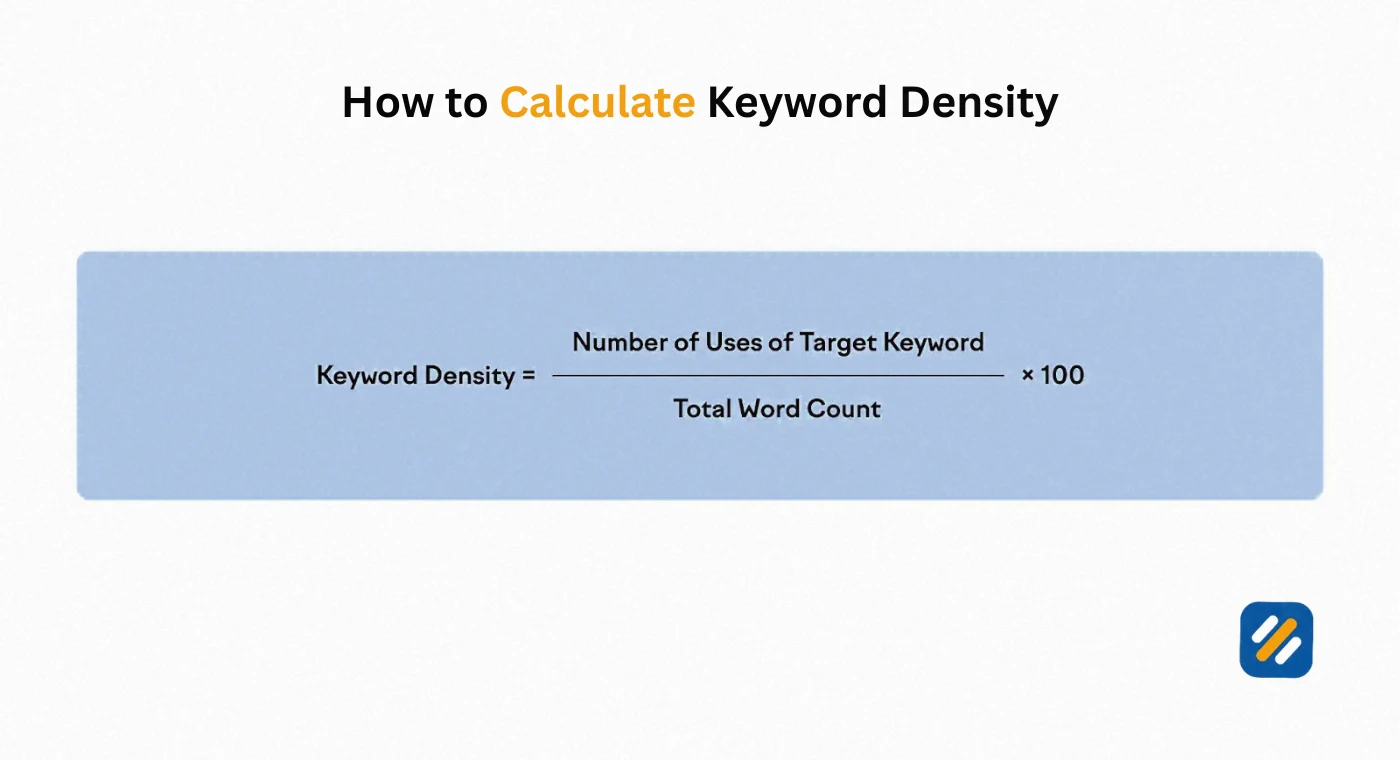
The sweet spot for most SEO content is a primary keyword density between 1% and 1.5%. Beyond that, you are almost certainly forcing the keyword into sentences where it does not belong naturally.
More important than the number is placement. Your primary keyword should appear in your title tag, your first paragraph, at least one H2 heading, your meta description, and naturally throughout the body. After those placements, use synonyms and related terms rather than repeating the exact keyword phrase.
7 What Google’s Algorithm Updates Say About Keyword Spamming in 2026
Keyword spamming, another term for the same practice, has been a focus of Google’s core algorithm updates for over fifteen years. Understanding what the most recent updates say about it helps you stay on the right side of Google’s guidelines going forward.
Google’s helpful content system, rolled out between 2022 and 2024, introduced a site-wide signal that evaluates whether a website primarily exists to rank on Google or to genuinely help people. Sites where most content is clearly written for search engines rather than people, including sites with keyword stuffed articles, receive a sitewide demotion that affects every page, not just the stuffed ones.
This is a critical point that many beginners miss. Keyword stuffing one article on your site can suppress rankings across your entire domain if Google’s helpful content classifier determines that your site’s overall content quality is poor.
Google’s spam brain system, which became fully integrated into the core ranking algorithm in 2024, uses machine learning to detect unnatural patterns in content at scale. It does not need a human reviewer to identify keyword stuffing. It identifies it automatically across billions of pages.
The practical implication is simple. In 2026, there is no level of keyword stuffing that is safe, strategic, or temporarily effective. Every instance is a liability.
8 How to Avoid Keyword Stuffing | The Right Way to Plant Keywords in Your Content
Avoiding keyword stuffing is not just about using your keyword less. It is about understanding a completely different and far more effective approach to keyword optimisation.
Here is the method I use across every piece of content I write for clients and my own websites:
Start with one primary keyword and two to three secondary keywords. Never try to target more than five keyword variations in a single article. The more keywords you try to squeeze in, the more likely you are to force unnatural repetition.
Place your primary keyword in these exact locations and nowhere else unless it flows completely naturally: the title tag, the first 100 words of the article, one H2 heading, the meta description, and the URL slug.
After those placements, switch to LSI keywords and semantic variations. If your primary keyword is “keyword stuffing,” your content should naturally use related terms like “keyword spamming,” “keyword density,” “over-optimisation,” “search engine spam,” and “unnatural keyword usage.” These variations tell Google the same topical relevance signal without repeating the same phrase constantly.
Write your first draft without thinking about keywords at all. Write to fully answer the reader’s question as naturally as you would explain it to a colleague. Then review the draft and confirm your primary keyword appears in the required locations. If it appears too many times, replace excess instances with synonyms.
Read your content aloud before publishing. If any sentence sounds forced or unnatural when spoken, the keyword placement is wrong. Rewrite the sentence until it sounds like something you would actually say to another person.
9 How to Check Your Content for Keyword Stuffing Before Publishing
You do not need an expensive tool to check your own content for keyword stuffing. Here are three free methods that work reliably:
Use the browser find function. Press Ctrl+F on your draft and search for your primary keyword. Count how many times it appears and compare to your word count. For a 1,500 word article, you should see the keyword appear no more than 20 to 22 times to stay within a 1.5% density.
Use a free keyword density checker. Tools like SmallSEOTools keyword density checker or SEOBook keyword density tool let you paste your content and see exactly which words appear most frequently and at what density. If your primary keyword is at the top of the list with a density above 2%, revise before publishing.
Use Rank Math inside WordPress. Rank Math’s content analysis shows keyword density in real time as you write. The plugin flags over-optimisation before you publish and suggests where natural keyword usage falls short or exceeds the recommended range.
| Free Tool | What It Checks | Best For |
|---|---|---|
| Rank Math WordPress Plugin | Real-time keyword density and placement | WordPress users writing inside the CMS |
| SmallSEOTools Keyword Density | Full density analysis of pasted content | Quick check of any draft |
| Yoast SEO Plugin | Keyword prominence and density scoring | Alternative to Rank Math users |
| Google Search Console | Post-publish performance signals | Monitoring whether a live page performs |
| Screaming Frog | Bulk keyword analysis across full site | Site-wide audit for existing content |
10 3 Expert Tips to Avoid Keyword Stuffing Like a Pro
Tip 1: Write for one reader, not for a search engine
Before you write a single word, picture one specific person who will read your article. Write everything directly to that person. When you write for a real human being, keyword stuffing becomes impossible because real humans do not speak in keyword strings.
Tip 2: Use your keyword in the question, not the answer
Your H2 headings naturally contain your keyword because they frame the question. Your body paragraphs under each heading answer that question in natural language. This structure satisfies both Google’s topical relevance requirements and your reader’s expectation of clear, useful answers without forcing keyword repetition into explanatory text.
Tip 3: Replace every third keyword instance with a synonym
After drafting your article, find every instance of your primary keyword. Keep the first two in any given section. Replace every third occurrence with the most natural synonym available. This habit alone keeps density in the optimal range while making your content read more fluidly than any competitor who is still counting keyword appearances.
11 Conclusion
Keyword stuffing was a tactic born from an era when Google was easy to manipulate. That era ended over a decade ago. Today, Google’s systems are sophisticated enough to understand meaning, intent, and context without needing to see your keyword repeated thirty times on a single page.
The websites that rank consistently in 2026 are the ones that treat their readers as the primary audience and Google as a secondary one. When you write content that genuinely helps people, uses language naturally, and covers a topic with real depth and expertise, keyword optimisation takes care of itself.
One primary keyword, placed deliberately in the right locations, surrounded by rich natural language and semantic variations, will always outperform a stuffed page. That is not just good practice. It is what Google’s entire helpful content system is designed to reward.
Publish content worth reading. Use keywords worth finding. Leave keyword stuffing where it belongs, in the past.
Have a question about keyword density or how to place keywords naturally in your content? Drop a comment below and I will answer it personally.
Join 1,000+ business owners and bloggers who get one actionable SEO tip every week — straight to their inbox. Free forever.
Get Free Weekly Tips →