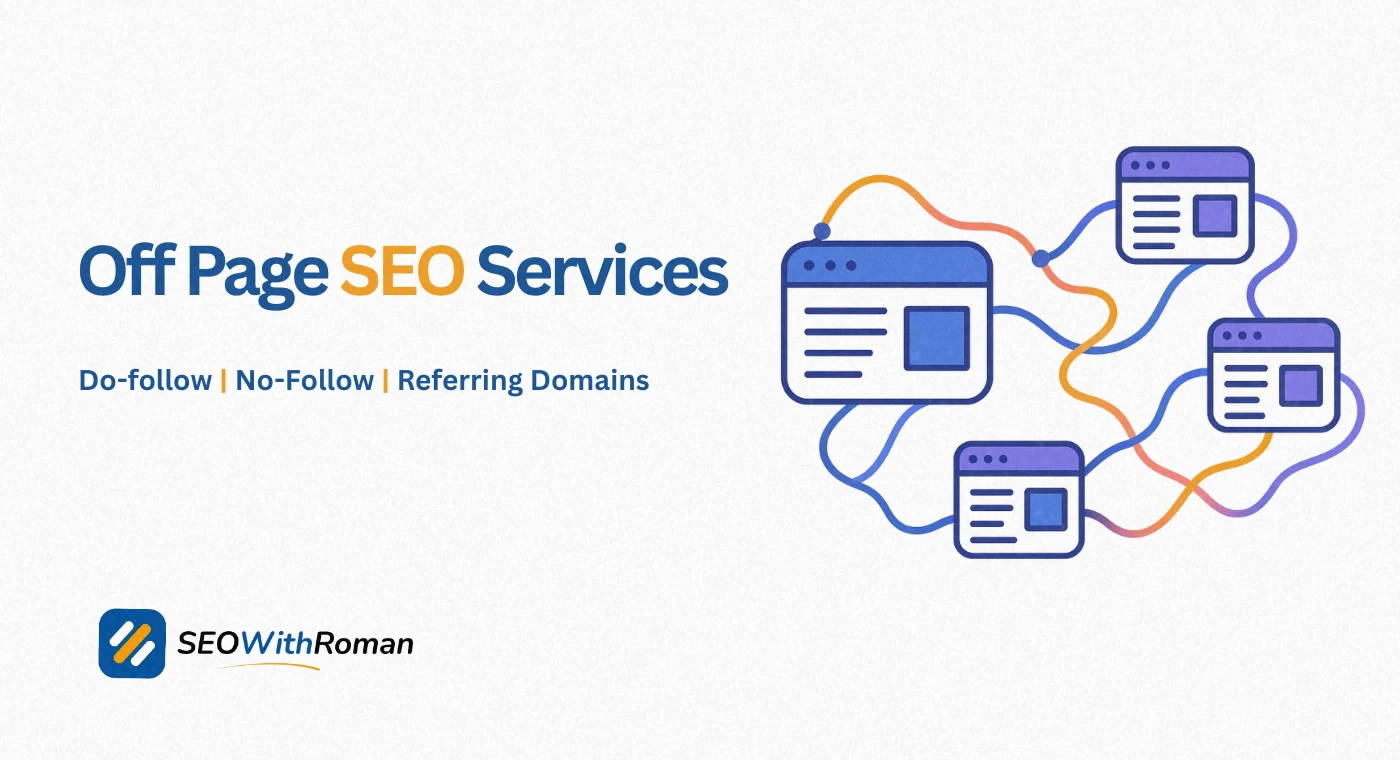
- Off Page SEO Services cover everything done outside your website to build authority, trust, and rankings on Google
- Backlinks remain the single strongest off-page ranking signal in 2026 but quality matters far more than quantity
- Guest posting, link insertion, digital PR, and brand mentions are the four most effective off-page SEO strategies for small businesses
- Domain Rating and Domain Authority measure your site's overall link strength while referring domains show how many unique sites point to you
- A healthy anchor text distribution using branded, naked URL, and partial match anchors protects your site from Google penalties
1 What Is Off Page SEO Services and Why Does It Decide Who Actually Ranks
You can write the best content on the internet. You can have a perfectly optimised title tag, a clean site structure, and a loading speed under two seconds. And your website can still sit on page three while a weaker competitor ranks above you.
The reason is almost always off-page SEO.
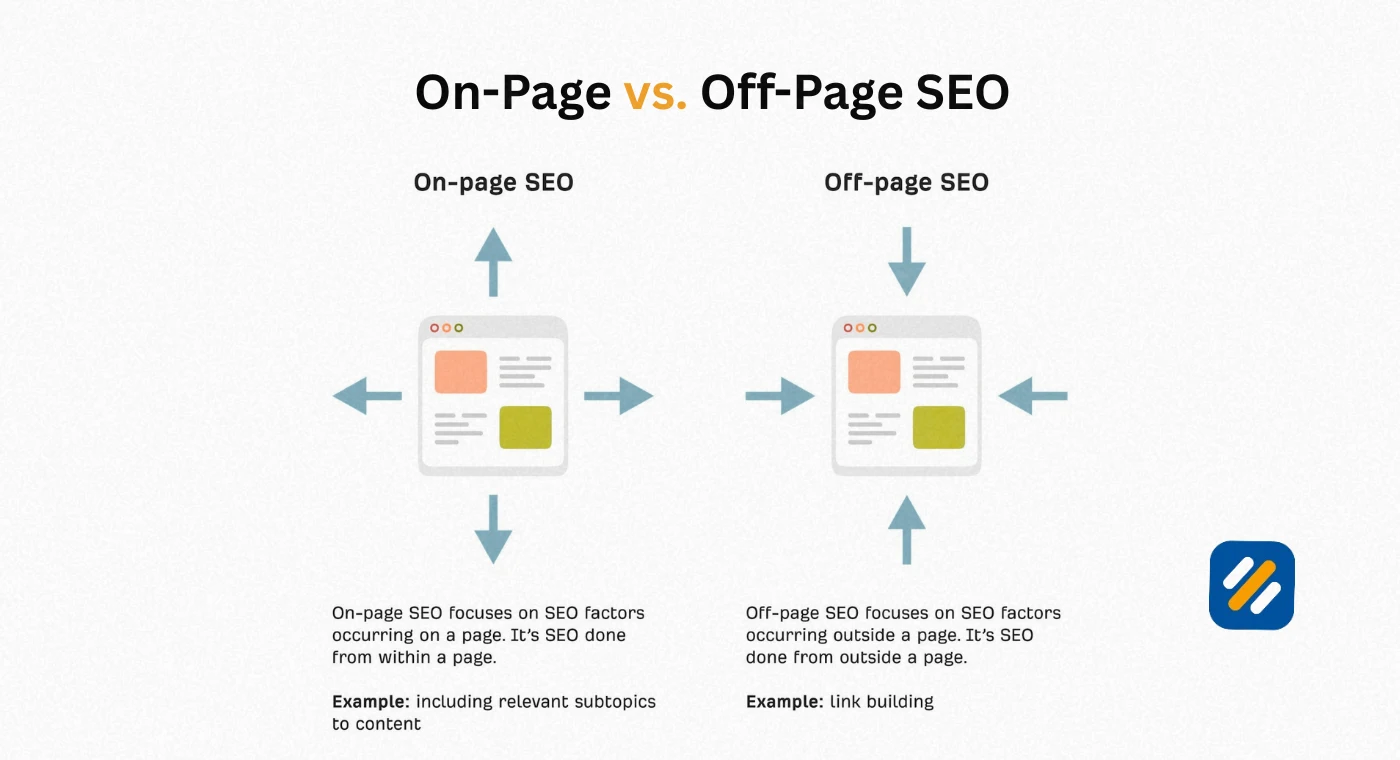
Off Page SEO refers to every action taken outside your own website that influences how Google perceives your authority, trustworthiness, and relevance. While on-page SEO tells Google what your website is about, off-page SEO tells Google how much the rest of the internet trusts you.
Think of it like a job application. Your on-page SEO is your CV. Your off-page SEO is your references. A strong CV with no references from anyone credible gets ignored. A strong CV backed by respected voices in your industry gets hired.
Google has operated on this principle since 1998 when Larry Page invented PageRank, the algorithm that measures a page's authority based on how many other pages link to it. Twenty-eight years later, links and external signals remain the most powerful ranking factor Google uses.
In many years of working on SEO campaigns across B2b, healthcare, ecommerce, and SaaS industries, I have never seen a website reach consistent page one rankings on competitive keywords without a solid off-page SEO foundation. Content gets you to the door. Off-page SEO gets you inside.
2 Off-Page SEO vs On-Page SEO | Understanding the Difference That Changes Everything
Most beginners focus entirely on on-page SEO because it feels more controllable. You write the content. You set the title tag. You add the keywords. It is all within reach.
Off-page SEO feels harder because it involves other people, other websites, and signals you cannot directly control. That is exactly why it carries so much weight with Google. Signals that are harder to manipulate are more trustworthy signals.
| Factor | On-Page SEO | Off-Page SEO |
|---|---|---|
| Where it happens | On your own website | On other websites and platforms |
| What it tells Google | What your page is about | How much others trust your page |
| Your control level | Full control | Partial control through outreach |
| Main elements | Keywords, content, title tags, headings, internal links | Backlinks, brand mentions, social signals, digital PR |
| Time to impact | Faster, days to weeks | Slower, weeks to months |
| Difficulty level | Learnable, implementable alone | Requires outreach, relationships, and strategy |
| Long term value | Foundation level, necessary but not sufficient | Differentiator, what separates ranking from not ranking |
Both are essential. Neither replaces the other. The websites that dominate competitive keywords in 2026 are the ones executing both consistently and simultaneously.
3 What Are the Three Types of SEO Services
Before going deep into off page SEO services specifically, it is worth understanding where off-page fits within the full SEO picture. There are three types of SEO services and every complete SEO strategy needs all three.
Type 1: On-Page SEO Services
On-page SEO services cover everything done directly on your website pages. This includes keyword research and placement, content creation and optimisation, title tag and meta description writing, heading structure, internal linking, image optimisation, and schema markup. On-page SEO is the starting point for every website. Without it, off-page work has nowhere to land.
Type 2: Technical SEO Services
Technical SEO services handle the infrastructure of your website. Site speed, mobile usability, crawlability, indexability, Core Web Vitals, XML sitemaps, robots.txt configuration, redirect management, and structured data all fall under technical SEO. It ensures Google can find, read, and understand your website without obstacles.
Type 3: Off Page SEO Services
Off page SEO services build your website's external authority through link building, digital PR, brand mentions, guest posting, social signals, and local citations. This is the category that most directly influences how much Google trusts your domain compared to competitors.
A complete SEO agency or off-page SEO company will deliver all three. Be cautious of any off-page SEO service that focuses only on link building without mentioning on-page quality or technical foundations.
4 What Are the Real Off Page SEO Services That Actually Build Authority
Off page SEO services is not just a synonym for link building. It covers a broad range of activities, each targeting a different authority signal. Here is a complete breakdown of every legitimate off-page SEO service and what it actually does:
Guest Posting
Guest posting means writing an article for another website in your industry and earning a backlink to your site within that article or in the author bio. It is one of the oldest and most reliable off-page SEO strategies still working in 2026.
The key to effective guest posting is relevance and quality. A guest post on a website covering the same niche as yours with genuine editorial standards is worth twenty guest posts on unrelated low-quality blogs. When I do guest posting for clients, I only target websites with a Domain Rating above 30, real organic traffic, and an audience that genuinely overlaps with the client's target market.
Link Insertion
Link insertion, also called niche edits, means reaching out to websites that already have existing published content and getting your link added naturally into that content. Instead of writing a new article, you identify a relevant page that already ranks, find a spot where a link to your content would add value for the reader, and pitch the website owner to include it.
Link insertion often delivers faster results than guest posting because the page already has age, authority, and ranking history. Google trusts aged pages more than freshly published ones, so a link from a three-year-old article carries more weight than one from a post published last week.
Digital PR
Digital PR means creating genuinely newsworthy content, data studies, surveys, or stories and pitching them to journalists and publications. When a major industry publication covers your story and links back to your website, you earn a high-authority backlink without any transactional element.
This is the highest quality off-page SEO service available but also the hardest to execute. A single placement in Forbes, Search Engine Journal, or an industry-specific publication can do more for your domain authority than fifty guest posts on smaller websites.
Brand Mentions
A brand mention is when another website references your name, your business, or your content without necessarily linking to you. Google treats unlinked brand mentions as a trust signal, particularly since Google's Natural Language Processing capabilities now allow it to understand context and association.
Converting unlinked brand mentions into linked citations is one of the highest return off-page activities available. Tools like Ahrefs Alerts or Google Alerts can notify you every time your brand is mentioned online, allowing you to reach out and request a link.
Local Citations
Local citations are mentions of your business name, address, and phone number across directories, review platforms, and local websites. For any business serving a local area, consistent citations across Google Business Profile, Yelp, Bing Places, Apple Maps, and industry-specific directories directly influence local search rankings.
Social Signals
Social signals refer to the engagement, sharing, and discussion of your content across social media platforms. While Google has stated that social signals are not direct ranking factors, there is significant correlation between content that performs well socially and content that earns backlinks organically.
Forum Participation and Community Building
Participating in industry forums, Reddit communities, Quora, and LinkedIn groups builds brand authority and can generate referral traffic. While most forum links are nofollow, the brand visibility and community authority they build contribute to off-page strength over time.
5 Do-Follow vs No-Follow Links | The Truth Every Beginner Gets Wrong
One of the most misunderstood areas of off-page SEO is the difference between do-follow and no-follow links and how much each one actually matters.
Do-Follow Links
A do-follow link is a standard hyperlink that passes link equity, also called link juice, from the linking page to your page. When a website links to you with a do-follow link, it is telling Google to pass a portion of that page's authority to your site. This is the type of backlink that directly influences your Domain Rating and your search rankings.
Do-follow links are what most off page SEO services are primarily focused on building.
No-Follow Links
A no-follow link contains an HTML attribute that instructs search engines not to pass link equity through that link. No-follow links were introduced by Google in 2005 to combat comment spam, and most links from social media platforms, forums, and comment sections are no-follow by default.
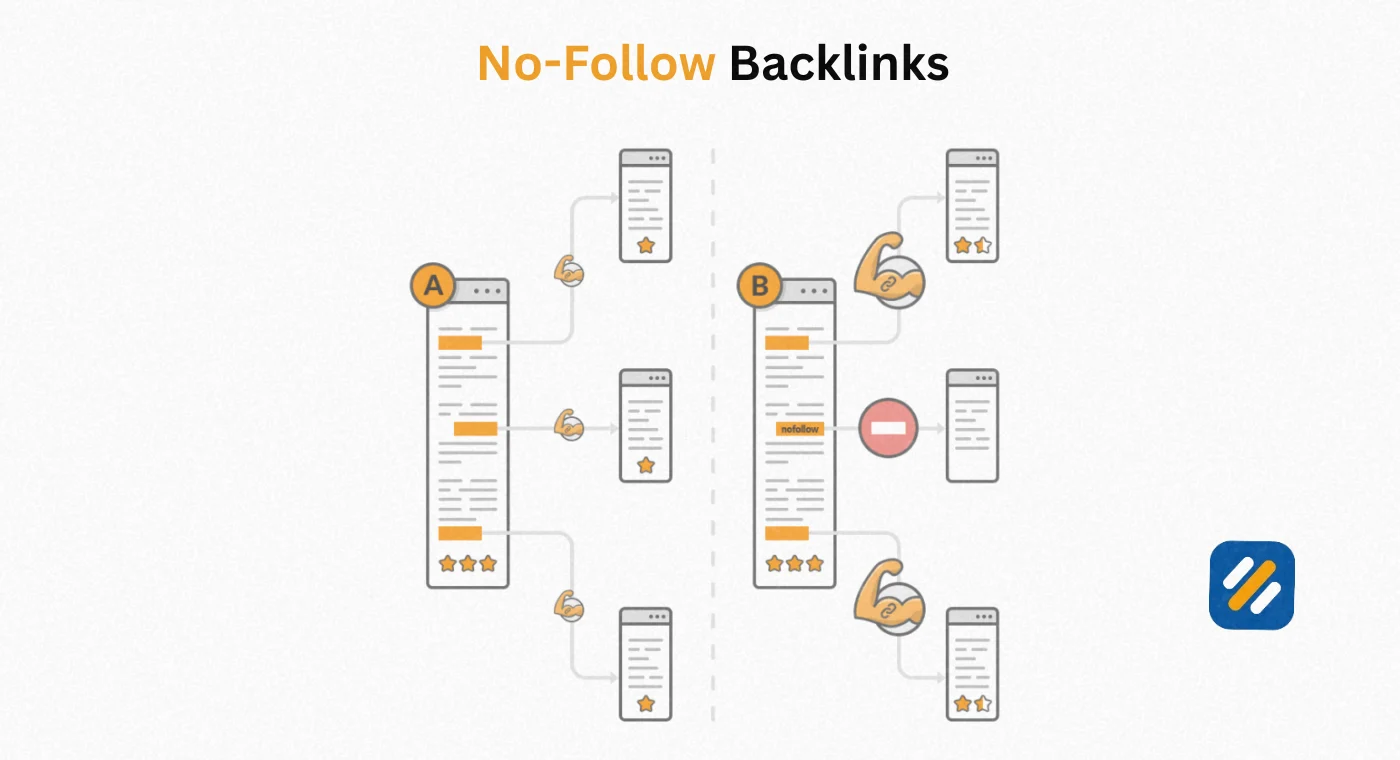
Here is what most beginners misunderstand. No-follow links are not worthless. They drive referral traffic. They contribute to a natural-looking link profile. And since Google updated its no-follow guidance in 2019, treating no-follow links as hints rather than directives, there is evidence that high-quality no-follow links from authoritative sources do carry some influence on rankings.
A completely do-follow link profile with no natural no-follow links actually looks suspicious to Google. Real websites attract both types. A healthy backlink profile contains roughly 60 to 70 percent do-follow and 30 to 40 percent no-follow links.
| Link Type | Passes Link Equity | Drives Traffic | Looks Natural | Google Treatment |
|---|---|---|---|---|
| Do-Follow | Yes, fully | Yes | Yes, when earned | Primary ranking signal |
| No-Follow | Partially since 2019 | Yes | Yes, essential for balance | Hint signal, not ignored |
| Sponsored | No | Yes | Yes, for paid links | Required disclosure |
| UGC (User Generated) | Minimal | Yes | Yes, for comments | Low weight |
6 Domain Rating, Domain Authority, and Referring Domains | What They Actually Mean
When evaluating off-page SEO performance or choosing where to build links, three metrics come up constantly. Most beginners use them interchangeably. They are not the same thing.
Domain Rating (DR)
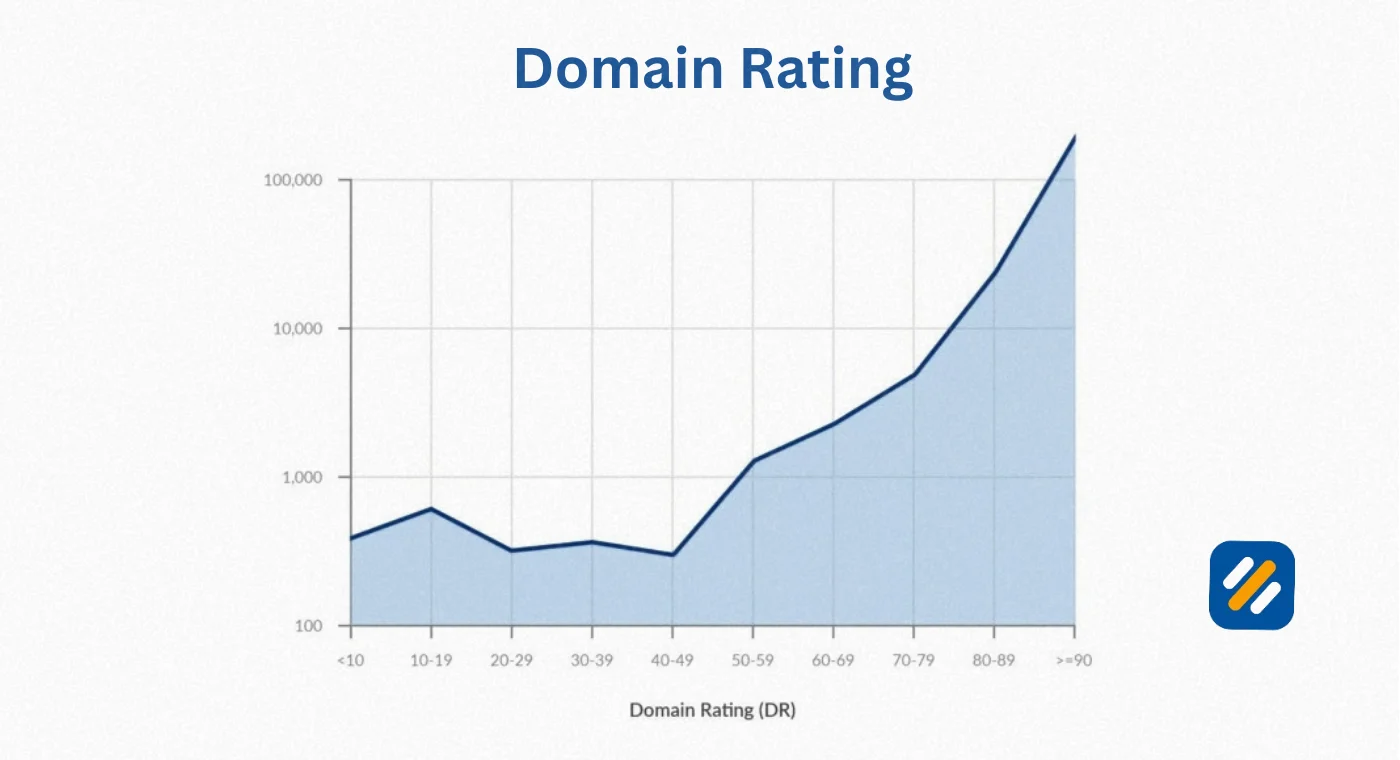
Domain Rating is Ahrefs' proprietary metric that measures the strength of a website's backlink profile on a scale of zero to 100. It is calculated based on how many websites link to the domain, the DR of those linking websites, and how many other sites each of those linking websites also links to.
A DR of 0 to 20 is typical for new or small websites. DR 20 to 50 is solid for most small businesses and niche blogs. DR 50 to 70 indicates strong authority in a competitive space. DR 70 and above represents major publications and industry leaders.
When building links for a client website, I prioritise placing links on pages hosted on domains with a DR above 30 and real organic traffic. A high DR domain with zero traffic is a sign of artificial link building and can actually harm your profile.
Domain Authority (DA)
Domain Authority is Moz's equivalent metric, also on a zero to 100 scale. It was the industry standard before Ahrefs became more widely used. DA and DR are calculated differently and will almost never show the same number for the same domain, but both are useful as directional indicators of backlink strength.
Neither DR nor DA is a Google ranking factor. Google does not use either metric. They are third-party approximations of what Google's own internal authority calculations might look like. Use them as filters for link building targets, not as direct measures of ranking potential.
Referring Domains
Referring domains is the count of unique websites that link to your domain. This is one of the most important metrics in off-page SEO and one that Google's algorithms are known to weight heavily.
Here is why it matters more than total backlink count. One hundred backlinks from one hundred different websites is significantly more powerful than one hundred backlinks all from the same website. Google values breadth of trust signals. The more unique, relevant, authoritative websites that link to you, the stronger your domain authority becomes.
When measuring off-page SEO progress, track your referring domain growth over time. A consistent month over month increase in quality referring domains is the most reliable indicator that your off-page SEO is working.
7 Anchor Text Distribution | The Off-Page SEO Detail That Can Make or Break Your Rankings
Anchor text is the clickable text used in a hyperlink. It is one of the most powerful and most misunderstood elements of off-page SEO. Getting anchor text distribution right protects your site from Google penalties. Getting it wrong can trigger a manual action that wipes out years of ranking progress overnight.
There are several types of anchor text and each plays a different role in your link profile:
Branded Anchors use your actual brand name as the link text. For example, a link that says "SEO With Roman" pointing to your website. Branded anchors are the safest and most natural type. They should make up the largest portion of your link profile, typically 40 to 50 percent.
Naked URL Anchors use the raw URL as the link text, such as "seowithroman.com" or "https://seowithroman.com." These are natural appearing and contribute to a diverse profile. They should represent around 10 to 20 percent of your anchors.
Partial Match Anchors contain your target keyword alongside other words. For example, "SEO tips from Roman" or "learn more about off page SEO services here." These are safe when used in moderation and should represent around 15 to 20 percent of your profile.
Exact Match Anchors use your precise target keyword as the link text. For example, a link that says "off page SEO services" pointing to this article. Exact match anchors are powerful but risky. If too many of your backlinks use exact match anchors, Google interprets this as manipulative. Keep exact match anchors under 5 to 10 percent of your total profile.
Generic Anchors use non-descriptive phrases like "click here," "read more," or "this article." These add naturalness to your profile and should represent around 10 to 15 percent.
| Anchor Type | Example | Recommended Share | Risk Level |
|---|---|---|---|
| Branded | SEO With Roman | 40 to 50 percent | Very low |
| Naked URL | seowithroman.com | 10 to 20 percent | Very low |
| Partial Match | off-page SEO guide by Roman | 15 to 20 percent | Low |
| Exact Match | off page SEO services | 5 to 10 percent | High if over-used |
| Generic | click here, read more | 10 to 15 percent | Very low |
| LSI or Related | search engine optimisation help | 5 to 10 percent | Low |
Over-optimising anchor text, particularly having too many exact match anchors pointing to one page, is one of the top triggers for Google's Penguin algorithm penalty. Always audit your anchor distribution before starting a new link building campaign.
8 The Complete Off-Page SEO Strategy | Step by Step Process
Here is the exact process I follow when building an off-page SEO strategy for a new client website from scratch:
Step 1: Audit the existing backlink profile
Before building a single new link, I pull the full backlink profile from Ahrefs and review the existing links, referring domains, anchor text distribution, and any toxic or spammy links that could be dragging rankings down. A disavow file may be needed before starting new outreach.
Step 2: Analyse competitor backlink profiles
I export the backlink profiles of the top three to five ranking competitors for the client's primary keywords. This reveals where they are getting their links, which publications cover their industry, and which link opportunities are realistically available. Every link a competitor has earned is a link you can potentially earn too.
Step 3: Set a referring domain target
Based on competitor analysis, I set a monthly referring domain acquisition target. For a new website competing in a moderate difficulty niche, adding five to ten new quality referring domains per month creates meaningful momentum within three to six months.
Step 4: Prioritise guest posting for topical authority
In the first three months, the focus is guest posting on relevant industry websites. Every guest post builds both a backlink and topical authority signals that help Google understand what niche the website belongs to.
Step 5: Add link insertion campaigns for quick wins
While guest posts are being placed, I run parallel link insertion outreach targeting existing articles in the niche that already rank. These placements tend to deliver ranking movement faster than new guest posts because the pages already have authority.
Step 6: Build unlinked brand mention reclamation
I set up Ahrefs Alerts for the client's brand name and regularly convert unlinked mentions into linked citations. This is one of the highest-return off-page activities with zero content creation required.
Step 7: Track DR growth and referring domain velocity monthly
Every month, I review the Ahrefs backlink report to measure DR progression, referring domain growth, new anchor text additions, and any new toxic links that need disavowing. Off-page SEO is not a set-and-forget activity. It requires ongoing monitoring and adjustment.
9 Is Off-Page SEO Still Relevant in 2026
This question comes up in almost every client conversation I have, and the short answer is yes. Not only is it still relevant, it is more important now than it was five years ago.
Here is why. Google's algorithm has become significantly better at evaluating content quality. In 2026, good content is the baseline expectation, not a differentiator. Almost every website competing for a competitive keyword has well-written, well-structured content. The differentiator is now authority, and authority comes from off-page SEO.
Beyond traditional Google rankings, off-page signals now influence visibility in AI Overviews, ChatGPT answers, and Perplexity citations. Research shows that the sources AI models cite most frequently are websites with strong backlink profiles and widespread brand mentions across authoritative publications. Off-page SEO is no longer just about Google. It is about being cited across every AI-driven search channel.
The tactics have evolved. Buying bulk links from link farms no longer works and actively causes harm. But legitimate offpage SEO services built on earned, editorial, contextually relevant backlinks are more valuable in 2026 than they have ever been.
10 3 Expert Tips for Off-Page SEO That Most Agencies Will Not Tell You
Tip 1: Build links to your internal pages, not just your homepage.
Most beginners and even some off-page SEO agencies focus all link building on the homepage. The pages that actually rank for keywords and drive organic traffic are your internal blog posts and service pages. Build backlinks directly to the page you want to rank. A link to your homepage does not automatically lift every page on your site.
Tip 2: Prioritise referring domain growth over total backlink count.
One hundred backlinks from five websites is weaker than twenty backlinks from twenty different websites. Always measure your off-page progress in referring domains, not total links. Growing your referring domain count consistently month over month is the single most reliable indicator of long-term ranking strength.
Tip 3: Match your anchor text to where the page sits in your link profile.
If a page already has several exact match anchors pointing to it, the next link you build should use a branded or generic anchor. Continuously audit your anchor distribution and intentionally vary your next placement based on what the profile currently needs, not just what feels most natural to request.
11 Conclusion
Off page SEO services are not optional for any website that wants to compete on Google in 2026. On-page SEO gets you indexed. Technical SEO keeps you crawlable. Off-page SEO is what actually moves you up the rankings and keeps you there when competitors try to push you back down.
The fundamentals have not changed since Google launched. The internet's trust in your website, measured through the quality and quantity of sites that link to you, mention you, and cite you, is the most powerful signal you can send to Google.
Whether you are doing this yourself through guest posting and link insertion outreach, or working with an off-page SEO company or off-page SEO agency, the principles remain the same. Build real links from real websites. Earn mentions from authoritative sources. Protect your anchor text distribution. Track your referring domain growth every month.
Do that consistently for twelve months and your off-page authority will compound in ways that no paid advertising budget can replicate.
Have a question about off page SEO services or your current link building strategy? Drop a comment below and I will answer it personally.
Join 1,000+ business owners and bloggers who get one actionable SEO tip every week — straight to their inbox. Free forever.
Get Free Weekly Tips →