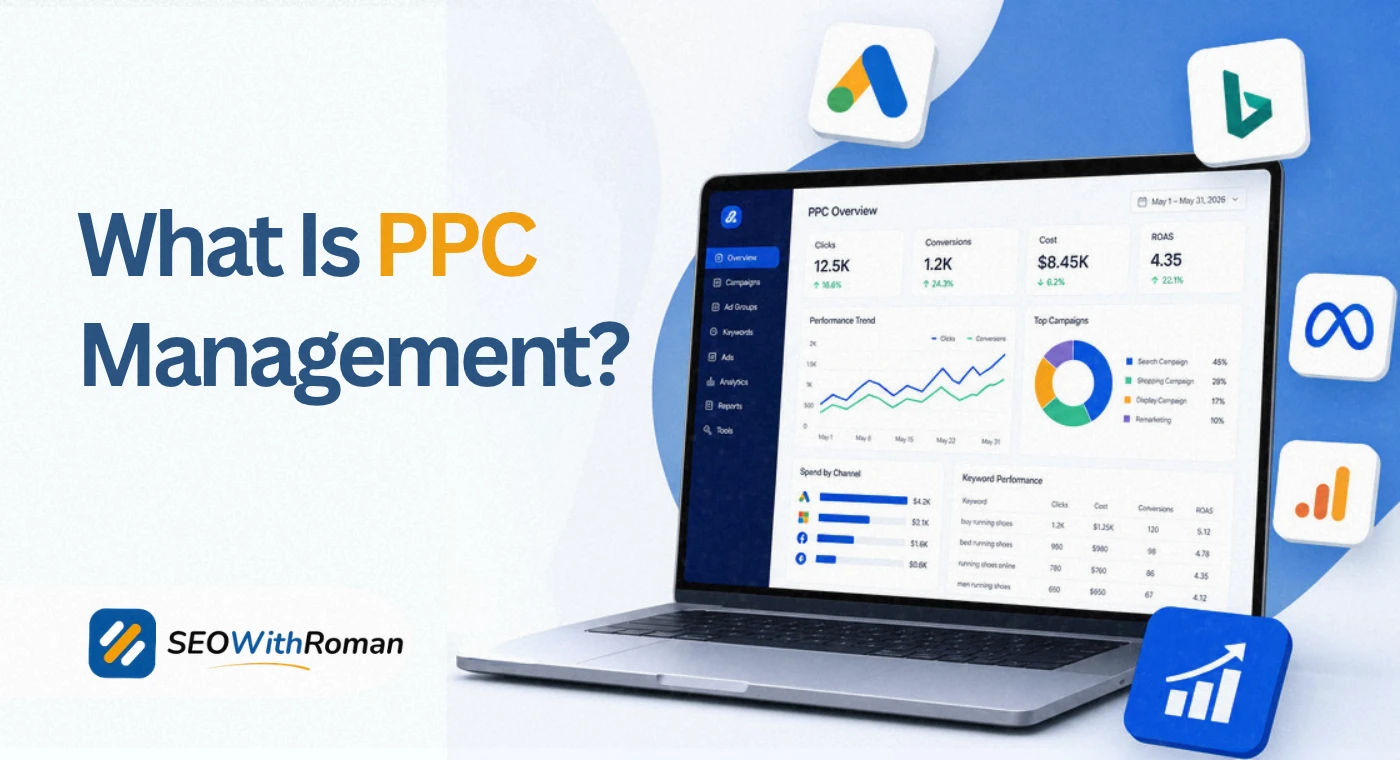
- PPC stands for Pay Per Click and PPC management is the process of planning, running, and optimising paid ad campaigns so every dollar spent returns maximum results
- Google Ads is the most widely used PPC platform but Facebook PPC advertising, Bing Ads, and LinkedIn Ads are equally powerful depending on your audience
- Effective PPC management combines keyword research, bid strategy, ad copywriting, landing page optimisation, and constant performance monitoring
- PPC and SEO are not competing strategies. They work best together and businesses running both consistently outperform those relying on one channel alone
- Poor PPC management wastes budget fast. A professionally managed PPC account typically delivers 200% to 400% return on ad spend compared to unmanaged campaigns
1 What Does PPC Stand For and Why Does It Matter in 2026
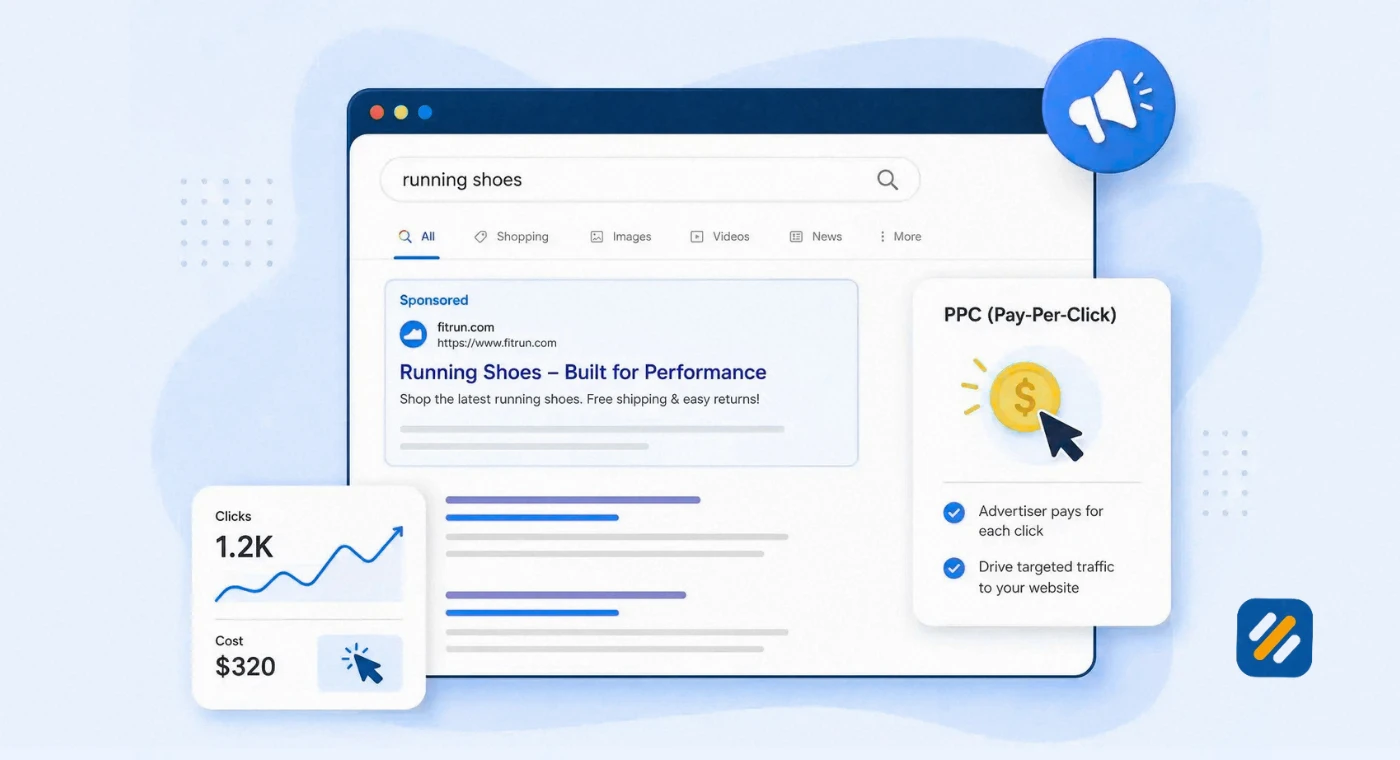
PPC stands for Pay Per Click. It is a model of digital advertising where you pay the platform, Google, Facebook, Bing, or LinkedIn, only when someone actually clicks your ad. You are not paying for impressions or for your ad being shown. You are paying for the action of a real person clicking through to your website.
This is what makes PPC fundamentally different from traditional advertising. When you buy a billboard or a magazine spread, you pay regardless of how many people respond. With pay per click management, every penny you spend is tied to a measurable action.
In 2026, PPC advertising accounts for over 65% of all digital marketing spend globally. Businesses running Google PPC management campaigns appear instantly at the top of search results, above every organic result, the moment their campaign goes live.
That instant visibility is the core appeal of PPC. Where organic SEO builds rankings over months, a well-managed PPC campaign can put your business in front of thousands of potential customers on day one.
But instant visibility without proper management is just instant budget loss. That is exactly where PPC management comes in.
2 What Is PPC Management and What Does It Actually Include
PPC management is the ongoing process of planning, building, monitoring, optimising, and reporting on pay per click advertising campaigns to maximise return on ad spend while minimising wasted budget.
It is not a one-time setup. A PPC campaign that is not actively managed deteriorates quickly. Bids become inefficient, ad copy grows stale, quality scores drop, and costs per click rise while conversion rates fall.
Effective PPC advertising management covers all of the following:
Keyword Research and Selection: Identifying which search terms your target audience uses and separating high-intent commercial keywords from broad informational ones that waste budget.
Campaign Structure: Organising your PPC account into logical campaigns and ad groups so each ad is tightly matched to its keywords and landing page.
Ad Copywriting: Writing compelling headlines and descriptions that earn clicks and communicate your value proposition clearly in the limited character space Google and Facebook provide.
Bid Management: Setting and adjusting how much you pay per click for each keyword, either manually or through automated bidding strategies, to maintain profitable positions without overpaying.
Negative Keyword Management: Filtering out irrelevant search terms that would trigger your ads for people unlikely to convert. This is one of the highest ROI activities in managed PPC.
Landing Page Optimisation: Ensuring the page a user lands on after clicking your ad matches what the ad promised, loads fast, and converts visitors into leads or buyers.
A/B Testing. Continuously testing different ad variations to find which headlines, descriptions, and calls to action produce the highest click through and conversion rates.
Reporting and Analysis: Measuring campaign performance against business goals, not just clicks, but actual leads, sales, and cost per acquisition.
3 What Is PPC in Management Terms | The Full Process Explained
Understanding PPC in management terms means understanding that it is a system, not a single action. Here is how the full process works from start to measurable results:
Stage 1: Account Audit and Strategy
Before any campaign goes live, a PPC management consultant analyses your business, your competitors, your target audience, and your current account health if one exists. This sets the foundation for every decision that follows.
Stage 2: Keyword Research and Intent Mapping
Keywords are grouped by intent. Transactional keywords like “buy PPC management services” go into direct conversion campaigns. Informational keywords get different treatment or are excluded entirely. This prevents budget waste on clicks that will never convert.
Stage 3: Campaign Build
Campaigns are structured with tight ad groups, each containing closely related keywords and ads written specifically for those keywords. A tightly structured campaign achieves higher quality scores, which means lower cost per click and better ad positions.
Stage 4: Launch and Initial Monitoring
In the first two weeks after launch, campaigns are watched daily. Budget pacing, click through rates, quality scores, and conversion data all indicate whether the initial structure is working or needs adjustment.
Stage 5: Ongoing Optimisation
This is where most of the real value in pay per click management services is delivered. Weekly bid adjustments, negative keyword additions, ad copy testing, and audience refinement continuously improve campaign efficiency over time.
Stage 6: Reporting
Monthly reports translate campaign data into business metrics. Not “your ads got 5,000 impressions” but “your ads generated 47 qualified leads at a cost of $12.40 per lead.”
4 Google PPC Management vs Facebook PPC Advertising | Choosing the Right Platform
One of the most common questions from small business owners entering paid advertising is which platform to use. The honest answer is that Google PPC management and Facebook PPC advertising serve fundamentally different purposes and the right choice depends entirely on your business model and audience.
| Platform | Best For | Targeting Type | Average CPC | Intent Level |
|---|---|---|---|---|
| Google Ads | High-intent buyers actively searching | Keyword-based | $1 to $6 for most niches | Very high, user is searching now |
| Facebook Ads | Awareness, B2C products, retargeting | Interest and demographic-based | $0.50 to $3 | Lower, user is browsing not searching |
| LinkedIn Ads | B2B lead generation, professional services | Job title, industry, company size | $5 to $15 | Medium, professional context |
| Bing Ads | Older demographics, lower competition | Keyword-based | $1 to $4, typically lower than Google | High, same search intent as Google |
| YouTube Ads | Brand awareness, product demonstrations | Interest and behaviour-based | $0.01 to $0.30 per view | Variable by ad format |
For small businesses and service providers targeting US and UK markets, Google Ads is almost always the starting point. The person searching “PPC management services near me” on Google is actively looking to buy. The person who sees your Facebook ad was doing something else entirely when your ad interrupted them.
Both platforms have their place. But Google PPC management delivers faster conversion results for service businesses while Facebook PPC advertising excels at building awareness and nurturing audiences over time.
5 What Are PPC Management Services and What Do You Get When You Hire One
PPC management services refer to the professional handling of your pay per click advertising campaigns by a specialist, agency, or consultant. Instead of building and managing campaigns yourself, you outsource this to someone whose full time job is making PPC campaigns profitable.
Here is what you typically receive when you hire pay per click management services:
Initial Account Setup: Full campaign architecture built from scratch including keyword research, ad group structure, ad copy, extensions, and conversion tracking implementation.
Monthly Management: Ongoing bid management, negative keyword addition, ad copy testing, budget allocation adjustments, and performance analysis every month.
Competitor Monitoring: Tracking what competitors are bidding on and how their ads are performing so your campaigns can maintain a competitive position without overspending.
Conversion Tracking: Setting up Google Analytics, Google Tag Manager, and platform pixels to track every lead, call, purchase, or form submission that comes from your ads.
Monthly Reporting: Clear performance reports showing cost per click, click through rate, conversion rate, cost per lead or sale, and return on ad spend benchmarked against your business goals.
PPC Account Management: Dedicated account oversight ensuring your budget is being spent efficiently every day and no technical issues are silently burning budget without generating results.
| Service Level | What Is Included | Best For |
|---|---|---|
| Self-managed PPC | You set up and run everything yourself | Businesses with time to learn and manage daily |
| Freelance PPC consultant | One specialist manages your account | Small businesses with focused budgets |
| Managed PPC agency | Full team handles strategy, execution, and reporting | Growing businesses needing comprehensive management |
| In-house PPC specialist | Dedicated employee manages all paid campaigns | Enterprises with significant monthly ad spend |
| AdWords PPC management services | Specialist focus on Google Ads specifically | Businesses where Google search is the primary channel |
6 PPC Management and SEO | How These Two Channels Work Better Together
One of the most valuable insights I share with clients in my 10+ years of doing both SEO and PPC work is this: businesses that treat PPC and SEO as competing priorities are leaving significant money on the table.
PPC and SEO are not alternatives. They are complementary channels that strengthen each other when managed with that relationship in mind.
Here is how they connect in practice:
PPC keyword data improves SEO strategy: Your Google Ads account shows you exactly which keywords convert at what rate. This is conversion data that organic keyword research tools cannot provide. When you know a keyword converts at 8% in PPC, that keyword jumps to the top of your SEO content priority list.
SEO content improves PPC quality scores: Google’s Quality Score, the metric that determines your ad position and cost per click, is partly based on the relevance and quality of your landing page. A well-optimised SEO page used as a PPC landing page consistently achieves higher quality scores than a generic page built only for ads.
PPC fills the gap while SEO builds authority: A new website cannot rank organically for competitive keywords for months. Running PPC campaigns during this period means your business still appears at the top of search results while SEO builds the long-term foundation underneath.
Remarketing connects paid and organic visitors: Users who found your website through organic search and did not convert can be retargeted through Google Display and Facebook ads. This creates a combined channel journey that consistently outperforms either channel alone.
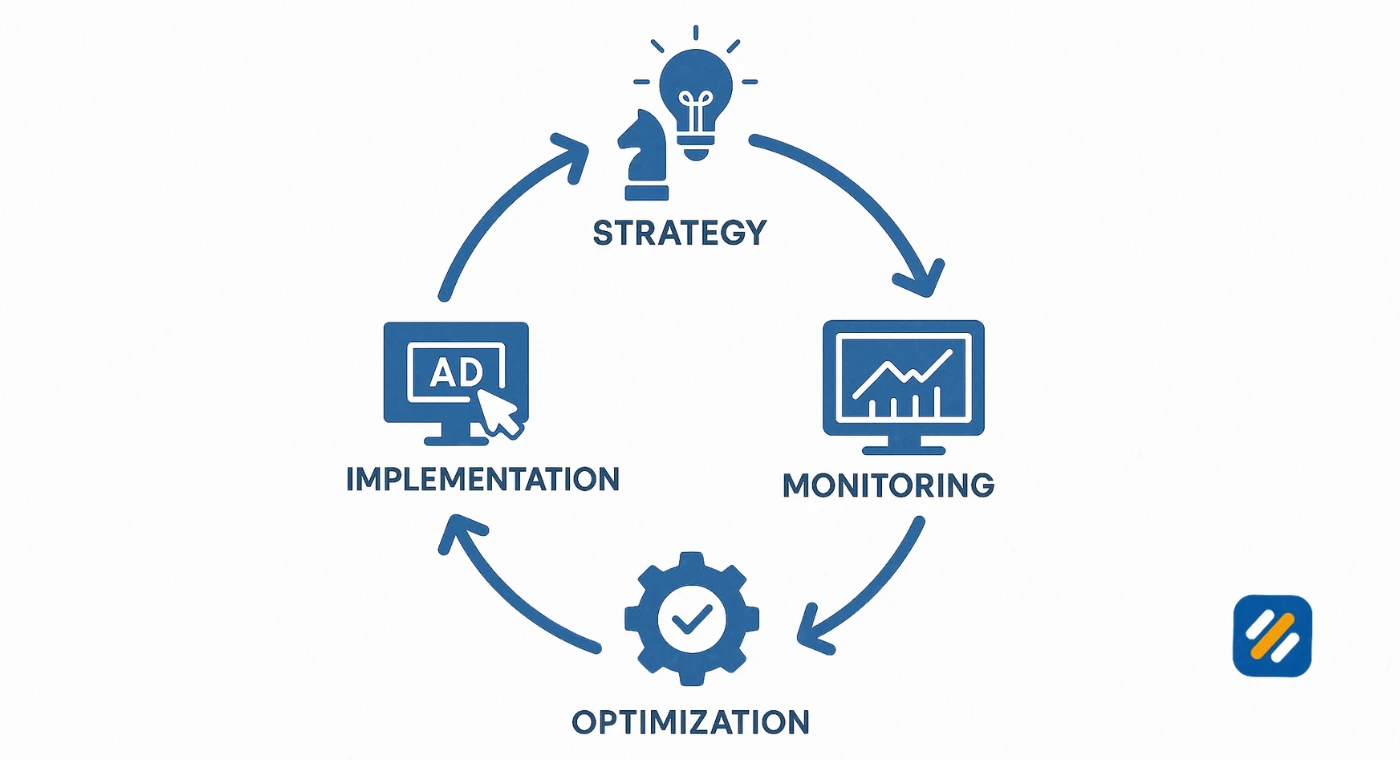
7 How to Manage PPC Campaigns Effectively | The Core Principles
Whether you manage PPC campaigns yourself or oversee an agency doing it for you, these principles determine whether a campaign succeeds or drains budget:
Never set and forget: A PPC campaign left unattended for two weeks in a competitive market can easily waste hundreds of dollars on irrelevant clicks, deteriorating quality scores, and missed bid adjustments. Manage PPC campaigns actively or hire someone who will.
Structure determines performance: The single biggest predictor of a PPC account’s long-term performance is how well it was structured at setup. Tight ad groups with highly relevant keywords and matching ad copy consistently outperform loosely organised accounts regardless of budget.
Negative keywords are as important as target keywords: Every search term that triggers your ad but cannot convert is a direct budget loss. Reviewing your search term reports weekly and adding negative keywords is one of the highest value activities in PPC account management.
Landing pages are half the battle: A perfectly optimised ad that sends users to a slow, irrelevant, or confusing landing page wastes every click. The page experience after the click determines whether your PPC spend produces leads or just traffic.
Track conversions or you are flying blind: If you are not tracking the specific action that represents a customer for your business, whether that is a form submission, a phone call, or a purchase, you have no way of knowing whether your PPC management is working.
8 3 Expert Tips for Better PPC Management Results
Tip 1: Use PPC Data to Build Your SEO Keyword List
Before writing any SEO content, check your Google Ads search term report for keywords that converted in the last 90 days. These are proven buyer-intent keywords. Any keyword converting above 3% in PPC deserves a dedicated SEO article. You are not guessing at search intent because you already have conversion data proving it exists.
Tip 2: Always Add Negative Keywords Before Spending a Single Dollar
Before launching any new campaign, build your negative keyword list first. Add generic terms like “free,” “jobs,” “salary,” “course,” and “how to” if you are selling a service. These single-word negatives prevent your budget from being spent on clicks that cannot possibly convert and they dramatically reduce wasted spend in the first month.
Tip 3: Test Two Ad Variants Per Ad Group at All Times
Never run a single ad without a challenger. Keep two ad variations live in every ad group at all times and after three to four weeks, pause the lower performer and write a new challenger to beat the winner. This continuous testing cycle compounds improvements and within six months produces ad copy significantly more effective than what you started with.
9 PPC Management Costs | What Should You Expect to Pay
Understanding what PPC management costs before you commit to a strategy prevents budget misalignment and unrealistic expectations.
PPC costs have two components. Your ad spend, which goes directly to Google, Facebook, or whichever platform you use, and your management fee, which goes to whoever manages the campaigns.
| Management Type | Typical Monthly Fee | Ad Spend Range | Best For |
|---|---|---|---|
| Self-managed | No fee | Any amount | Businesses with time to learn PPC properly |
| Freelance PPC consultant | $300 to $800/month | $500 to $5,000 | Small businesses with limited budgets |
| Small PPC agency | $800 to $2,000/month | $2,000 to $20,000 | Growing businesses needing full service |
| Established PPC agency | $2,000 to $5,000+/month | $10,000+ | Enterprises with significant paid budgets |
| Performance-based model | Percentage of ad spend, typically 10% to 20% | Variable | Businesses preferring aligned incentives |
The minimum viable ad spend for Google PPC management in US and UK markets varies by industry. For service businesses, $500 to $1,000 per month is typically the minimum to generate meaningful data. For ecommerce, $1,000 to $3,000 per month produces enough conversion volume to optimise intelligently.
10 Conclusion
PPC management is one of the most powerful and most misunderstood areas of digital marketing. Done correctly, it puts your business in front of people who are actively searching for exactly what you offer at the exact moment they are ready to buy. Done incorrectly, it burns budget with nothing to show for it.
The difference between those two outcomes is active, intelligent management. Keyword selection, campaign structure, bid optimisation, landing page quality, and constant testing all compound into a system that improves every month it runs.
Whether you manage PPC campaigns yourself using the principles in this guide, hire a pay per click management consultant, or bring in a full agency for managed PPC, the fundamentals remain the same. Know who you are targeting. Match your message to their intent. Track what matters. Test everything. Optimise relentlessly.
Start there and PPC will become one of the most measurable and profitable channels in your digital marketing strategy.
Have a question about PPC management or not sure which platform is right for your business? Drop a comment below and I will answer it personally.
Join 1,000+ business owners and bloggers who get one actionable SEO tip every week — straight to their inbox. Free forever.
Get Free Weekly Tips →