- The process of SEO has 8 core steps that work together as a system, not as isolated tasks
- SEO is an ongoing process, meaning it never fully ends but compounds in value the longer you do it
- Most websites fail at SEO not because the strategy is wrong but because steps are skipped or done out of order
- A website audit is always the first step, whether you are starting fresh or fixing an existing site
- Tracking SEO performance is not optional, it is what separates websites that keep growing from ones that plateau
1 What Is the Process of SEO and Why Does the Order of Steps Matter
Most beginners approach SEO the wrong way. They read about keywords, write a few articles, wonder why nothing is ranking, and then conclude that SEO does not work for their industry.
The problem is almost never the strategy. It is the sequence.
The process of SEO is a structured system of eight interconnected steps. Each step builds on the one before it. Skipping step two to get to step five faster does not save time. It creates problems that take twice as long to fix later.
SEO stands for Search Engine Optimization. It is the process of making changes to your website so that Google ranks it higher in unpaid search results when someone searches for something related to your business, service, or content.
But SEO is not a one-time project. It is an ongoing process that requires consistent attention because Google's algorithm updates continuously, your competitors keep publishing content, and search behaviour shifts over time. The businesses that treat SEO as a permanent channel rather than a short-term campaign are the ones that build compounding traffic that grows year after year.
In many years of running SEO campaigns across B2b, healthcare, ecommerce, and SaaS industries, I have seen the same pattern repeatedly. The websites that follow a complete, ordered SEO process consistently outperform websites that cherry-pick tactics. This guide covers every step of that process in the exact order it should be executed.
2 The Full SEO Process at a Glance
Before going deep into each step, here is the complete SEO process mapped out so you can see how all eight steps connect:
| Step | Stage | Time to Complete | Ongoing or One Time |
|---|---|---|---|
| 1 | Website SEO Audit | 1 to 2 weeks | Repeat every 3 to 6 months |
| 2 | Keyword Research | 1 to 2 weeks | Revisit quarterly |
| 3 | Competitor Analysis | 1 week | Revisit monthly |
| 4 | Technical SEO Fixes | 2 to 4 weeks | Ongoing monitoring |
| 5 | On-Page SEO Optimisation | 2 to 4 weeks | Every new page published |
| 6 | Content Strategy and Creation | Ongoing | Weekly publishing |
| 7 | Off-Page SEO and Link Building | 1 to 6 months | Ongoing |
| 8 | Performance Tracking and Refinement | Ongoing | Weekly and monthly |
Every step in this table has a defined starting point and a clear output. None of them are optional if you want consistent results.
Step 1: Website SEO Audit: Start Here Before Anything Else
The single biggest mistake I see when taking on a new client website is finding out they have been publishing content for six months on a site that has fundamental technical problems preventing Google from indexing it properly.
A website SEO audit is always step one. It does not matter whether your site is brand new or three years old. Before investing time in keywords or content, you need to know exactly what condition your website is currently in.
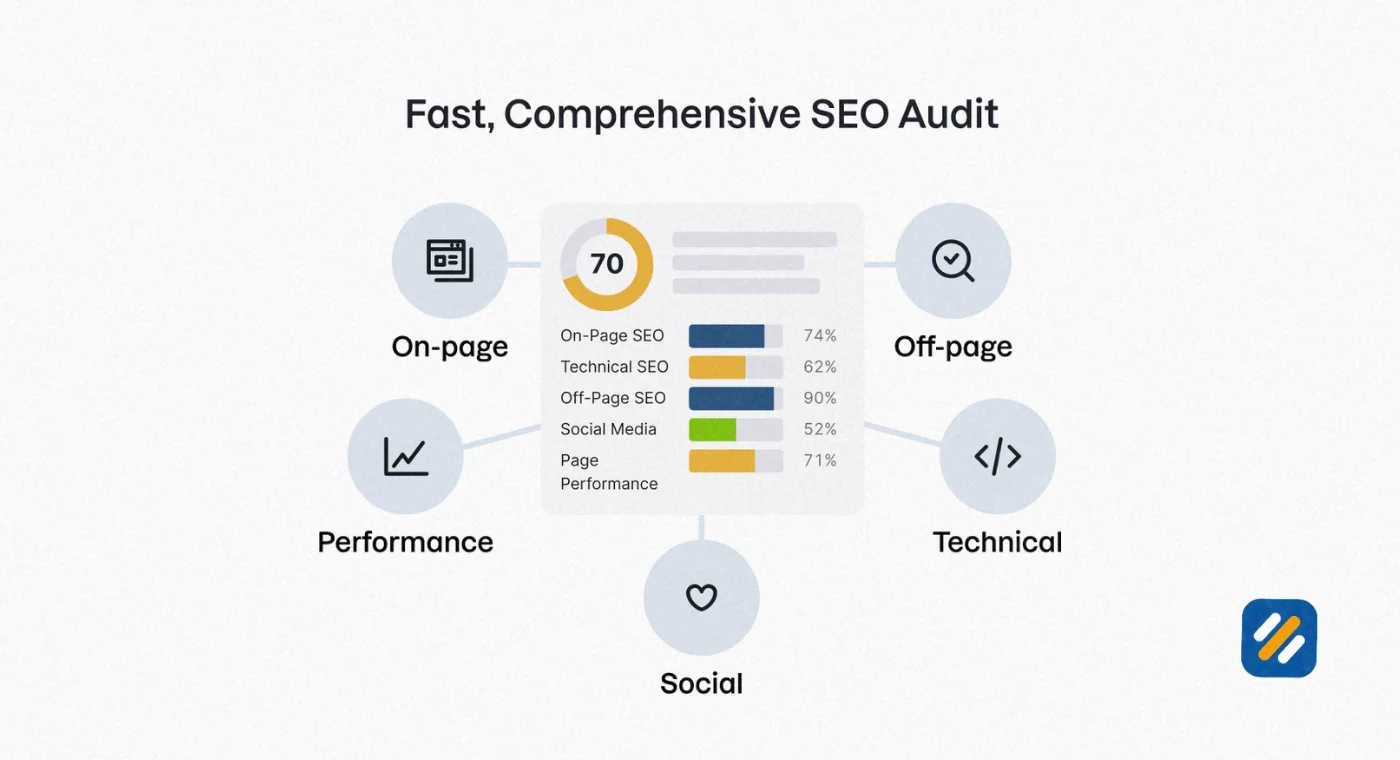
A complete SEO audit covers three areas
Technical health check: Can Google find, crawl, and index your pages without obstacles? Are there broken links, missing sitemaps, duplicate content issues, or pages blocked in robots.txt by mistake? Use Google Search Console's Coverage Report and a crawl tool like Screaming Frog free version to identify every technical issue.
On-page review: Do your existing pages have title tags? Are meta descriptions present and unique across all pages? Are there keyword cannibalisation issues where multiple pages compete for the same keyword? Are headings structured logically with H1 used once per page?
Content audit: Which existing pages are generating traffic and which are invisible? Are there thin pages with under 300 words that could be improved or consolidated? Are there outdated articles that need refreshing?
The output of your audit is a prioritised list of fixes. Address critical technical issues first, on-page issues second, and content improvements third. Then move to step two.
Step 2: Keyword Research: The Foundation Every Other Step Builds On
Keyword research is where your entire SEO strategy gets its direction. Every piece of content you create, every page you optimise, and every topic you cover traces back to decisions made during keyword research.
The goal of keyword research is to find the exact words and phrases your target audience types into Google and determine which of those terms your website can realistically rank for.
How to do keyword research step by step
Start with seed topics. Write down five to ten broad topics directly related to your business. If you run an SEO blog, your seed topics might be "keyword research," "on-page SEO," "technical SEO," "backlinks," and "Google Search Console."
Expand each seed topic into specific keyword phrases using Google Keyword Planner, Ahrefs free keyword generator, or the free version of Semrush. Look at the monthly search volume and keyword difficulty score for each suggestion.
Categorise keywords by search intent. Every keyword falls into one of four intent categories
| Intent Type | What the Searcher Wants | Example Keyword | Best Content Format |
|---|---|---|---|
| Informational | To learn something | "what is technical SEO" | Blog post, guide, explainer |
| Navigational | To find a specific website | "Ahrefs login" | Homepage or landing page |
| Commercial | To compare options before buying | "best SEO tools 2026" | Comparison article, listicle |
| Transactional | To take action or buy | "hire SEO specialist" | Service page, landing page |
For a new website, prioritise informational and commercial intent keywords with a difficulty score under 20. These give you the fastest path to first rankings while building the domain authority you need to compete for harder keywords later.
Assign one primary keyword per page and two to three supporting secondary keywords. Never target the same primary keyword on more than one page or you will create keyword cannibalisation that confuses Google about which page to rank.
Step 3: Competitor Analysis: Learn From What Is Already Working
Before writing a single article, you need to understand the competitive landscape your website is entering. Competitor analysis tells you exactly what standard your content needs to meet and reveals keyword opportunities your competitors have missed.
Here is how to run a competitor analysis that actually informs your strategy
Identify your real search competitors. Your search competitors are not necessarily your business competitors. They are the websites ranking on page one for your target keywords. Google your primary keyword and note which domains appear most frequently across the top results. These are your search competitors regardless of whether they compete with your business directly.
Analyse their top performing content. Enter a competitor domain into Ahrefs free Webmaster Tools or the free version of Semrush. Look at which pages are generating the most organic traffic. These pages reveal the topics your audience values most and the content depth Google is already rewarding in your niche.
Run a content gap analysis. A content gap analysis shows you keywords your competitors rank for that you do not. This reveals untapped opportunities where you can publish content with confirmed search demand that nobody in your direct competitor set has fully addressed.
Review their backlink profiles. Understanding how many backlinks your top competitors have earned and from which domains tells you how much off-page work your campaign will require to compete. A competitor with 500 backlinks from high-authority domains requires a fundamentally different link building strategy than one with 50 backlinks from low-authority sites.
3 Step 4: Technical SEO: Build the Foundation Google Can Actually Use
Technical SEO is the step most beginners skip because it feels intimidating. That is a costly mistake. Without a technically sound website, every other step in the SEO process delivers reduced results.
Think of technical SEO as the plumbing of your website. When it works correctly, nobody notices it. When it breaks, everything stops working properly.
Crawling and indexing: The first technical priority is ensuring Google can crawl and index every important page on your website. Submit your XML sitemap in Google Search Console. Check the Coverage Report weekly for pages flagged as "Excluded" or returning errors. Review your robots.txt file to confirm no important pages are accidentally blocked.
Page speed and Core Web Vitals: Google uses Core Web Vitals as a ranking signal. These measure three user experience metrics: Largest Contentful Paint which is how fast your main content loads, First Input Delay which is how quickly the page responds to interaction, and Cumulative Layout Shift which measures visual stability. Check your scores at pagespeed.web.dev and address any issues flagged as poor or needs improvement.
Mobile usability: Google uses mobile-first indexing, meaning it evaluates and ranks your website based on its mobile version. A page that looks perfect on desktop but breaks on mobile will underperform in rankings regardless of how well optimised its content is.
HTTPS and security: Every page on your website should be served over HTTPS. Google confirmed HTTPS as a ranking signal and users see a "Not Secure" warning on HTTP pages in Chrome, which destroys trust and increases bounce rate.
URL structure: Clean, descriptive URLs that include your target keyword outperform long, parameter-filled URLs. A URL like seowithroaman.com/keyword-research-free is both more crawlable and more click-worthy than seowithroaman.com/post?id=4821.
Duplicate content: Pages that share substantially similar content confuse Google about which version to index and rank. Use canonical tags to tell Google which version of a page is the authoritative one and consolidate thin or overlapping content where possible.
Step 5: On-Page SEO: Signal Relevance on Every Page You Publish
On-page SEO is the process of optimising individual pages to rank higher for their target keywords. It is entirely within your control and it is where the compounding returns of good SEO begin to appear.
Every page you publish needs these on-page elements configured before it goes live
Title tag: Contains the primary keyword within the first four words. Stays under 60 characters. Includes a value proposition that makes someone want to click. This is the single most important on-page SEO element.
Meta description: Under 160 characters. Restates the keyword naturally. Promises a specific outcome. Ends with an implicit call to action. While not a direct ranking factor, a well-written meta description increases click-through rate which is a strong Google quality signal.
H1 heading: Every page has exactly one H1 heading. It contains the primary keyword and matches or closely mirrors the title tag. Google gives significant weight to the H1 because it is the strongest heading signal on the page.
H2 and H3 subheadings: Break your content into logical sections using H2 headings. Include secondary keywords naturally in at least two H2 headings. Use H3 for supporting points within each section.
Keyword density: Place your primary keyword naturally throughout the content at approximately 1% density. For a 1,500-word article that means the keyword appears roughly 15 times including the title tag, H1, and body content. Never force it.
Image alt text: Every image on your page needs descriptive alt text that explains what the image shows. Include the keyword in at least one image's alt text where it fits naturally.
Internal links: Link to at least two to three related pages on your website from every new piece of content. Internal linking distributes authority across your site and helps Google understand your topical coverage.
Content depth: Answer the primary question the searcher is asking and every related question they might have. Content that fully satisfies search intent reduces bounce rate and increases dwell time, both of which signal quality to Google.
Step 6: Content Strategy: The Engine That Drives Long-Term SEO Growth
Content is the fuel that powers the entire SEO process. Without a consistent content strategy, your keyword research produces nothing, your technical fixes rank empty pages, and your backlink building has nothing worth linking to.
A content strategy is not the same as a content calendar. A content calendar tells you what to publish when. A content strategy tells you what to publish, why, for whom, and how each piece connects to your overall SEO goals.
Building your content strategy:
Start with topical authority clusters. Rather than publishing random articles across loosely related topics, organise your content around core topic clusters. Each cluster has one comprehensive pillar article covering a broad topic and multiple supporting articles covering specific subtopics that link back to the pillar.
For an SEO blog, a pillar article might be "The Complete Guide to On-Page SEO" with supporting articles covering title tags, meta descriptions, header tags, internal linking, image optimisation, and schema markup separately. This cluster structure tells Google you have comprehensive expertise in on-page SEO, not just a surface-level understanding.
Publishing consistency matters more than publishing volume. A website that publishes two quality articles per week for twelve months consistently outperforms a website that publishes ten articles in month one and then goes quiet. Google rewards websites that maintain publishing momentum because it signals that the site is actively maintained and regularly updated with fresh information.
Content optimisation for existing pages: Your content strategy is not only about new content. Updating existing pages that are ranking between positions 5 and 20 is one of the highest ROI activities in the entire SEO process. Adding more depth, fresher statistics, better examples, and stronger internal links can move a page from position 8 to position 2 faster than any new article you publish.
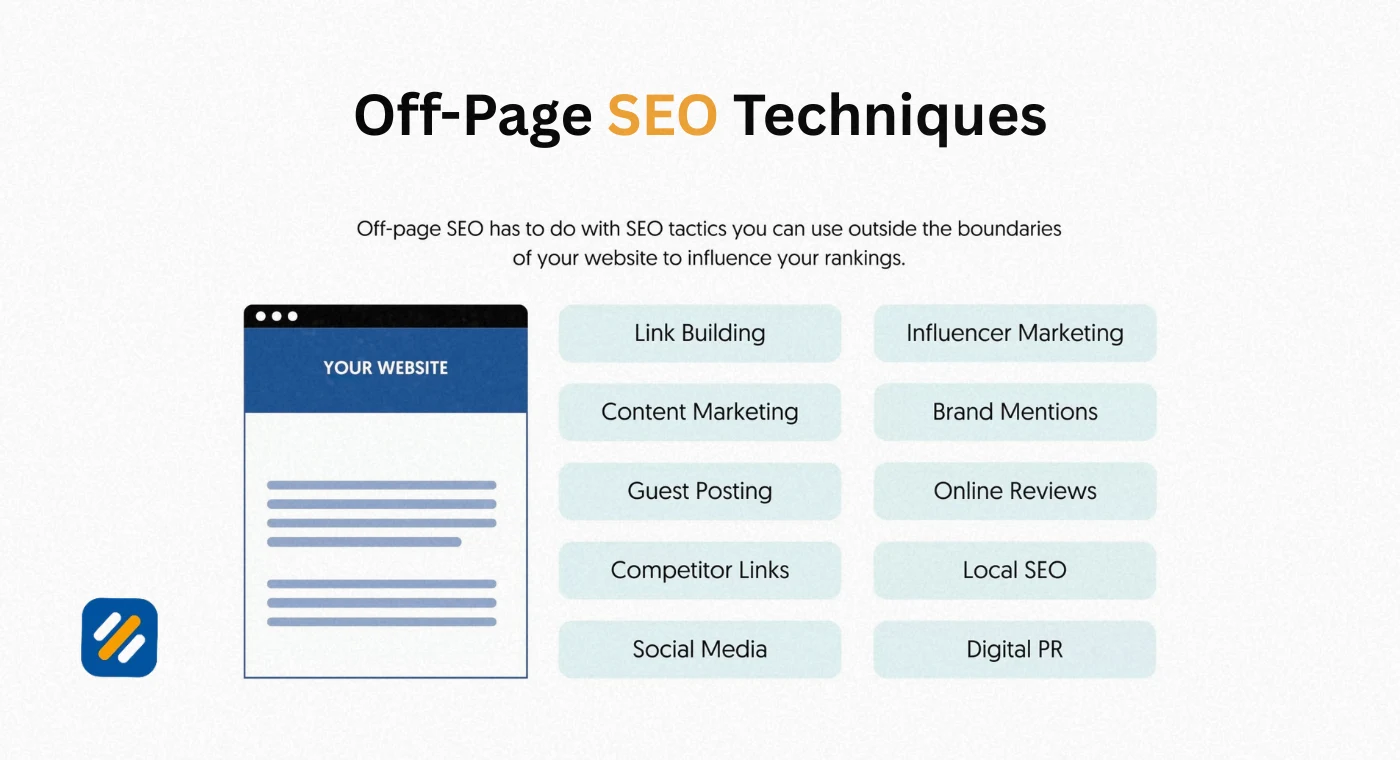
Step 7: Off-Page SEO and Link Building: Build the Authority Google Requires
Off-page SEO refers to actions taken outside your website that influence your Google rankings. The most important off-page signal is backlinks, which are links from other websites pointing to your pages.
Google treats backlinks as votes of confidence. When a respected website links to your content, it tells Google that your page is credible and worth recommending to searchers. The more high-quality backlinks your domain earns, the more Google trusts your entire website, which lifts the ranking potential of every page you publish.
The most effective link building strategies for 2026:
Content-led link earning: Publishing genuinely useful content, particularly original research, comprehensive guides, and data-driven resources, naturally attracts backlinks from other websites that want to reference your work. This is the only link building strategy that scales without risk.
Guest posting: Writing articles for other reputable websites in your niche in exchange for a backlink to your site. The key is relevance. A backlink from a respected SEO website to an SEO blog is worth significantly more than a backlink from an unrelated site in a completely different industry.
Broken link building: Finding broken links on other websites in your niche and reaching out to suggest your relevant content as a replacement. This works because you are offering a genuine solution to the website owner's problem rather than asking for a favour.
Digital PR: Creating newsworthy content, studies, surveys, or tools that journalists and bloggers want to cover. A single piece of digital PR content can earn dozens of high-authority backlinks from media publications.
What to avoid in link building: Buying links from link farms, participating in private blog networks, and using automated link building tools all violate Google's guidelines and carry the risk of manual penalties that can remove your website from search results entirely.
Step 8: SEO Performance Tracking: Measure Everything, Improve Consistently
The final step of the SEO process is also the step that feeds back into every other step. Without tracking performance, you are running an SEO campaign blindfolded. You cannot improve what you cannot measure.
The essential SEO tracking setup:
Google Search Console: Shows you exactly which keywords your pages are ranking for, how many impressions and clicks they are receiving, and your average position for each query. Check the Performance Report weekly. Pay close attention to pages with high impressions but low click-through rates because these are pages where a better title tag or meta description can generate significantly more traffic without any additional content work.
Google Analytics 4: Tracks where your traffic comes from, how users behave on your site, how long they stay, which pages they visit, and whether they complete the actions you want them to take. Connect GA4 to your website from day one so you have baseline data to compare against as your SEO traffic grows.
Rank tracking: Monitor your keyword positions over time using a rank tracker. Seeing a keyword move from position 15 to position 7 to position 3 over three months shows your SEO process is working. Seeing a keyword drop from position 5 to position 12 after a Google update tells you that page needs attention.
Monthly SEO reporting: Set aside time each month to review your performance data across all three tools. Track these core metrics: total organic sessions, top performing pages by traffic, keywords moved to page one, number of new backlinks earned, and Core Web Vitals scores.
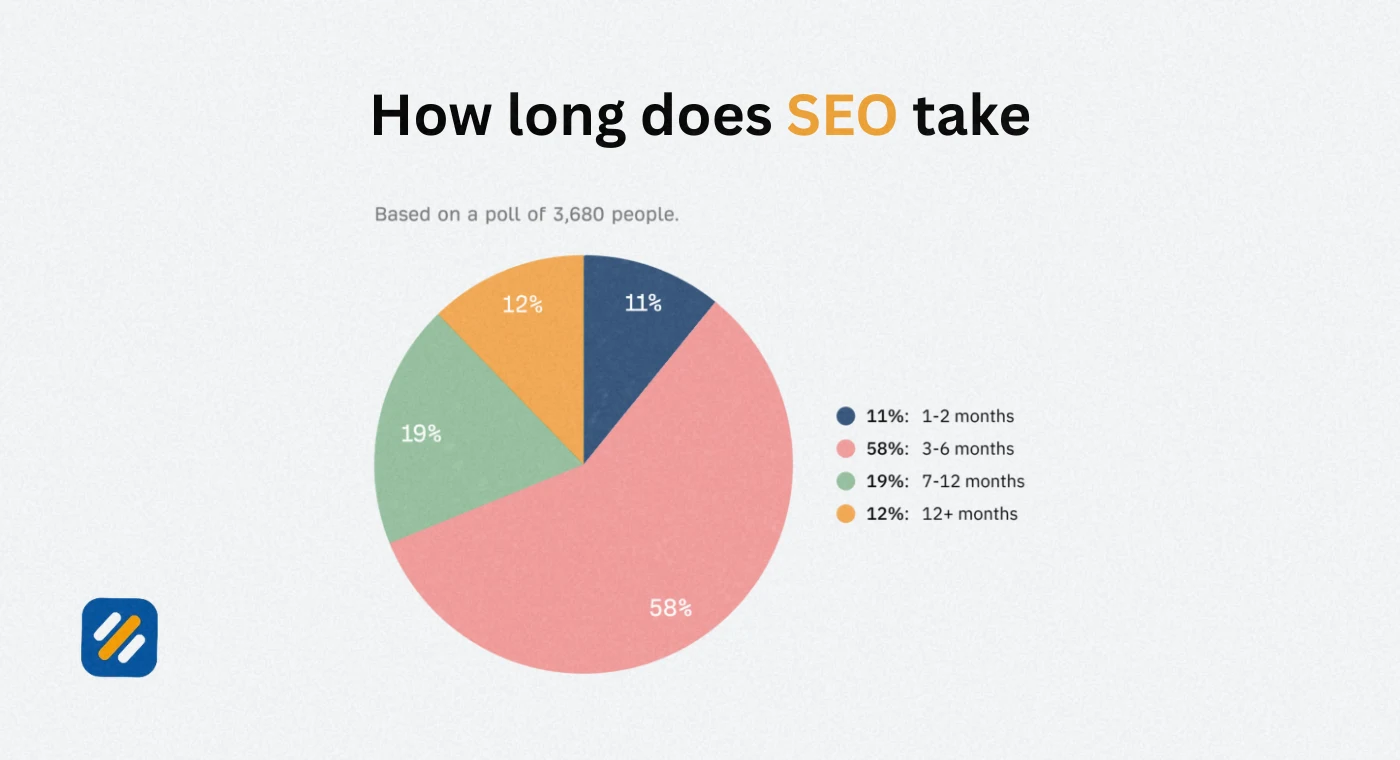
4 How Long Does SEO Take to Show Results
This is the question every client asks and every honest SEO specialist answers the same way: it depends, but here is the real data.
| Website Stage | Expected Timeline | What Drives the Results |
|---|---|---|
| Brand new website, 0 to 10 pages | Month 1 to 3: Near zero traffic | Building technical foundation, publishing first content |
| New site with 20 to 30 articles | Month 3 to 5: First rankings appear | Long-tail keywords start indexing and ranking |
| Growing site with 50 plus articles | Month 5 to 8: Consistent traffic begins | Topical authority forming across multiple categories |
| Established site with 80 plus articles | Month 8 to 14: Compounding traffic growth | Domain authority rising, medium difficulty keywords accessible |
| Authority site with backlinks | Month 14 onwards: Significant organic traffic | Brand searches, referral traffic, featured snippets |
SEO is an ongoing process and the results do not grow in a straight line. The first three months feel like nothing is happening. Then a few keywords appear. Then traffic starts growing. Then it compounds. The websites that succeed are the ones that commit to the process long enough to reach the compounding phase.
Ahrefs research shows that the average page ranking in Google's top 10 results is over two years old. This does not mean you need two years to rank. It means the websites that hold page one positions have been doing their SEO process consistently for long enough to build genuine authority.
5 3 Expert Tips to Make Your SEO Process Work Faster
These three tips come directly from real campaign experience and go beyond what most SEO guides cover.
Expert Tip 1: Fix Technical SEO Before Publishing Any Content
Most beginners start publishing content immediately and fix technical issues later. This means every article they publish gets crawled in a suboptimal environment. Spending two weeks on technical SEO before your first article goes live means every piece of content you publish gets indexed faster and ranked more accurately from day one.
Expert Tip 2: Target One Topic Cluster Before Moving to Another
Publishing five articles on keyword research, five on technical SEO, and five on backlinks all at the same time builds no topical authority anywhere. Publishing fifteen articles that all cover different aspects of keyword research in depth builds genuine topical authority in that cluster that lifts all fifteen pages simultaneously. Depth in one area before breadth across many areas is the faster path to real rankings.
Expert Tip 3: Update Before You Create
Once you have 30 or more published articles, spend at least 30% of your content time updating existing articles rather than only creating new ones. Pages ranking between positions 5 and 20 are your highest ROI opportunity. They are already indexed, already trusted, and already getting some impressions. A focused update with better examples, fresher data, and stronger internal links can move them to positions 1 to 3 in weeks rather than the months a new article takes to rank.
6 Conclusion
The process of SEO is not complicated but it does require discipline, patience, and a commitment to doing every step in the right order.
Audit your website first. Research your keywords before writing. Fix your technical issues before publishing. Optimise every page before it goes live. Publish content consistently around topic clusters. Build backlinks through quality and relevance. Track your performance every week and use what you learn to improve what is already working.
That is the complete SEO process. Every successful website ranking on page one today followed some version of this exact system. The only variable is how consistently and how correctly each step was executed.
SEO is an ongoing process and the compounding returns it builds over 12 to 24 months of consistent effort are unlike any other marketing channel available to a small business or personal brand.
Start with step one today. The best time to begin your SEO process was twelve months ago. The second best time is right now.
Have a question about any step in this process? Drop a comment below and I will answer it personally.
Join 1,000+ business owners and bloggers who get one actionable SEO tip every week — straight to their inbox. Free forever.
Get Free Weekly Tips →